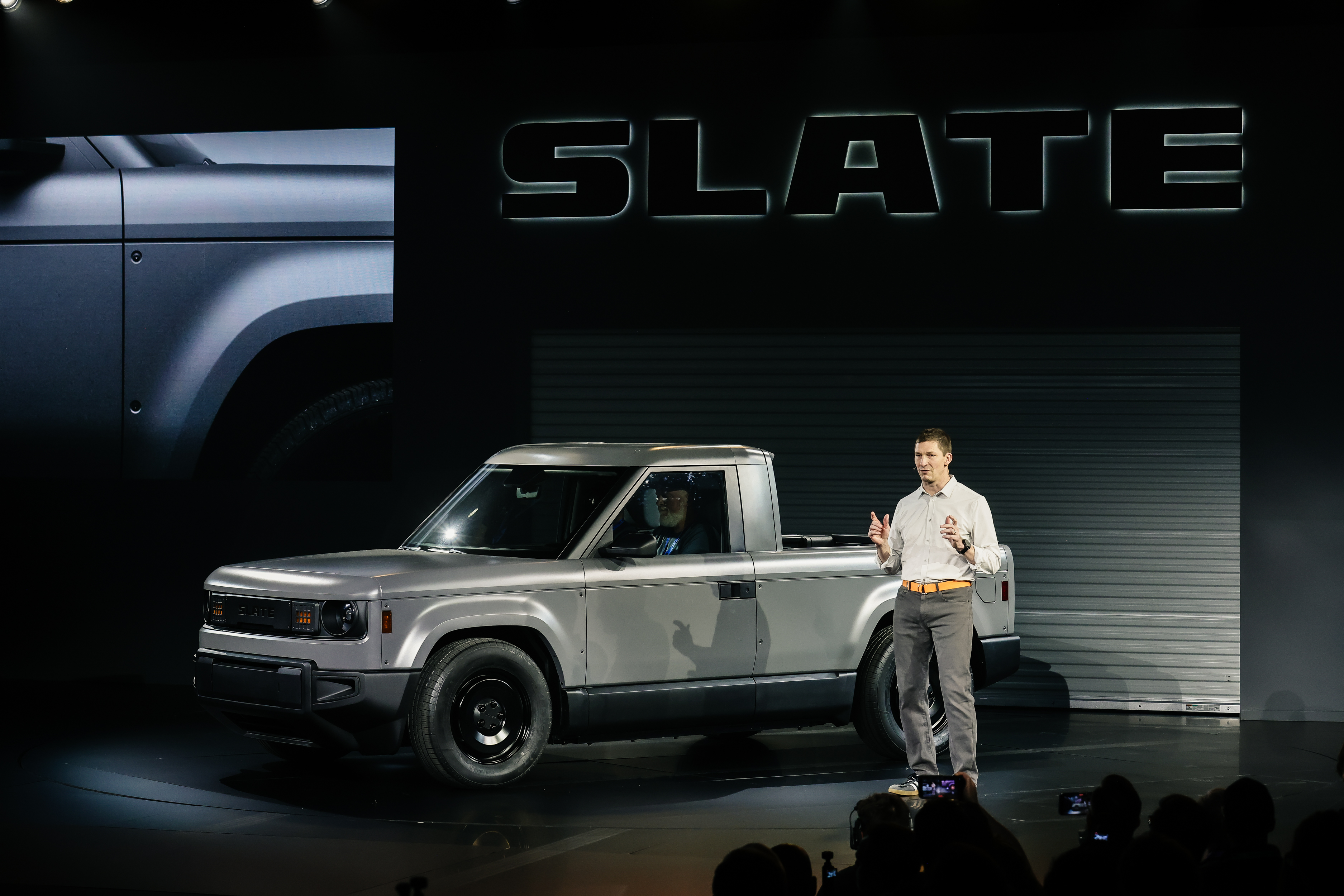
While many electric truck launches have focused on high-end trims and luxury upgrades, Slate appears to be tapping into a different segment of the market.
The Appeal of Affordability
One of the most significant drivers behind the reservation surge is price sensitivity.
In recent years, electric pickups from major manufacturers have launched with price tags that push well beyond traditional mass-market truck buyers. As production costs and battery prices rose, many EV trucks entered the market closer to luxury territory than entry-level utility.
Slate’s positioning as a more affordable alternative appears to have unlocked pent-up demand from consumers who want electric capability without premium pricing. For buyers priced out of other EV options, the promise of a lower-cost truck provides an accessible entry point.
Utility Over Luxury
Another factor fueling reservations is the focus on practicality.
Many electric trucks have emphasized performance metrics — acceleration times, horsepower figures and advanced infotainment systems. Slate’s strategy, by contrast, centers on functionality and everyday usability.
This approach aligns with core pickup buyers who prioritize durability, payload capacity and operational costs over cutting-edge tech features. In markets where trucks are tools as much as lifestyle vehicles, simplicity can be a competitive advantage.
Timing in the EV Cycle
The 160,000 reservations also reflect broader EV adoption dynamics.
Despite periods of demand deceleration in 2026, long-term forecasts still show EV penetration rising steadily toward the end of the decade. Consumers increasingly expect electric options in every vehicle category, including work trucks.
At the same time, traditional internal combustion pickup prices have climbed significantly. When gas-powered trucks approach historically high price points, the cost gap between electric and combustion narrows.
For many buyers, the decision becomes less about novelty and more about total cost of ownership.
Reservation Model Psychology
Reservation counts do not always translate directly into final sales, but they remain a powerful signal.
Low-deposit preorder systems reduce consumer risk while allowing startups to demonstrate demand strength to investors and suppliers. A six-figure reservation tally can support supply chain negotiations, manufacturing planning and capital raising.
For Slate, the 160,000 figure likely strengthens its credibility in a capital-intensive industry where proving demand is critical before scaling production.
Competitive Landscape
The electric pickup segment already includes offerings from legacy automakers and high-profile startups. However, much of the competition remains concentrated in mid- to high-priced categories.
If Slate successfully delivers on affordability without compromising reliability, it could occupy a less crowded niche — the budget-conscious electric truck buyer.
That positioning could prove especially powerful in rural and commercial markets where price sensitivity is high.
The Broader Signal
The strong reservation count highlights a key reality in the EV transition: demand exists beyond premium early adopters.
As the industry moves from early enthusiasts to mainstream consumers, affordability becomes decisive.
Slate’s early traction suggests that the next wave of EV growth may not be driven by performance upgrades or luxury trims — but by accessible pricing and practical design.
If even a fraction of the 160,000 reservations convert to deliveries, the message will be clear: the mass market for electric pickups is not theoretical. It is waiting for the right price point.