The most unsettling aspect of Australia's recent warning to its finance firms regarding AI-driven cyber risks isn't the novelty of the threat, but its democratization. For years, sophisticated, polymorphic malware, autonomous network reconnaissance, and highly personalized social engineering were largely the domain of well-funded nation-state actors or elite cybercrime syndicates. Today, large language models and advanced machine learning algorithms are rapidly commoditizing these capabilities, placing powerful, previously inaccessible attack vectors into the hands of a much broader spectrum of malicious actors, from lone-wolf hackers to mid-tier criminal groups.
This seismic shift in the cyber threat landscape has prompted Australia's financial regulators, including the Australian Securities and Investments Commission (ASIC) and the Australian Prudential Regulation Authority (APRA), to issue a stark advisory. The message is clear: financial institutions must fundamentally reassess their risk frameworks, moving beyond traditional perimeter defenses to embrace a more adaptive, AI-aware security posture. The urgency stems from the unprecedented speed and scale with which AI can now facilitate fraud, data breaches, and systemic disruptions.
The Evolving Arsenal of AI-Powered Threats
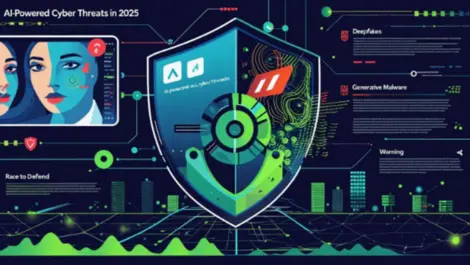
The traditional threat playbook has been rewritten. Generative AI, for instance, can produce highly convincing spear-phishing emails, voice clones for CEO fraud, and deepfake videos with astonishing accuracy, overcoming previous linguistic or contextual limitations. An attacker can feed an LLM publicly available information about a company's hierarchy, projects, and internal jargon, then instruct it to craft emails that are virtually indistinguishable from legitimate internal communications, targeting specific individuals with precise social engineering.
Beyond social engineering, AI enhances the technical aspects of cyberattacks. Machine learning algorithms can autonomously identify zero-day vulnerabilities in complex software systems faster than human analysts. They can generate novel malware variants that evade signature-based detection, learning and adapting to defensive measures in real-time. Automated bots, powered by AI, can map vast corporate networks, identify critical assets, and orchestrate multi-stage attacks with minimal human intervention, accelerating compromise timelines from weeks to mere hours.
The supply chain also becomes an amplified vector. If a third-party vendor integrates AI tools into their operations without robust security oversight, it creates a cascade of potential vulnerabilities that financial institutions inherit. An AI-powered attack on a single point in the supply chain can rapidly propagate, affecting numerous downstream clients and their sensitive data.
Australia's Proactive Stance: A Global Bellwether
Australia's proactive stance is not accidental. The nation has experienced several high-profile data breaches in recent years, including incidents involving telecommunications giant Optus and health insurer Medibank, which exposed millions of customer records. These events have significantly heightened public and regulatory scrutiny of cybersecurity practices across critical infrastructure sectors, especially finance.
ASIC and APRA, responsible for market integrity, consumer protection, and prudential stability, recognize that AI-driven cyber risks threaten all these mandates. A major AI-facilitated breach could erode consumer trust, destabilize financial markets, and compromise the integrity of the entire financial system. Their warnings serve as a pre-emptive strike, urging firms to build resilience before a catastrophic event forces their hand.
"The challenge with AI is not just the sophistication of the attacks, but the sheer velocity at which they can be launched and adapted. Regulators are rightly concerned that traditional, human-centric security operations will be outmaneuvered by AI-driven adversaries who can iterate and exploit vulnerabilities at machine speed. This isn't just about patching systems; it's about fundamentally rethinking defense strategies to incorporate AI at every layer, and doing so with speed and foresight."
Dr. Evelyn Reed, Director of Cyber Resilience at the Institute for Digital Policy, Sydney
The Dual-Use Dilemma: AI as Both Weapon and Shield
The irony of the AI-driven cyber threat is that the same technology used by attackers is also indispensable for defense. Financial institutions are increasingly deploying AI and machine learning for anomaly detection, threat intelligence correlation, automated incident response, and predictive security analytics. AI can sift through petabytes of network traffic and log data in seconds, identifying subtle indicators of compromise that would be impossible for human analysts to spot.
However, this creates an escalating arms race. As defenders integrate more sophisticated AI into their security operations, attackers respond by developing AI that specifically targets and bypasses these defenses. The battleground shifts from human versus human, or human versus machine, to machine versus machine. The advantage will often go to the side with superior data, more agile AI models, and a deeper understanding of adversarial tactics.
For finance firms, this dual-use dilemma means that simply adopting off-the-shelf AI security solutions may not be enough. They need to invest in research and development, cultivate in-house AI expertise, and engage in continuous red-teaming exercises using AI-powered attack simulations to stress-test their defenses against the latest threats.
Regulatory Imperatives and Strategic Responses
The Australian regulators' warning carries implicit expectations for financial institutions. Firms are now expected to:
Integrate AI Risk into Governance: AI-driven cyber risk must be a standing item for board-level discussions, not solely an IT operational concern. Robust governance frameworks are needed to assess, manage, and report on these risks.
Enhance Due Diligence on AI Tools: Any AI tool adopted internally or by third-party vendors must undergo rigorous security vetting, assessing its potential as an attack surface and its susceptibility to adversarial AI techniques.
Invest in AI-Powered Defense: Proactive investment in AI-driven security solutions for threat detection, incident response, and vulnerability management is no longer optional.
Upskill Security Teams: Cybersecurity professionals must be trained in AI/ML concepts, understanding how adversaries leverage these technologies and how to defend against them. This includes proficiency in prompt engineering for defensive applications and identifying AI-generated malicious content.
Foster Collaboration: Information sharing between financial institutions, regulators, and cybersecurity intelligence agencies is critical to develop collective resilience against rapidly evolving AI threats.
The financial sector, globally, is a prime target due to the sheer volume and value of sensitive data it holds. Australian banks, wealth managers, and insurance companies manage trillions in assets and millions of customer identities. A successful AI-driven cyberattack could result in massive financial losses, irreparable reputational damage, and systemic instability.
Beyond Compliance: A Strategic Imperative
The warning from Australia is not merely about compliance. It is a strategic imperative for long-term viability. Financial institutions that fail to adapt their cybersecurity strategies to the AI era risk not only regulatory penalties but also significant competitive disadvantage. Customers will gravitate towards firms they perceive as secure guardians of their assets and data.
Furthermore, the operational resilience of these firms depends on their ability to withstand sophisticated, autonomous attacks. Disruption to critical financial services could have ripple effects across the economy, affecting businesses and individuals alike. Therefore, managing AI-driven cyber risk is not just a defensive measure; it is an offensive strategy to maintain trust, ensure continuity, and preserve market integrity.
As AI technology continues its exponential growth, its weaponization will only become more sophisticated and accessible. Australia's financial regulators are signaling a clear path forward: proactive adaptation, strategic investment, and collaborative resilience are the only sustainable responses to a threat that promises to redefine the landscape of cyber warfare. The global financial community would be wise to heed this warning, recognizing that what impacts one major financial market inevitably has implications for all.
KEY TAKEAWAYS
AI democratizes sophisticated cyberattack capabilities, making advanced threats accessible to a wider range of malicious actors.
Australian regulators (ASIC, APRA) urge financial firms to fundamentally reassess and upgrade their cyber risk frameworks to counter AI-driven threats.
Financial institutions must invest in AI-powered defense mechanisms and upskill security teams to effectively counter autonomous and adaptive attacks.
Robust governance and enhanced due diligence on all AI tools, whether internal or third-party, are critical to mitigate systemic vulnerabilities.
Proactive adaptation to AI cyber risks is no longer just about compliance but is a strategic imperative for maintaining trust and operational resilience in a globalized financial ecosystem.