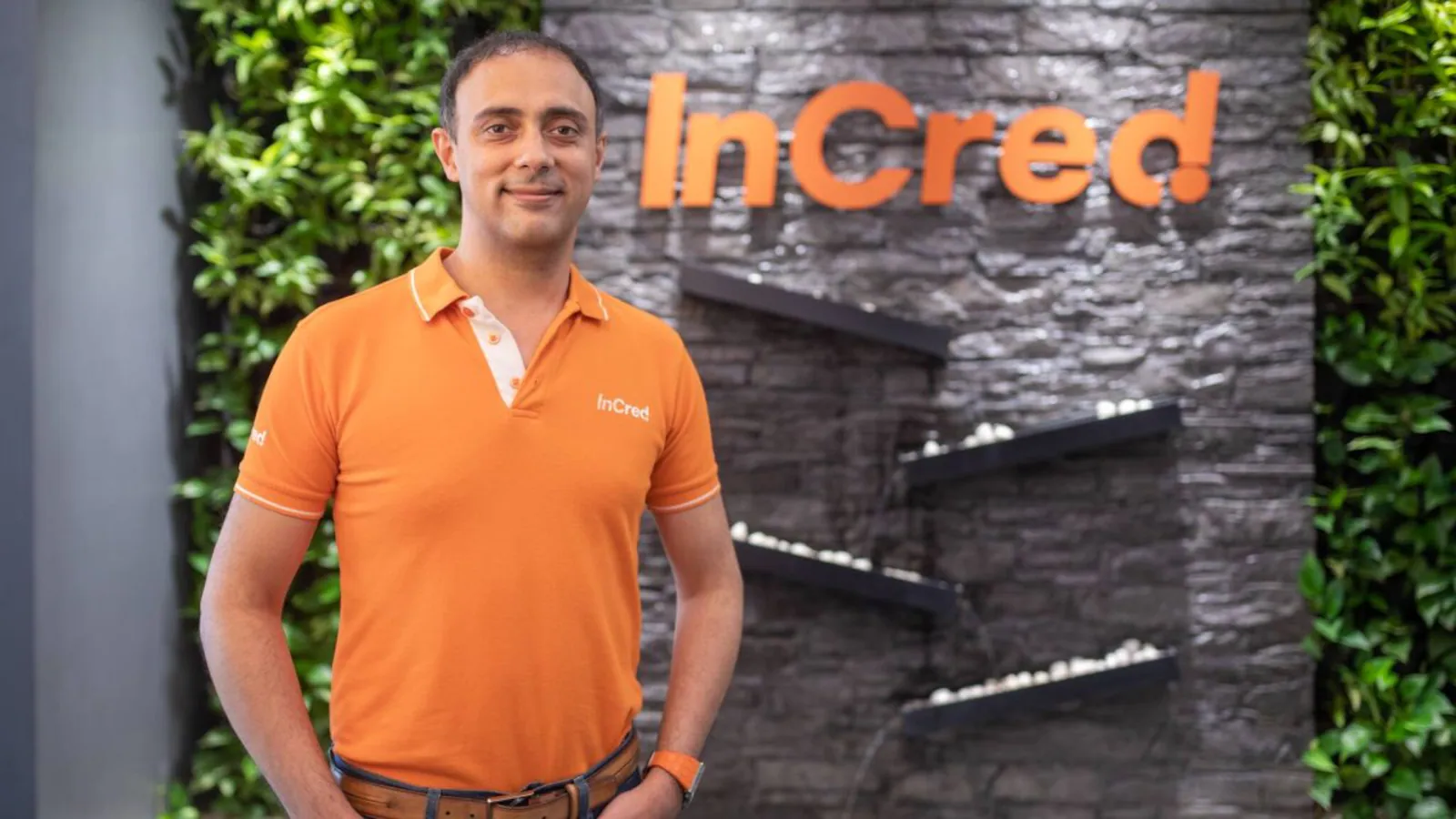
Fintech giant InCred Holdings signals major public listing, filing DRHP to raise ₹1,250 Cr via fresh issue in a pivotal market move.
The financial markets are once again abuzz with the prospect of a significant public listing from India's burgeoning fintech sector. InCred Holdings’ filing of its Draft Red Herring Prospectus (DRHP) with the Securities and Exchange Board of India (SEBI) for an Initial Public Offering (IPO) is a pivotal moment, signaling its intent to raise ₹1,250 crore via a fresh issue. This move is conventionally interpreted as a testament to the robust growth trajectory of the Indian financial services landscape and a beacon for investor confidence.
Conventional wisdom often dictates that an IPO of this magnitude, particularly from a player like InCred that straddles both traditional non-banking financial company (NBFC) operations and modern fintech innovation, is an unequivocal win. It suggests a company poised for aggressive expansion, backed by strong fundamentals and an eager investor base ready to fund the next wave of disruption. The narrative is straightforward: India's vast, underserved credit market combined with its rapidly digitizing populace creates an irresistible growth story, making such offerings inherently attractive.
However, a rigorous analysis demands moving beyond this simplistic narrative. While the potential for growth in the Indian market remains undeniable, the current global and domestic macroeconomic climate presents a more complex picture. The capital markets today are far more discerning than they were during the peak of the fintech funding frenzy. Investors are increasingly prioritizing demonstrated profitability and resilient business models over sheer growth at any cost. This shift in sentiment means InCred’s listing will be scrutinized not just for its growth potential, but for its intrinsic value, risk management frameworks, and sustainable path to profitability.
The Nuance of a Fresh Issue in a Tightening Market
The decision to raise ₹1,250 crore entirely through a fresh issue, as opposed to incorporating an Offer for Sale (OFS) from existing shareholders, is telling. On the surface, it reinforces the growth story: the capital is earmarked for the company’s expansion, primarily augmenting its lending book and potentially investing in technology and infrastructure. This aligns with the ambition of a growing NBFC seeking to capitalize on market opportunities in retail lending, MSME finance, and education loans, areas where InCred has established a significant presence.
Yet, a deeper look reveals potential strategic imperatives beyond mere expansion. For an NBFC, robust capital adequacy is not just a matter of growth; it is a regulatory imperative. The Reserve Bank of India (RBI) mandates specific Capital to Risk-weighted Assets Ratio (CRAR) requirements, which become more stringent as a company scales. A substantial fresh issue might, therefore, also be a proactive measure to shore up the balance sheet, ensuring compliance with regulatory norms and providing a buffer against potential asset quality deterioration in a volatile economic environment. This is particularly pertinent given the global tightening of credit conditions and rising interest rates, which inevitably impact the cost of funds and borrower repayment capabilities.
The absence of an OFS could also be interpreted in multiple ways. It might suggest that existing investors, including prominent private equity and venture capital funds, retain strong confidence in InCred’s long-term prospects and prefer to defer their exit, anticipating a higher valuation post-listing. Conversely, in a market where tech valuations have compressed globally, it could also indicate a pragmatic decision by early backers to avoid selling at a potentially lower multiple than previously anticipated, choosing instead to let the company demonstrate its public market value before considering an exit.
InCred's Position in the Competitive Landscape
InCred operates in a crowded and highly competitive Indian financial services market. On one end, it faces established NBFC giants like Bajaj Finance, Cholamandalam Investment and Finance, which boast extensive branch networks, deep customer bases, and significant financial muscle. On the other, it contends with a new wave of digital-first fintechs that are agile, tech-savvy, and often hyper-focused on niche segments. InCred's ability to differentiate itself will be critical.
The company’s hybrid model, leveraging technology for underwriting, customer acquisition, and operational efficiency while maintaining a robust lending book, is its core strength. However, this also presents a challenge: how to avoid being seen as "neither fish nor fowl." To succeed, InCred must convince investors that it possesses the best attributes of both worlds: the regulatory discipline and balance sheet strength of an NBFC, combined with the agility, data analytics capabilities, and customer-centric approach of a cutting-edge fintech. Its ability to manage credit risk through advanced analytics, especially in segments like unsecured retail loans, will be a key determinant of its long-term success and investor appeal.
“The Indian fintech IPO landscape is maturing, moving past the initial euphoria. Companies like InCred, with their blended approach, face the challenge of demonstrating sustainable profitability alongside growth. The market is no longer content with just user acquisition; unit economics and asset quality are paramount. InCred’s fresh issue is a crucial capital injection, but how effectively it deploys this capital to enhance its risk-adjusted returns will dictate its post-listing trajectory.”
Dr. Alok Sharma, Financial Market Strategist, Equitas Research
Global Parallels and Valuation Headwinds
Globally, the fintech IPO market has experienced a significant recalibration. Companies that once commanded astronomical valuations based on user growth and revenue multiples have seen their public market performance tempered by investor demands for clear paths to profitability. The struggles of some prominent global fintechs, or the delays in IPOs of others like Klarna, serve as cautionary tales. While India's domestic growth story often commands a premium, it is not entirely insulated from these global trends.
The valuation benchmark for InCred will likely involve a blend of traditional financial sector metrics, such as Price-to-Book (P/B) and Price-to-Earnings (P/E), alongside growth multiples typically applied to technology companies. The challenge lies in harmonizing these. Investors will seek clarity on the company’s capital allocation strategy: how much will be directed towards expanding the lending book versus investing in proprietary technology, artificial intelligence, and machine learning capabilities that truly enhance its competitive edge and reduce operational costs.
Furthermore, the regulatory environment for digital lending in India has seen increased scrutiny from the RBI, aiming to protect consumers and ensure responsible lending practices. While necessary, these regulations can introduce compliance costs and potentially impact business models. InCred’s ability to navigate this evolving regulatory landscape while maintaining its growth momentum will be a critical factor in its valuation and post-IPO performance.
Opportunities and Risks on the Horizon
The opportunities for InCred are substantial. India’s credit penetration remains lower than many developed economies, implying significant headroom for growth. The continued digitization of the economy, facilitated by initiatives like the India Stack (Aadhaar, UPI), provides fertile ground for tech-enabled lending. A young, aspirational demographic with increasing access to smartphones and digital services represents a vast potential customer base.
However, the risks are equally pronounced. Asset quality remains a perennial concern for NBFCs, particularly in unsecured lending segments. Economic downturns, interest rate hikes, or unforeseen events can quickly translate into rising non-performing assets (NPAs). Intense competition can compress margins, making it harder to sustain profitability. Attracting and retaining top tech talent in a competitive market is another operational challenge. Finally, changes in regulatory policy, while often aimed at systemic stability, can alter the competitive landscape and business viability for specific models.
InCred's IPO is more than just a capital raise; it is a litmus test for the public market's appetite for sophisticated Indian fintech-NBFC hybrids in a post-euphoria investment climate. Its success will hinge on its ability to articulate a clear, sustainable, and profitable growth strategy that leverages technology effectively, manages risk prudently, and demonstrates resilience against both domestic competition and global economic headwinds. The ₹1,250 crore fresh issue is a significant war chest, but its deployment will be the true measure of InCred's strategic acumen and its potential to carve out a dominant position in India's dynamic financial sector.
Key Takeaways
InCred Holdings' ₹1,250 Cr fresh issue IPO signals aggressive expansion plans but also underscores the imperative for capital adequacy in a tightening regulatory and economic environment.
Conventional wisdom of robust fintech growth is challenged by current market demands for demonstrable profitability, resilient business models, and prudent risk management over pure growth.
The absence of an Offer for Sale (OFS) suggests existing investors' long-term confidence or a strategic decision to defer exits amidst compressed global tech valuations.
InCred's hybrid model (NBFC + Fintech) must prove it combines the best of both worlds, navigating intense competition from traditional players and digital-first startups.
Valuation will be complex, balancing traditional financial metrics with tech growth multiples, all while addressing global fintech market recalibrations and evolving Indian digital lending regulations.
Frequently asked questions
What is InCred Holdings doing?
InCred Holdings has filed its Draft Red Herring Prospectus (DRHP) with SEBI for an Initial Public Offering (IPO), aiming to raise ₹1,250 crore through a fresh issue of shares. This marks a significant step towards its public listing.
What is a DRHP?
A DRHP, or Draft Red Herring Prospectus, is a preliminary legal document filed with a regulatory body like SEBI that contains essential information about a company's upcoming IPO. It allows potential investors to review the company's financial health, operations, risks, and proposed issue details.
How much capital does InCred Holdings plan to raise?
InCred Holdings plans to raise ₹1,250 crore through its Initial Public Offering (IPO) via a fresh issue of shares.
Which regulatory body is InCred Holdings filing with?
InCred Holdings is filing its DRHP with the Securities and Exchange Board of India (SEBI).
What sector does InCred Holdings operate in?
InCred Holdings operates in India's burgeoning fintech (financial technology) sector.
What is a 'fresh issue' in an IPO?
A fresh issue in an IPO refers to the issuance of new shares by the company, with the proceeds directly going to the company to fund its operations, expansion, or debt reduction. It differs from an Offer for Sale (OFS) where existing shareholders sell their shares.