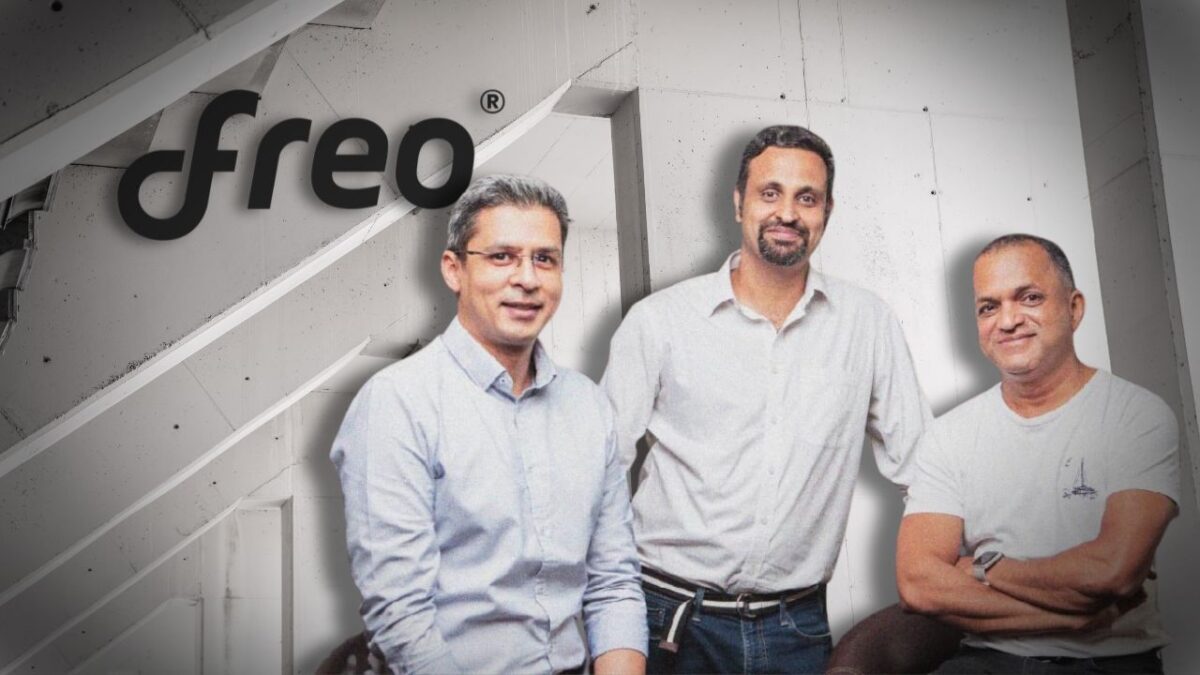
Digital Banking Startup Freo Acquires Credit Marketplace IndiaLends
The acquisition of IndiaLends, a prominent credit marketplace, by digital banking startup Freo marks a significant moment in India's rapidly evolving fintech landscape. This move is not merely a transaction; it represents a strategic inflection point, mirroring broader global trends of vertical integration, consolidation, and a sharpened focus on profitability within the digital financial services sector. For founders and operators navigating the complex currents of fintech innovation, this deal offers a potent case study in leveraging strategic M&A to build more resilient, comprehensive, and ultimately, more valuable financial ecosystems.
Freo, known for its digital banking platform offering credit lines and savings products, is making a clear statement about its ambitions to own a larger share of the customer's financial journey. IndiaLends, on the other hand, brings a robust data intelligence layer, proprietary credit underwriting algorithms, and an established network of lending partners. The synergy is evident: Freo gains immediate access to a deeper pool of credit risk assessment capabilities, a diverse customer base seeking various loan products, and an accelerated path to expanding its lending footprint while potentially reducing its customer acquisition costs.
The Imperative of Vertical Integration
The Freo-IndiaLends deal exemplifies a powerful trend sweeping across the global fintech industry: the drive for vertical integration. Companies are increasingly seeking to control more aspects of the value chain, moving beyond single-point solutions to build comprehensive, interconnected platforms. This strategy allows fintechs to capture more data, enhance customer lifetime value (LTV), and reduce reliance on third-party providers, thereby improving unit economics.
Consider the global giants. PayPal's acquisition of Honey in 2019, a shopping rewards platform, was a clear play to embed itself deeper into the consumer shopping journey, collecting valuable purchase intent data and facilitating smoother payment experiences. Similarly, Block (formerly Square) has strategically expanded its ecosystem with acquisitions like Afterpay, integrating buy now, pay later (BNPL) capabilities directly into its merchant and consumer offerings. These moves are designed to create a sticky, end-to-end financial experience, making it harder for customers to churn.
In the Indian context, this strategy takes on added significance. The market is characterized by a massive underserved population in need of formal credit, coupled with an explosion of digital adoption. However, it also presents unique challenges: diverse credit profiles, varying levels of digital literacy, and an evolving regulatory environment. A vertically integrated model, which combines a digital banking front-end with a sophisticated credit backend, is better equipped to navigate these complexities, offering tailored products while managing risk effectively.
Navigating India's Evolving Credit Landscape
The Indian digital lending sector has witnessed remarkable growth, but also significant regulatory scrutiny. The Reserve Bank of India (RBI) has introduced stringent guidelines for digital lending, emphasizing fair practice, transparency, and consumer protection. These regulations, including norms for first-loan default guarantees and clear disclosures, have prompted a recalibration among many pure-play lending platforms. Companies are now compelled to prioritize robust underwriting, responsible lending practices, and clear paths to profitability over aggressive, often unsustainable, growth at all costs.
This regulatory tightening makes IndiaLends' acquisition particularly astute for Freo. IndiaLends has spent years building a data-driven risk assessment framework and cultivating relationships with multiple banks and NBFCs. Integrating this capability directly allows Freo to enhance its compliance posture, strengthen its underwriting models, and potentially diversify its balance sheet exposure through co-lending partnerships that IndiaLends already facilitates. This reduces the time and capital Freo would otherwise spend building these capabilities from scratch, accelerating its ability to offer compliant, diversified credit products.
The Drive for Profitability and Sustainable Unit Economics
The venture capital landscape has shifted dramatically. The era of "growth at all costs" is largely over, replaced by a demand for clear paths to profitability and sustainable unit economics. Public market valuations for fintechs have corrected significantly, making IPOs a more challenging exit strategy. Consequently, M&A has emerged as a preferred route for both consolidation and capability acquisition.
For Freo, acquiring IndiaLends directly addresses several key aspects of improving profitability. First, it diversifies revenue streams. Beyond its existing credit line and savings products, Freo can now offer a broader range of loan products facilitated by IndiaLends' marketplace. Second, it enhances customer lifetime value. By offering more relevant financial products based on deeper credit insights, Freo can increase engagement and retention. Third, it can significantly reduce customer acquisition costs. Instead of purely acquiring new customers, Freo can leverage IndiaLends' existing user base and lead generation capabilities, cross-selling its own products while onboarding IndiaLends' customers onto its comprehensive digital banking platform.
This strategic calculus is visible across the global fintech scene. Companies like Revolut, initially known for remittances and challenger banking, have rapidly expanded into trading, crypto, and even travel booking. These expansions are not random; they are meticulously planned to increase customer stickiness, diversify revenue streams, and improve the LTV/CAC ratio. In a market where capital is no longer cheap and abundant, such strategic consolidations become paramount for survival and sustained growth.
Competitive Positioning in India's Fintech Arena
India's fintech market is intensely competitive, with a mix of large incumbents, well-funded unicorns, and nimble startups. Players like Paytm, PhonePe, and Navi are aggressively expanding their financial services portfolios, often leveraging their massive user bases and existing payment infrastructure. Paytm, for instance, has significantly scaled its lending business, offering personal loans, merchant loans, and BNPL services. PhonePe has similarly ventured into insurance, wealth management, and is eyeing further expansion into credit.
Against this backdrop, Freo's acquisition of IndiaLends provides a distinct competitive edge. It allows Freo to leapfrog several stages of organic development in the credit segment. By integrating IndiaLends' data science capabilities, Freo gains a more nuanced understanding of credit risk, enabling it to offer competitive interest rates and faster disbursals. This is crucial in a market where speed, convenience, and personalization are key differentiators. Furthermore, the combined entity can leverage a larger dataset to develop more sophisticated AI/ML-driven models, staying ahead in a rapidly digitizing lending environment.
The future of digital lending in India will heavily rely on superior data analytics, robust compliance, and the ability to offer tailored financial solutions at scale. Freo's move positions it as a formidable contender, capable of challenging both traditional lenders and other fintech giants by offering a more comprehensive and intelligent credit solution embedded within a broader digital banking experience.
Challenges and the Road Ahead
While the strategic rationale is strong, the integration of two distinct entities presents its own set of challenges. Merging technologies, aligning organizational cultures, and consolidating product roadmaps require meticulous planning and execution. Ensuring a seamless experience for existing IndiaLends and Freo customers during the transition will be critical to retaining trust and minimizing churn.
Furthermore, the regulatory landscape will continue to evolve. Freo must remain agile and adaptable, ensuring its combined offerings comply with future RBI directives and data privacy norms. The ability to innovate responsibly will be a key determinant of long-term success. The combined entity also has significant opportunities for future growth, including deeper penetration into semi-urban and rural markets, expansion into SME lending, and exploring embedded finance partnerships with non-financial entities.
Key Takeaways
Strategic Vertical Integration: The acquisition underscores a global trend where fintechs seek to control more of the customer journey, from banking to lending, to improve unit economics and customer lifetime value.
Enhanced Credit Intelligence: Freo gains IndiaLends' proprietary data, algorithms, and lender network, significantly bolstering its credit underwriting capabilities and accelerating its lending portfolio expansion.
Regulatory Alignment: The deal positions Freo to navigate India's tightening digital lending regulations more effectively, leveraging IndiaLends' established compliance frameworks and risk management expertise.
Path to Profitability: By diversifying revenue, reducing CAC through cross-selling, and improving LTV, the acquisition provides a clearer route to sustainable profitability in a challenging funding environment.
Competitive Differentiation: The combined entity is better equipped to compete in India's crowded fintech market, offering a more comprehensive and data-driven suite of financial products against both traditional banks and other digital players.
The acquisition of IndiaLends by Freo is more than a corporate event; it is a bellwether for the maturation of the digital financial services industry, particularly in high-growth markets like India. It signals a strategic pivot towards building comprehensive, defensible ecosystems, where data, compliance, and integrated customer experiences are paramount. For founders and operators, it offers invaluable insights into the strategies required to thrive in an increasingly complex yet opportunity-rich global fintech landscape.