That's the exact gap that Bengaluru-based Ctruh has spent three years building into. This week, the company announced a $2.5 million seed round — and the structure of that cap table says something deliberate about where the company is headed. Varindia
The Round
The funding was led by Inflection Point Ventures, with participation from Avinya Ventures, India Accelerator, Founder's Avenue, Anthill Ventures, and LVX. The round also brought in strategic angels: Vivek Sinha, Founder and CEO of Emversity and former COO of Unacademy, and Shivakumar Ganesan, Founder and CEO of Exotel. Varindia
Those angel names are worth a pause. Sinha built one of India's largest edtech platforms before pivoting to enterprise learning. Ganesan built Exotel into a cloud communications giant serving thousands of enterprises across South and Southeast Asia. These aren't XR enthusiasts writing novelty cheques. They're operators who've sold into enterprise procurement cycles, navigated Indian regulatory ambiguity, and watched SaaS businesses scale past the awkward-middle phase. Their presence suggests the Ctruh pitch landed as an infrastructure story, not just an XR-cool story.
The capital will go toward advancing R&D, building out the proprietary browser-native 3D engine and VersaAI generative AI platform, and scaling go-to-market efforts across the United States and the UAE. Varindia
That's three very different geographies doing very different kinds of work in immersive tech right now. India is where the engineering happens and the domestic market is quietly maturing. The UAE — specifically Dubai — has made spatial computing a plank of its broader smart-city and commerce modernisation agenda, with government-backed mandates pushing retailers and real estate developers toward digital-first experiences. The US is where enterprise SaaS contracts are largest and competition is fiercest.
Ctruh is not sequencing these markets. It's entering all three at once. That's either confidence or hubris; at seed stage, the line is thin.
What the Company Actually Builds
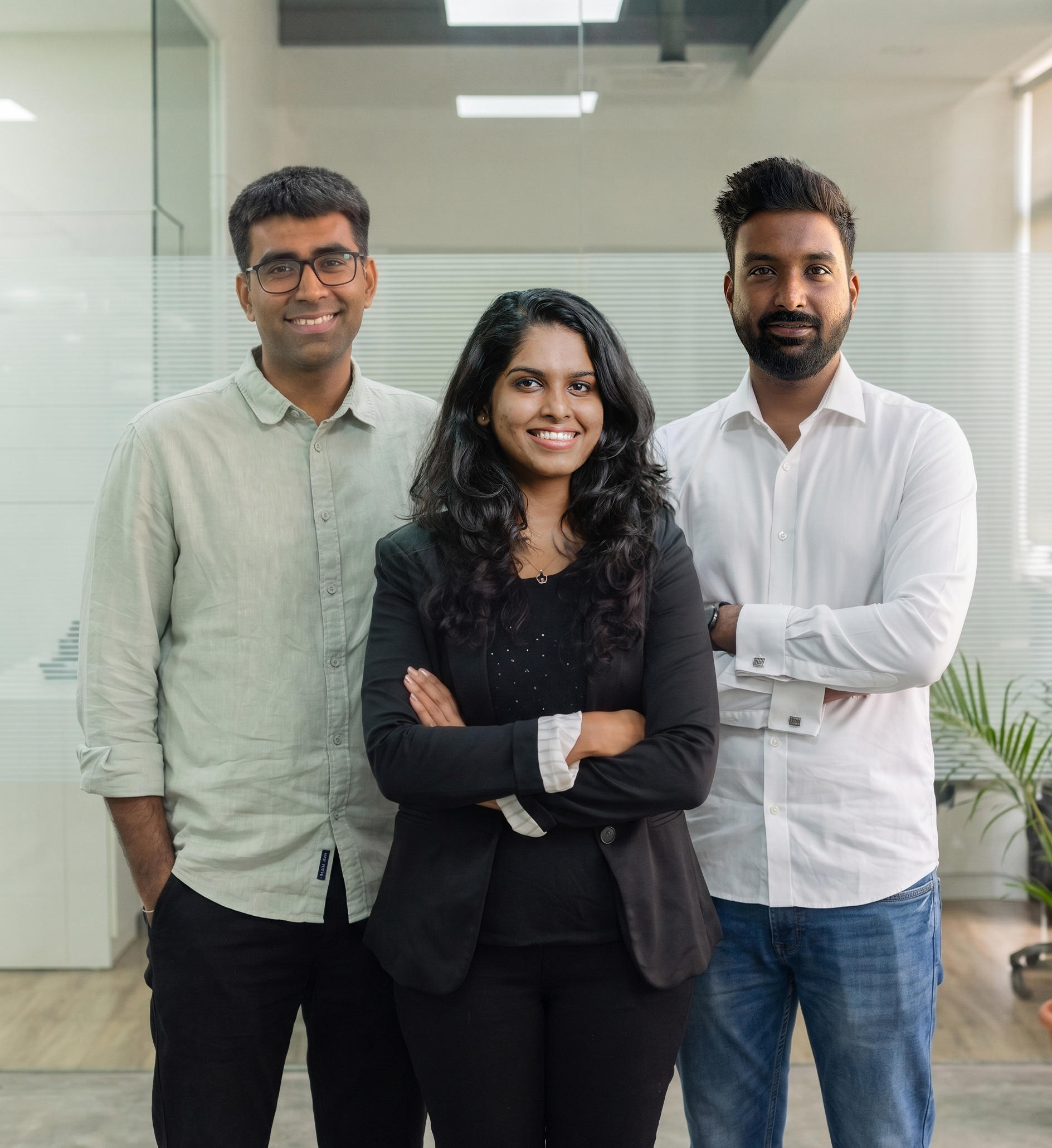
Founded in 2022 by Vinay Agastya, Ctruh is an AI, 3D, and XR company building browser-native tools for creating and deploying immersive content. Its core product stack runs on two rails: a proprietary no-code 3D engine and VersaAI, a generative AI platform that converts images, text, and video into production-ready 3D assets. Varindia
The key word is browser-native. This is not a marginal distinction. The conventional XR stack requires either a dedicated app download or an SDK integration — both of which create friction that kills conversion rates in commerce contexts. Ctruh's architecture eliminates the installation layer entirely.
On top of this engine sits Commverse Studio, which Ctruh describes as the world's first AI-powered unified XR commerce studio, enabling brands to deploy fully immersive 3D experiences in under 30 minutes. Varindia
Thirty minutes is a marketing number, not an engineering benchmark. But even if the real-world figure is two or three times that, it still collapses what has historically been a weeks-long 3D modeling and integration project. Ctruh serves industries including retail, e-commerce, real estate, automotive, education, and healthcare. That's a deliberately wide net — and for a 36-person team with fresh seed capital, it raises an obvious question about focus. Going deep in one vertical typically beats going broad at this stage. Varindia
The counterintuitive read, though, is that browser-native horizontal infrastructure benefits from vertical diversity. Every industry that ships an XR experience via Ctruh's engine is a stress test that a pure-play retail or real estate XR tool never gets. The data flywheel — render performance across device types, browser environments, user interaction patterns — gets richer faster.
The Numbers Behind the Thesis
Metric | Data |
|---|---|
Total seed raised | $2.5 million |
Enterprise customers (YTD) | 9 |
Revenue (current FY, YTD) | ₹2.2 crore (~$265K USD) |
Team size | 36 |
Founded | 2022 |
Headquarters | Bengaluru, India |
Ctruh is already demonstrating market traction, serving nine enterprise customers and generating ₹2.2 crore in year-to-date revenue for the current financial year. That's not explosive, but at seed stage for a deep-tech infrastructure play, it's credible. It demonstrates willingness to pay at the enterprise tier — which is the question most XR startups never answer before burning out. Ipventures
"While the AI space continues to get increasingly crowded, Ctruh is cutting through the noise with strong technical differentiation. Its patented 3D engine enables high-fidelity 4K, 8K, and even 16K experiences to run smoothly on the web with fast load times. What stands out is how they are combining AI with 3D and XR to scale immersive content creation — making these experiences not just cutting-edge, but usable and scalable for everyday business applications." — Vinay Bansal, CEO & Co-Founder, Inflection Point Ventures
The Broader Bet — and the Tension In It
The combined AR/VR/XR market is projected to reach anywhere from $85 billion to over $200 billion by 2030, with enterprise applications continuing to drive significant growth. Smart glasses shipments surged 110% year-over-year in the first half of 2025, with Meta holding over 70% market share, while VR training has demonstrated up to 78% better learning outcomes compared to traditional methods. TreeviewTreeview
What does that mean for Ctruh? The hardware wave is coming, but it's being led by Meta, Apple, and Samsung — platforms with billions in distribution leverage. The opportunity for a startup isn't to win the hardware race. It's to own the content creation layer. And that's precisely where Ctruh is positioning.
Vinay Agastya, Founder and CEO of Ctruh, cited data showing AR-enabled products drive up to 94% higher conversions according to Shopify research, and noted that IDC forecasts an 87% rebound in XR hardware in 2026, led by the Apple Vision Pro M5, Meta Quest, Samsung Moohan, and XREAL smart glasses. Viestories
Agastya put the Ctruh thesis plainly: "At Ctruh, our focus has always been to simplify technology for businesses by making advanced solutions more accessible. We are building an infrastructure for the upcoming generation of digital experiences, where our goal is to create spatial experiences for every business, regardless of size and scale."
The "regardless of size" line is doing heavy lifting. Democratisation claims are venture-narrative staples — but Ctruh's actual structural argument is different from most. Across 39+ XR companies operating globally, none currently unify no-code 3D creation, AI content generation, browser-native deployment, commerce integration, and analytics in a single platform, according to the company. That claim is audacious and worth interrogating — but Shopify's AR Commerce data and Snap's enterprise AR initiatives suggest the stack is fragmented enough that a horizontal unifier has genuine white space. Varindia
India's XR Moment — and Its Structural Disadvantage
Bengaluru's role here deserves direct attention. The city accounted for 32% of India's total startup funding in 2025, maintaining its lead as the country's largest startup hub. Inflection Point Ventures, Venture Catalysts, and Antler emerged as the top seed-stage investors in 2025 — a sign that early-stage deal flow in India is deep and competitive, even as late-stage capital remains more selective. Indian Startup NewsTracxn
What Bengaluru's ecosystem offers Ctruh is real: access to deep engineering talent, government-backed credibility (the company is an ELEVATE 2025 winner under Karnataka's startup programme), and a domestic market large enough to use as a testbed. What it doesn't offer is proximity to the enterprise procurement cycles in the US and UAE that will determine whether Ctruh crosses from promising deep-tech startup to durable SaaS business.
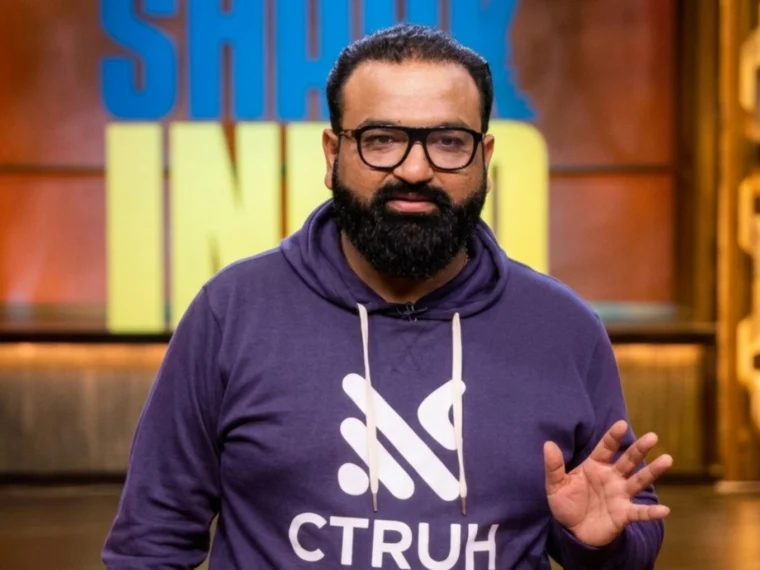
Ctruh appeared on Shark Tank India Season 5, Episode 13, receiving offers from Anupam Mittal and Vineeta Singh. The Shark Tank moment gives the company domestic visibility and a validation signal that cuts through noise in fundraising conversations. But it's a double-edged credibility marker when targeting enterprise buyers in Dubai or San Francisco — contexts where brand recognition and case study depth matter far more than reality TV appearances. Varindia
The US-UAE expansion, funded by this round, will be the true test. And it needs to happen quickly. The XR content creation space is not standing still.
Key Takeaways
The strategic bet: Ctruh's fundamental wager is that the value in the XR industry will accrue to the platform layer — whoever makes it fastest and cheapest to create and deploy immersive content — rather than to hardware or application verticals.
The technical moat: A patented, browser-native 3D engine capable of rendering 16K experiences without SDK installation is a genuine differentiator if it performs at scale. The moat deepens if VersaAI's asset generation quality compounds with usage data.
The execution risk: A 36-person team pursuing retail, real estate, automotive, healthcare, and education simultaneously across three geographies with $2.5M is aggressive. Prioritisation discipline will separate the promising seed story from a scaled business.
The market timing: IDC's projected 87% XR hardware rebound in 2026 means Ctruh has roughly 12-18 months to embed its platform before the next wave of hardware adoption creates switching costs that favour incumbents.
The investor signal: The presence of Exotel's Shivakumar Ganesan suggests informed confidence in enterprise GTM — not just technology. That's the right kind of smart money for this stage.
Ctruh is making a bet that's been made before in adjacent markets — that the complexity layer can be abstracted, that the enterprise buyer doesn't want a specialist, they want a workflow. Figma did it for design. Webflow did it for web development. Both looked like feature-limited toys to practitioners before they became the default.
Extended reality has been waiting for its Figma moment for years. The question is whether a 36-person startup in Bengaluru, armed with a patented engine, a generative AI pipeline, and $2.5 million in fresh capital, gets to be the one that finally delivers it — or whether a well-resourced incumbent absorbs the insight and the opportunity along with it.
StartupNews.fyi covers the global startup and tech ecosystem with an editorial focus on what founders and operators actually need to know. This article is based on verified public sources, official investor statements, and company disclosures.