The global semiconductor landscape is currently defined by a frantic, almost primal, grab for compute. While the world stares at Nvidia’s market cap, a quieter, more systemic shift is brewing in the "silicon orchards" of Bengaluru. Calligo Technologies, a high-performance computing (HPC) underdog, is currently in active discussions to raise $12 to $15 million in a Series A round that could define the next decade of Indian hardware.
This isn’t just another funding headline. It is a referendum on RISC-V—the open-standard instruction set architecture that promises to do to Intel and ARM what Linux did to proprietary operating systems.
The Tension: Sovereign Chips vs. Supply Chain Reality
Why does a $15 million round matter in an industry where fabrication plants cost billions? Because Calligo isn’t building the factory; they are building the brain. Their "Tunmbi" processor, an accelerator designed for AI and HPC workloads, is built on the RISC-V framework.
For the uninitiated, the geopolitical weight of this move cannot be overstated. Today, May 1, 2026, we find ourselves at a crossroads where the Indian government is aggressively pushing the India Semiconductor Mission (ISM). Regulatory tailwinds are strong, but the capital remains skittish. Deeptech in India has traditionally suffered from a "valuation ceiling," where investors used to quick SaaS returns balk at the seven-year gestation cycles of silicon design.
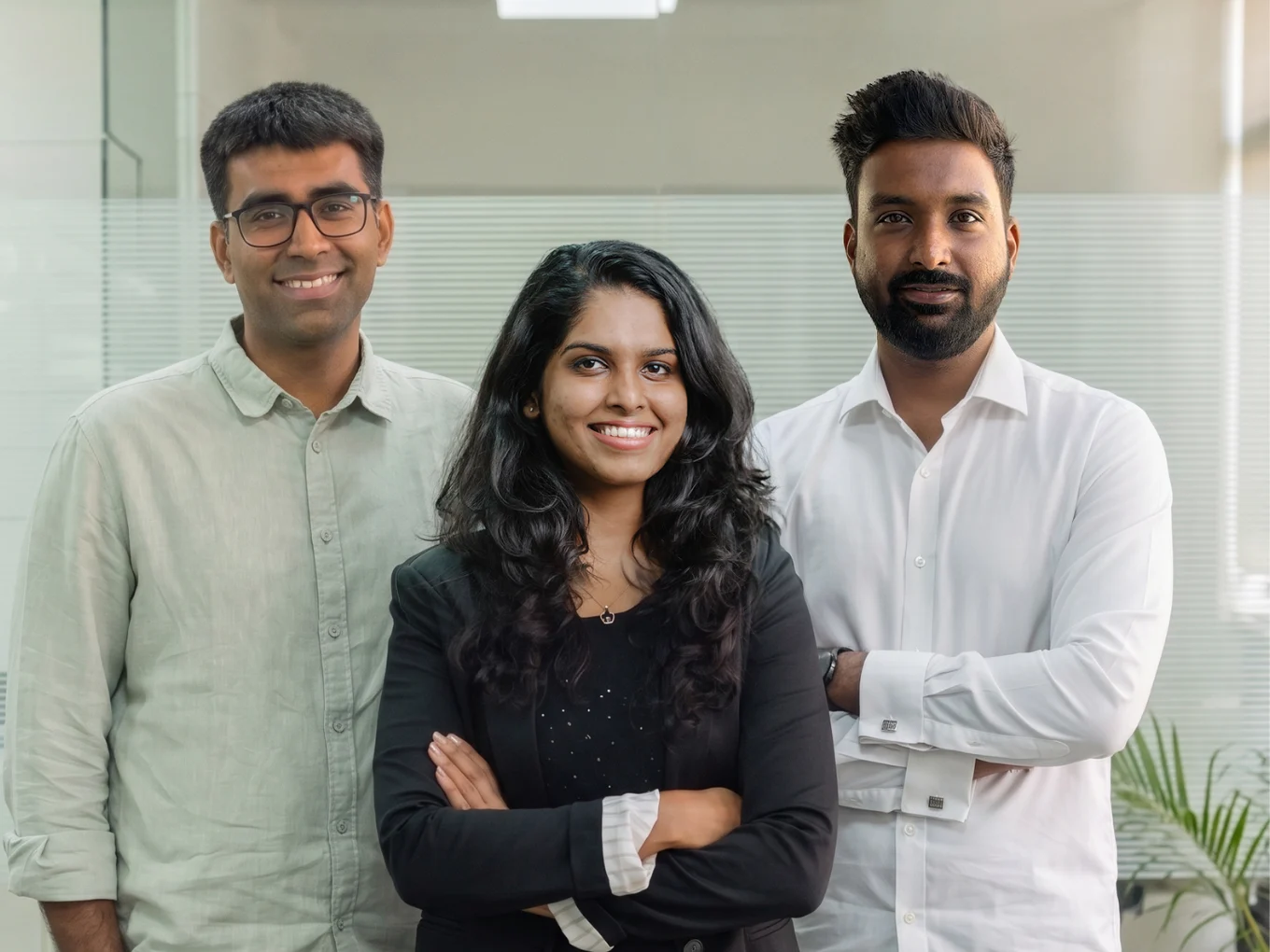
"We aren't just competing with other startups; we are competing with a legacy mindset that says high-end silicon can only be 'designed in California.' Our goal is to prove that the architecture of the future is open, and it's being coded in Karnataka." — A perspective often echoed by the Calligo leadership team.
The Numbers: A Lean Approach to Heavy Metal
In a rare moment of fiscal transparency within the ecosystem, the projected funding breakdown reveals a surgical approach to scaling. Unlike the bloated "growth-at-all-costs" rounds of 2021, this capital is earmarked for tape-outs and talent.
Metric | Target / Detail |
Target Raise | $12M - $15M |
Core Architecture | RISC-V (Open Standard) |
Primary Product | Tunmbi AI/HPC Accelerator |
Key Geography | India (HQ), Global Data Center Markets |
Incentive Alignment | MeitY Design Linked Incentive (DLI) |
The "Wired" Take: Is RISC-V Actually Ready?
Here is the counterintuitive observation: The biggest threat to Calligo isn't a lack of funding, but the sheer speed of AI model evolution. When you bake logic into silicon, you are making a multi-year bet on how software will behave. If Calligo optimizes for Transformers, and the industry shifts to a new architecture next year, that $15 million investment becomes a very expensive paperweight.
However, Calligo’s edge lies in its POSIT computing integration—a mathematical framework that promises higher accuracy with less bit-width. It’s a technical "flex" that suggests StartupNews.fyi isn't just watching a company, but a potential shift in how computational math is executed.
Can a startup from the Global South truly disrupt the ARM-Cortex hegemony?
The skepticism is valid. Most global VCs look at the Indian startup ecosystem and see a powerhouse of services and software-as-a-service. Hardware is the "final frontier." For Calligo to succeed, they must navigate a regulatory climate that is supportive on paper (via DLI schemes) but often bureaucratic in the execution of disbursements.
Key Takeaways for Founders and Operators
Vertical Integration is the New Horizontal: Calligo isn't just selling a chip; they are building a software stack around it. For deeptech founders, the lesson is clear: if the hardware is revolutionary, you must provide the bridge for developers to use it.
The RISC-V Advantage: By avoiding the heavy licensing fees associated with ARM, Calligo can theoretically offer better margins—a crucial metric as they approach global Tier-1 investors for their Series B.
Sovereign Narrative as a Moat: In an era of "de-risking" from certain geographies, being an "Indigenous Indian Chip" is a powerful sales pitch to both the Indian public sector and global firms looking for neutral hardware.
The Skeptic’s Corner: A Founder’s Perspective
If you’re a founder in the trenches, you know the funding environment for hardware is "arid" at best.
"The challenge with raising $15 million in this climate," one semiconductor veteran told us off the record, "is that it’s enough to get you to the starting line, but not enough to win the race. You’re up against Nvidia’s R&D budget, which is larger than the GDP of some small nations. You have to be 10x more efficient, or 10x more specialized."
Calligo is choosing specialization. By focusing on the HPC niche—think weather forecasting, bioinformatics, and complex financial modeling—they are avoiding a head-on collision with the consumer electronics giants.
What to Watch Next
As this funding round closes, there are three critical milestones to track:
The 5nm Leap: Will Calligo move to more advanced nodes? The cost of tape-outs at 5nm and below is astronomical. This Series A will likely fund the transition, but the execution risk is high.
Strategic Partnerships: Look for announcements involving C-DAC or global cloud providers. A chip without a "home" in a data center is a ghost.
The Talent War: Bengaluru is seeing an influx of "reverse brain drain" engineers returning from Silicon Valley. Calligo’s ability to poach senior architects from the likes of Intel India or Texas Instruments will be the true bellwether of their success.
Editorial Postscript: The Indian Silicon Dream
StartupNews.fyi has covered the rise of "India Stack" in software, but the "India Stack" in hardware is a different beast entirely. Calligo Technologies represents a bold, perhaps even audacious, attempt to move up the value chain.
Does the world need another chip designer?
If that designer can deliver POSIT-based accuracy on an open RISC-V architecture at a fraction of the power consumption of legacy chips, then the answer is a resounding yes. But let’s be clear-eyed: the path from "in talks to raise" to "deployed in the rack" is littered with the corpses of hardware startups that underestimated the moat of the incumbents.
For now, Calligo has the floor. The global venture community is watching, and for the first time in a long time, the most interesting conversation in silicon isn't happening in Santa Clara. It’s happening on the Outer Ring Road.