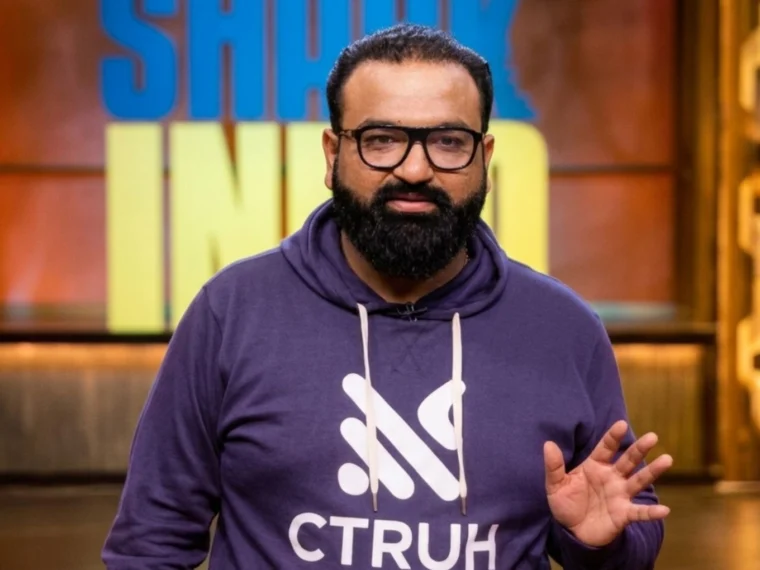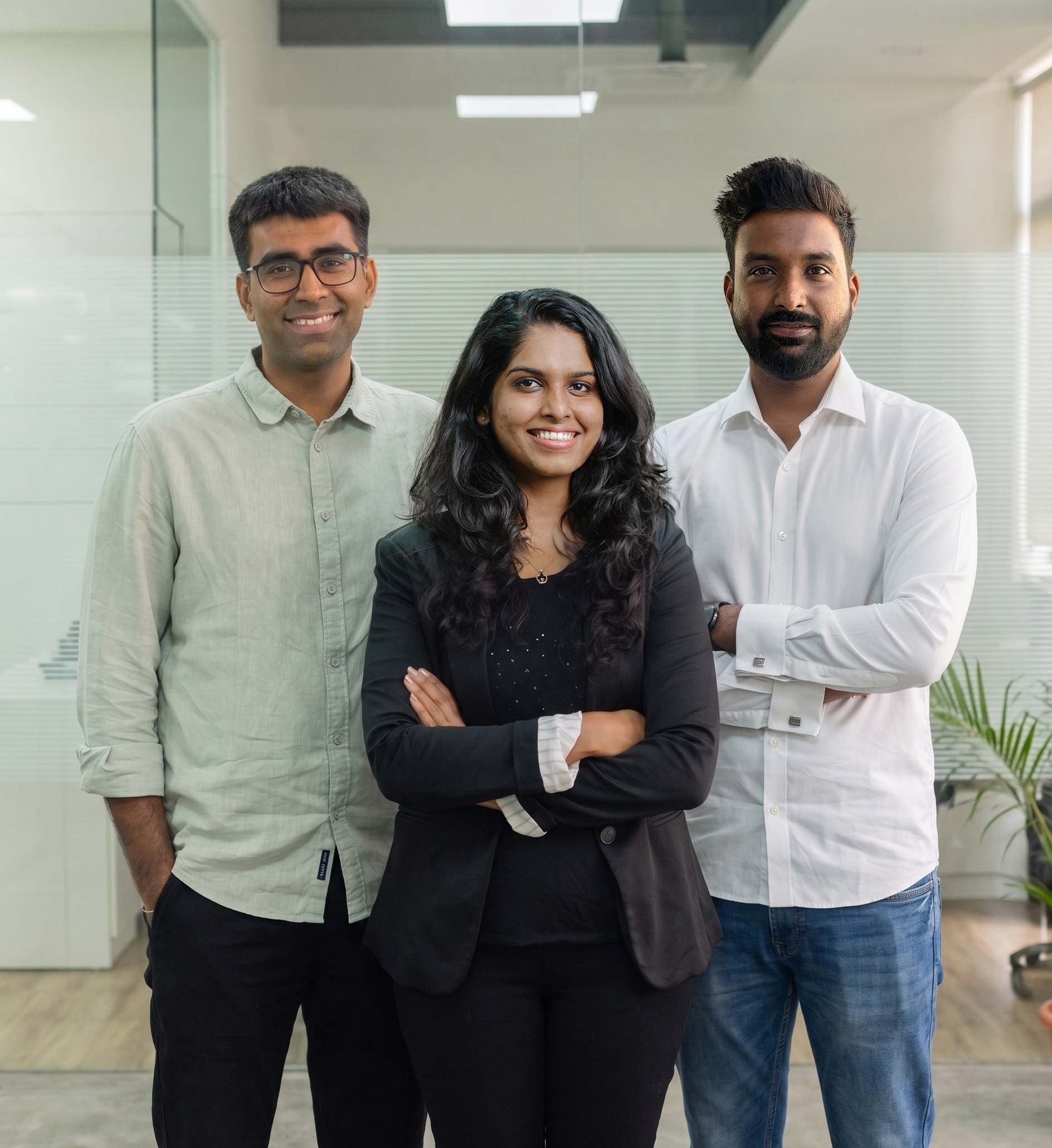
That last detail isn't filler. Aatrey and Barnwal built Meesho into one of India's most consequential commerce platforms by targeting a user cohort that incumbents ignored — Tier-2 and Tier-3 India. Their presence on the cap table suggests they see a similar structural bet here.
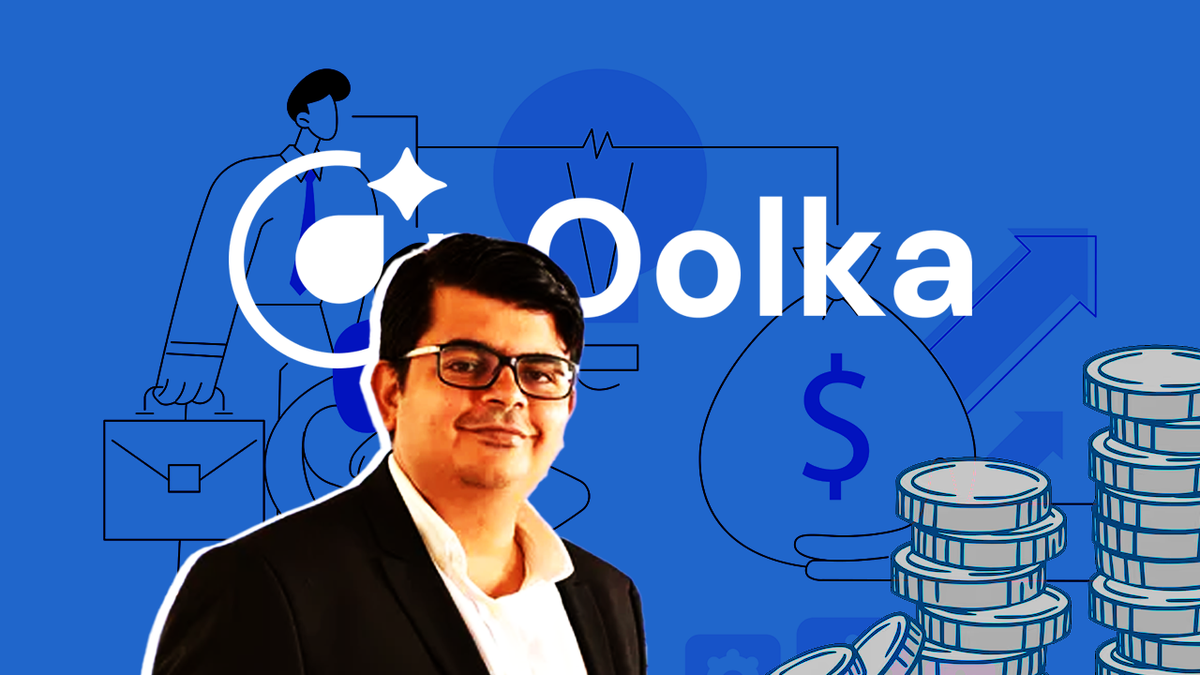
$14 million. $87.6 million valuation. 6 million registered users. $2.5 million ARR. Those are the numbers that matter going into this round.
Here's the thesis Oolka is built on, and it's more radical than it sounds: showing someone their credit score is almost entirely useless. Most credit apps — CRED, Paisabazaar, OneScore — have spent years building beautiful dashboards that tell users what their score is. Oolka's founder Utkrishta Kumar thinks that's roughly equivalent to a doctor telling a patient their blood pressure and then going home.
"We are currently looking at helping them to manage their savings and loan products better, the target is to help them save more rather than build investment products right away." — Utkrishta Kumar, Founder & CEO, Oolka
The distinction is subtle but commercially significant. Knowing you have a 620 CIBIL score doesn't get you a loan at a better rate. Disputing the incorrect derogatory mark that dragged your score down by 40 points might. Oolka's AI platform doesn't just surface credit scores — it detects discrepancies in credit reports, drafts and sends dispute emails on behalf of users, and supports negotiations for improved loan terms. That's the execution layer most credit apps don't touch. India Hood English
The company has partnerships with lenders including IDFC First Bank, DMI Finance, L&T Finance, DSP Finance, and InCred — a lending marketplace that gives it a commercial reason to actually improve users' creditworthiness, not just report on it. Better score, better loan offer, higher conversion, better take rate. The unit economics align in a way they don't for pure monitoring plays. Entrackr
The fresh capital will fund the growth of product and engineering teams, development of AI tools for credit score improvement, and expansion of the lending partner network so customers have more options for credit access. Viestories
India's credit problem is structural, not cosmetic. This is where the market context matters more than the funding announcement.
India has an estimated credit gap of approximately $240–300 billion, with over 71 million MSMEs — yet less than 11% of them have access to formal credit. That gap exists partly because formal credit scores don't exist for hundreds of millions of Indians, and partly because the scores that do exist are riddled with errors that borrowers have no practical mechanism to fix. MarkNtel Advisors
Fintech-led digital lending in India grew at a 35% CAGR in 2024, driven by rising credit demand, according to a QED Investors and BCG report. But growth in lending volume doesn't automatically translate to better outcomes for borrowers — especially first-time credit users who don't know how to manage their credit profile, let alone dispute errors on it. DD News
India's fintech market is projected to reach $990 billion by 2032, growing at a 30.26% CAGR. That headline number understates the complexity. The real growth is happening at the intersection of digital public infrastructure — Aadhaar, UPI, the Account Aggregator framework — and consumer-facing platforms sophisticated enough to convert data access into financial outcomes. Oolka is betting it can own that conversion layer. GlobeNewswire
The global comparison is instructive. In the United States, Credit Karma built a $7 billion business on credit monitoring and marketplace lending. But Credit Karma's model works in a market where consumers are already credit-literate and disputing errors is a familiar, if tedious, process. India's credit market is younger, less literate, and has far more error-prone bureau data — which is simultaneously a bigger problem and a bigger opportunity. The value of fixing a bad entry in an Indian credit file may be higher than anywhere else, precisely because the market is less efficient.
Oolka's closest direct competitor is GoodScore. GoodScore raised $13 million in a round led by Peak XV in October last year, and the two companies are running nearly parallel playbooks — AI-led credit improvement, personalised guidance, similar fundraising timelines. That convergence is either a sign the market is real or a sign both companies are about to fight over the same early adopter cohort before the mass market catches up. Possibly both. Entrackr
Three things to watch:
Whether Oolka's freemium model holds at scale. The company offers a free tier for basic credit monitoring and a paid "Oolka AI Plus" tier for active management. In FY25, Oolka reported revenue of just ₹5.52 lakh against a loss of ₹5.58 crore — which is entirely normal for a company at seed stage, but the pressure to convert free users to paying ones will intensify as the team grows and burn scales with it. Bharat Fast
Regulatory tolerance for AI-driven dispute filing. Automating dispute emails on behalf of users sits in an interesting regulatory grey zone. India's credit bureau framework wasn't designed with AI agents in mind. If the RBI tightens guidelines around automated consumer interactions with bureaus, that's a direct product risk.
Whether the lending marketplace margin can subsidise the credit improvement product. The smart play here is using loan origination commissions to fund free or low-cost credit remediation — effectively subsidising borrower improvement in exchange for downstream distribution. That flywheel either compounds quickly or collapses if lender appetite softens.
Here's the contrarian point worth making: six million registered users sounds impressive until you ask what "registered" actually means in Indian fintech. Downloads, sign-ups, and active engaged users are three very different numbers, and the gap between the first and the third in this segment is often embarrassingly large. Funding in India's fintech sector has declined from $3.1 billion in H1 2021 to $1.5 billion in H1 2025, and investors have gotten significantly more careful about the difference between growth and stickiness. Oolka will need to show that its users are actually engaging with the dispute and credit improvement features — not just checking their score once and going dormant. KPMG
That said, the product has a natural engagement hook that pure monitoring apps don't: if the AI actually files a dispute that gets resolved and your score goes up, you come back. That's a feedback loop most credit apps have never had.
Mature sub-sectors like lending and payments now account for nearly 60% of total fintech funding in India, and investors are increasingly looking for proof of unit economics before writing bigger cheques. Accel leading this round, with Lightspeed and Z47 following on, suggests Oolka has started showing some of that proof — even if the FY25 revenue number looks thin at face value. KPMG
The $14 million buys time to prove the core loop: identify a credit problem, fix it automatically, facilitate a better loan, capture a margin on the origination. If that works at scale, Oolka isn't a credit monitoring app. It's infrastructure for a financially underserved population that's about to enter the credit system for the first time — and that's a very different company with a very different ceiling.