Lightspeed's multi-billion bet on European defense AI firm Helsing signals a new era for venture capital, Silicon Valley, and global security.
Lightspeed's Multi-Billion Bet on Defense AI Signals a New Era for Silicon Valley and Global Security
A quiet revolution is brewing in the world of venture capital, and it just got a whole lot louder. Lightspeed Venture Partners, a firm known for backing consumer tech darlings and enterprise software giants, has thrown its considerable weight behind Helsing, a European artificial intelligence startup focused on defense. The move isn't just another big tech investment; it reportedly values the nascent defense AI company at an eye-watering $18 billion, a figure that sends a clear message: the future of national security is increasingly being forged in the labs of deep tech startups, not just traditional arms manufacturers.
This isn't merely a financial transaction; it's a strategic pivot for a major investor and a powerful signal to the global market. The valuation alone places Helsing in an elite tier, signaling Lightspeed's conviction that AI is not just optimizing business operations but is fundamentally reshaping the geopolitical landscape and the very nature of warfare. For everyday citizens, this shift means that the technology protecting their nations might soon be developed by companies previously associated with apps and cloud services, rather than Lockheed Martin or BAE Systems.
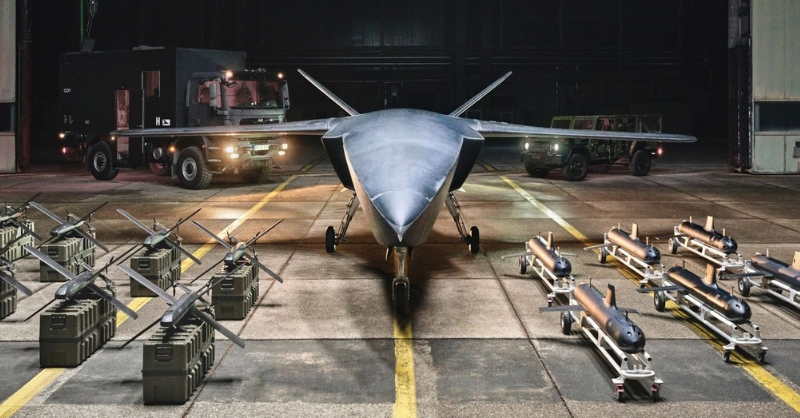
Helsing, headquartered in Germany and with offices in the UK and France, specializes in delivering AI-driven insights to military operations. Its core technology aims to process vast amounts of sensor data—from drones, satellites, and ground systems—in real-time, providing commanders with a clearer, faster understanding of the battlefield. This could range from identifying enemy movements to optimizing resource deployment, essentially giving defense forces a significant data-driven edge in complex environments. The company has already secured contracts with European governments, including a notable partnership to develop AI capabilities for Germany's Future Combat Air System (FCAS).
The reported $18 billion valuation for a company founded just a few years ago is striking, even in today's inflated tech market. While specific details of Lightspeed's investment round and its exact share are not publicly disclosed, such a valuation underscores the intense demand for advanced defense capabilities in a world grappling with persistent geopolitical tensions. It also highlights a growing trend where venture capital, traditionally risk-averse in the defense sector due to long sales cycles and bureaucratic hurdles, is now actively seeking out startups that can deliver rapid, transformative technological solutions to pressing national security challenges.
Lightspeed's involvement is particularly noteworthy given its traditional portfolio, which includes household names like Snapchat and Nest. While the firm has a strong track record in enterprise and deep tech, this significant foray into pure-play defense AI marks a pronounced strategic shift. It indicates a recognition that software and data intelligence are becoming as critical, if not more so, than traditional hardware in modern conflict. This investment is not an isolated incident but rather part of a broader re-evaluation within Silicon Valley and global venture capital regarding the role and opportunity in defense technology.
Why Silicon Valley is Pivoting to Defense
The dramatic turn by Lightspeed and other prominent venture capital firms towards defense tech is not happening in a vacuum. It is a direct response to a confluence of factors, primarily the escalating geopolitical instability witnessed globally, from the war in Ukraine to tensions in the Indo-Pacific. Governments worldwide are rapidly increasing their defense budgets and, crucially, are looking for innovative solutions that can be developed and deployed much faster than traditional defense contractors can manage. This urgency has created a fertile ground for agile, tech-first startups.
For decades, the defense industry was largely the domain of a few massive, established players. Innovation was often slow, driven by lengthy procurement cycles and complex regulatory frameworks. However, the nature of warfare has evolved, emphasizing speed, data superiority, and precision. Technologies like artificial intelligence, advanced robotics, cyber warfare, and autonomous systems are no longer futuristic concepts but immediate operational necessities. This shift has opened a massive opportunity for startups that can leverage cutting-edge commercial technologies and adapt them for military applications, often referred to as "dual-use" technologies.
Companies like Anduril Industries, founded by Oculus co-founder Palmer Luckey, and Shield AI in the US, have already paved the way, attracting billions in venture capital by demonstrating how commercially developed AI and autonomous systems can provide a significant advantage to defense forces. Anduril, for example, develops AI-powered autonomous sentry towers and drones, while Shield AI focuses on AI pilots for military aircraft. These companies, much like Helsing, are bypassing the traditional, slow-moving defense acquisition process by offering sophisticated, off-the-shelf, and rapidly deployable solutions that promise to enhance situational awareness, decision-making, and operational effectiveness for military personnel.
The appeal for venture capitalists is clear: a massive, largely untapped market with committed government spending, coupled with the potential for high-impact, transformative technology. While the ethical considerations of AI in warfare are significant and ongoing—debates around autonomous weapons systems and the "human in the loop" are critical—the perceived necessity for these technologies by democratic nations is driving significant investment. Firms like Lightspeed are betting that the strategic imperative to maintain a technological edge will outweigh many of these concerns, or at least drive the development of ethically robust AI systems within a framework of democratic values, as Helsing often emphasizes.
What Happens Next
The influx of venture capital into defense AI startups like Helsing marks a profound shift that will likely accelerate in the coming years. We can expect to see more established tech investors, who previously shied away from the defense sector, begin to explore opportunities. This means increased competition for talent, as these startups will vie with traditional tech giants and established defense contractors for engineers, data scientists, and AI specialists. It also implies a rapid evolution in military capabilities, as governments around the world race to integrate these new technologies into their defense strategies.
For the defense industry itself, this means a likely period of disruption. Traditional contractors will face increased pressure to innovate faster, potentially through acquisitions of these agile startups or by developing their own advanced AI capabilities in-house. We may also see new models of collaboration emerge between Silicon Valley and the Pentagon, or its European equivalents, aimed at streamlining procurement and fostering a more dynamic innovation ecosystem. The long-term implications are vast, touching upon global power balances, the ethics of warfare, and the very nature of national sovereignty in an increasingly interconnected and technologically advanced world.
As Helsing continues to expand its footprint in Europe, and as companies like Anduril and Shield AI deepen their ties with the US military, the global defense landscape will become increasingly shaped by dual-use technologies. The success of these ventures will likely be measured not just in financial returns but in their ability to deliver tangible, impactful improvements to national security and defense operations. This new era of defense tech, fueled by significant venture capital, underscores a critical realization: technological superiority is no longer a luxury, but a necessity, and the race to achieve it is well underway, with AI at its very core.
Frequently asked questions
What is Helsing and who recently invested in them?
Helsing is a European artificial intelligence startup focused on defense technology. Lightspeed Venture Partners, a prominent venture capital firm, recently backed Helsing with a significant investment, valuing the company at $1.8 billion.
What does Lightspeed's investment in Helsing signify?
Lightspeed's investment in Helsing indicates a growing trend among Silicon Valley venture capital firms to back defense and dual-use technology companies, signaling a new era for global security and tech investment.
What is the valuation of Helsing after Lightspeed's backing?
After Lightspeed's investment, the European defense AI startup Helsing is valued at $1.8 billion.
Which venture capital firm backed Helsing?
Lightspeed Venture Partners, known for backing various tech companies, provided the recent backing for Helsing.
Is defense AI a new focus for venture capital?
While not entirely new, the scale of Lightspeed's investment in Helsing suggests a significant and accelerating shift towards defense AI and national security tech as a key investment area for venture capital.
Where is Helsing primarily based?
Helsing is primarily a European artificial intelligence startup, indicating its roots and operational focus in the European tech landscape.