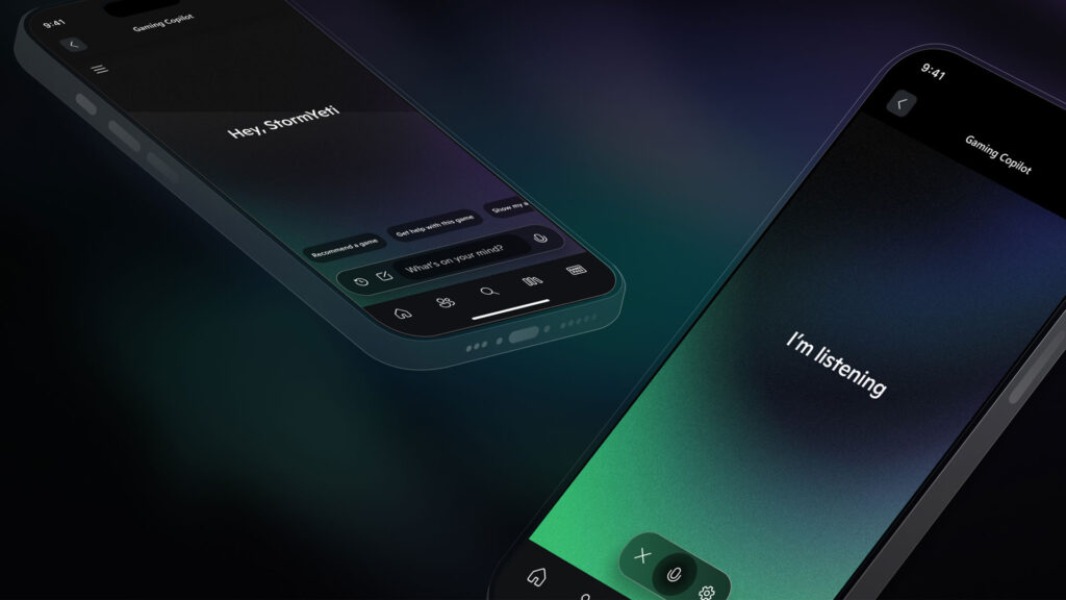
In March 2025, Microsoft took the stage at the Game Developers Conference and told the world that Gaming Copilot was the future of Xbox. An AI sidekick. Context-aware. Voice-activated. Aware of what you were playing and ready to coach you through the hard parts. The audience was polite. Players were skeptical. Gaming writer Thomas Wilde published a piece on GeekWire the same month calling it "a solution looking for a problem." He was right.
On Tuesday, May 5, 2026, new Xbox CEO Asha Sharma announced that Microsoft will begin winding down Copilot on mobile and will stop development of Copilot on console. The announcement — made via a post on X rather than a formal press release, which tells you something about the tone Sharma is setting — framed the decision as part of a broader strategic realignment. Microsoft retires Xbox Copilot AI assistant on mobile barely a year after its beta launch, ending one of the more visible and expensive experiments in consumer-facing AI integration this console generation.
The lifespan, from GDC announcement to cancellation, was approximately 14 months.
The Feature Nobody Asked For, the Platform That Desperately Needs Fixing
Understanding why Gaming Copilot failed requires understanding what it was actually trying to do — and for whom. Gaming Copilot was available in the Xbox mobile app, on Game Bar for Windows 11, and on the ROG Xbox Ally handhelds. Players could ask context-aware questions about the games they were playing, get coaching through difficult sections, receive game recommendations based on play history, and query their achievements and subscriptions.
On paper, that's a reasonable feature set. In practice, it crashed into a set of real problems that the GDC demo never had to confront. The feature drew skepticism from the start, with gaming writer Thomas Wilde raising concerns about the feature pulling guide content from the open internet without attribution, writing that Gaming Copilot was "eating its own seed corn" by undermining the ecosystem of online guides it depended on. That's a structural critique, not a UX complaint. An AI assistant for gaming that scrapes walkthroughs and FAQs without crediting the communities that produced them doesn't build trust with players — it erodes it.
Microsoft first unveiled Copilot for Gaming at the Game Developers Conference in March 2025, pitching it as an AI sidekick that could offer gameplay tips, coaching, and recaps of where players left off. A beta launched on the Xbox mobile and PC apps and later on the ROG Xbox Ally handheld. The console rollout — which was supposed to be the real proof-of-concept — never happened. The hardware constraint problem was real: making an AI assistant run without impacting frame rates or input latency on fixed-spec console silicon is a genuinely hard engineering problem, and Microsoft clearly hadn't solved it to a satisfying standard before the leadership change forced the question.
What Sharma's cancellation notice did was name the actual problem out loud: "Xbox needs to move faster, deepen our connection with the community, and address friction for both players and developers." That's not the language you use about a feature. That's the language you use about a division that has lost its sense of what it's for.
"The Gaming Copilot situation is a case study in what happens when a platform company treats AI as a surface feature rather than a structural capability. If the underlying business isn't growing — if players aren't choosing your platform — adding a chatbot doesn't change the calculus. It just creates a new point of friction. Sharma killing it quickly is the correct move. The question is what she replaces it with, and whether the community believes it."
— A senior product executive at a major European games publisher, speaking on background ahead of a platform partnership announcement
The Numbers That Made This Inevitable
Sharma didn't kill Gaming Copilot because it was unpopular. She killed it because Xbox is a business under genuine financial stress, and the feature wasn't pulling its weight against a backdrop that demands results.
Xbox gaming revenue decreased 6.6 percent from $5.72 billion in the same quarter a year ago to $5.34 billion. Xbox hardware revenue dropped 33 percent year-on-year due to a lower number of consoles sold. That's not a blip. Hardware revenue tumbled by 32 percent in Q2, and gaming revenue decreased by nine percent year-on-year — the fourth major round of redundancies made by Microsoft since its $68.7 billion merger with Activision Blizzard resulted in multiple game cancellations, the dissolution of publishing partnerships, and studio closures.
Xbox's holiday 2025 revenue dropped over $600 million to $5.96 billion. Microsoft's CFO Amy Hood revealed that Xbox had an impairment charge during the period — a write-down of gaming assets that suggests parts of the gaming portfolio aren't performing as expected.
The context here is brutal. Microsoft spent $75 billion acquiring Activision Blizzard in 2023. Three years later, it's writing down gaming assets and watching hardware revenue contract in double digits quarter after quarter. In Japan, where Xbox has historically held a single-digit market share against Sony's PlayStation dominance, the hardware declines are structural. In Europe, where Game Pass has been the primary value proposition for Xbox, the recent price hikes risk accelerating churn at exactly the moment retention matters most. The global competitive picture is unforgiving.
Against that backdrop, assigning engineering resources to a voice chatbot that most players weren't using was indefensible — and Sharma knew it.
The Leadership Overhaul Is the Bigger Story
The Copilot cancellation is the headline. The management restructuring is the substance.
Asha Sharma succeeded Phil Spencer on February 23, 2026. Previously, Sharma served as President of Microsoft's CoreAI product. In a statement following her appointment, Sharma promised to "recommit to our core Xbox fans and players" and "not chase short-term efficiency or flood our ecosystem with soulless AI slop."
That last phrase — "soulless AI slop" — was her first signal. This week's leadership changes are her second.
Four executives from CoreAI are joining Xbox. Jared Palmer, formerly a CoreAI vice president and GitHub senior vice president, joins Xbox as a member of technical staff to work on product, engineering, developer tools, and infrastructure. Tim Allen, who led design and research at CoreAI and GitHub, takes over Xbox design. Jonathan McKay, previously head of growth for ChatGPT at OpenAI, becomes Xbox's head of growth. Evan Chaki, a CoreAI general manager, will lead a forward-deployed engineering team focused on removing repetitive work and simplifying development.
Crucially, two veteran Microsoft executives are departing. Kevin Gammill, corporate vice president for Xbox user experience, game development, and publishing platforms, is leaving. Roanne Sones, corporate vice president for Xbox devices and ecosystem, is taking a leave of absence before moving into an advisory role. Both spent 24 years at Microsoft.
Twenty-four years each. The institutional knowledge walking out the door is significant — but so is the signal Sharma is sending by replacing them with CoreAI alumni who understand platform product development at scale. This isn't a pivot away from technology. It's a pivot toward technology that actually creates value for players, rather than technology that demonstrates Microsoft is doing AI.
The counterargument deserves stating plainly: bringing four CoreAI leaders into a gaming division that just killed its most visible AI product creates an obvious tension. The gaming community will be watching to see whether these hires represent a genuine commitment to infrastructure and developer tooling — or whether they're just the advance guard of the next wave of AI features that nobody asked for. Sharma promised not to flood the ecosystem with AI. Her new hires will be the test of whether that promise holds.
What the "Refocus" Actually Means
Sharma described refocusing Xbox's AI efforts around "player problems like enhancing real-time graphics, improving discovery and deepening personalization." Those hires and her decision to retire Copilot suggests that AI might not be a big part of the public-facing products Xbox offers, but it could be integrated into how the division is run and the tools it offers to developers.
That distinction is important. There's a version of AI in gaming that players never see — better matchmaking algorithms, more responsive game recommendation engines, internal QA tools, developer tooling that reduces the cost and time of shipping games. That's the infrastructure play. It's less visible than a chatbot. It's harder to demo at GDC. And it's almost certainly more valuable to the long-term health of the platform.
Sharma has already cut Game Pass prices, signaling she understands the value-per-subscriber problem. She's adopted daily active players as Xbox's new internal success metric — a shift away from revenue-first thinking toward engagement-first thinking that mirrors how successful consumer platforms have historically grown. The Copilot cancellation is consistent with that framework: if it doesn't increase daily active players, it doesn't earn its resources.
Sharma's post did not address the status of the Copilot beta on the Xbox PC app or the ROG Xbox Ally handheld — which leaves open the question of whether some version of gaming AI assistance survives in a narrower form. The PC gaming audience, in particular, has a different relationship with overlay tools and gameplay assistance than console players. A version of Gaming Copilot that stays on PC and the ROG Ally, where the technical constraints are looser and the user behavior is different, might still have a future.
Microsoft Retires Xbox Copilot AI Assistant on Mobile at a moment when the rest of the company is going in exactly the opposite direction — Azure AI is growing at 34% annually, GitHub Copilot has become one of Microsoft's most successful developer tools, and Satya Nadella is betting the entire corporate strategy on AI infrastructure. The apparent contradiction resolves when you understand what Sharma is actually saying: AI embedded in a gaming platform should make gaming better, not demonstrate that gaming has AI. The question she now has to answer — with a new leadership team, declining hardware revenues, and a community that has been burned by broken promises — is whether Xbox can still make gaming better at all.
Key Takeaways
The 14-month lifecycle from announcement to cancellation is a warning for every platform company. Gaming Copilot was announced before it was ready, beta-launched before the use case was validated, and cancelled before it reached the product it was actually meant to be: a console feature. Shipping beta AI features to manage a narrative is not a strategy.
Sharma's leadership changes are more significant than the Copilot cancellation. Four CoreAI executives joining Xbox — including Jonathan McKay, previously head of growth for ChatGPT at OpenAI — signals a shift toward platform and infrastructure thinking over consumer-facing AI features. The proof will be in what they build, not what they killed.
The financial context makes everything more urgent. Xbox gaming revenue down 6.6% year-on-year and hardware revenue down 33% means Sharma does not have the luxury of multi-year feature experiments. Every resource allocation is a tradeoff against a business that needs to stabilize.
"AI for developers" is the remaining bet. If Xbox redirects its AI investment toward tools that help studios ship better games faster — reducing development cost, improving QA, enabling smaller teams — that's a defensible strategic position. It's less visible than a consumer chatbot. It's the right call.
The global market pressure is structural, not cyclical. Sony's PlayStation dominance in Japan and Western Europe, Nintendo's hardware resilience, and the rise of cloud gaming alternatives mean Xbox's platform challenges won't be solved by any single feature decision. Sharma is trying to stabilize a division while the broader market continues to apply pressure from every direction.