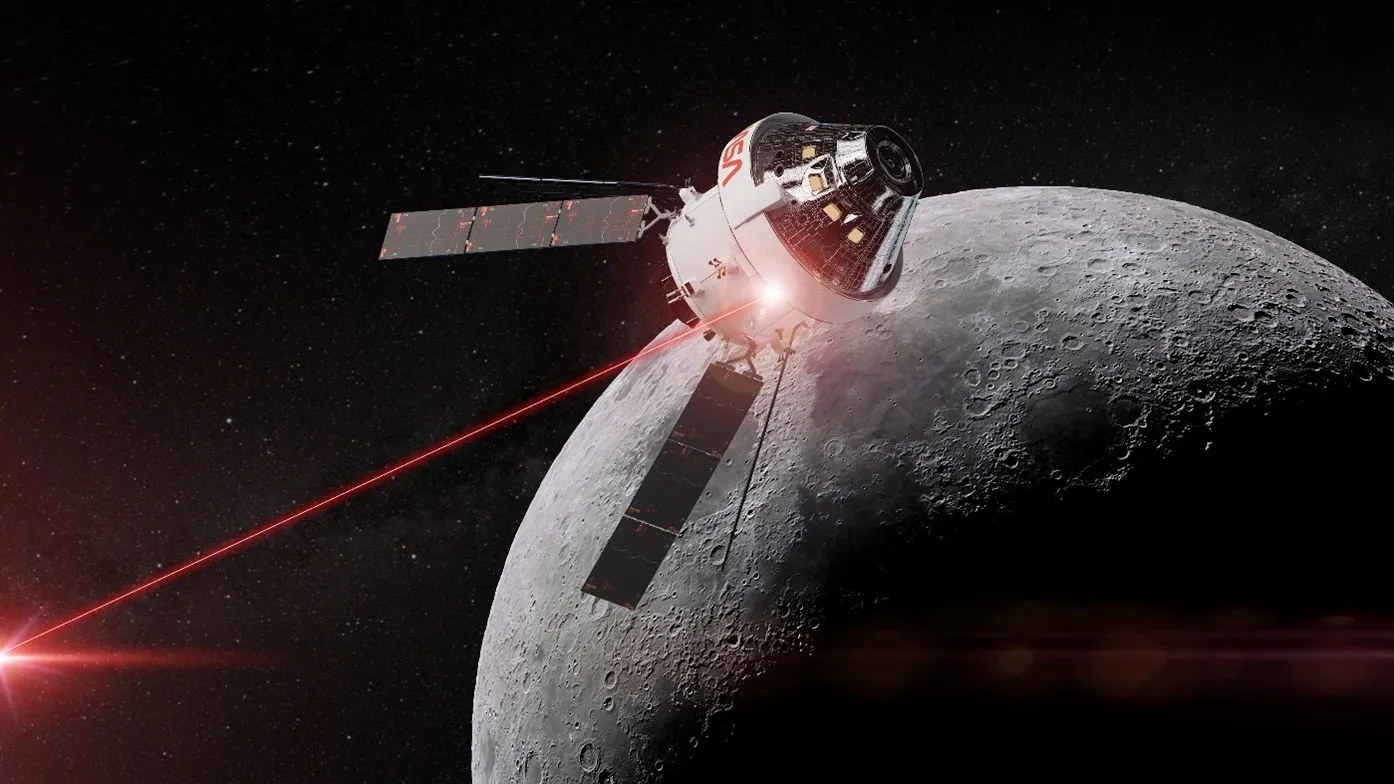
From Radio Waves to Photons
For decades, space missions have relied on radio frequency (RF) communications. While dependable, RF systems face bandwidth limits and spectrum congestion.
Laser, or optical, communications use infrared light to transmit data. These systems can carry significantly more information per second while using narrower beams, improving efficiency.
Artemis II testing suggests that high-data-rate links — including high-definition imagery and scientific telemetry — can be transmitted across lunar distances without degradation.
Scaling that capability is critical as missions become more data-intensive.
Why Scale Matters
Demonstrations are one thing. Operational reliability is another.
The Artemis II validation indicates that optical links can maintain performance consistency across varying atmospheric and orbital conditions. That reliability is essential for crewed missions, where communications serve not only science but safety.
Future lunar habitats, autonomous rovers and Gateway modules will generate far more data than legacy missions.
Laser communications provide the throughput to support that ecosystem.
Deep Space Ambitions
Optical communications are particularly relevant for missions beyond the Moon.
As NASA plans for Mars expeditions and sustained lunar presence, data demands will multiply. High-resolution mapping, real-time diagnostics and AI-assisted operations all require expanded bandwidth.
By proving scalability in lunar orbit scenarios, Artemis II helps de-risk deployment for interplanetary missions.
Commercial and Defense Implications
NASA’s progress also intersects with commercial space and defense interests.
Private satellite operators and national space agencies are exploring optical links for Earth-orbit constellations. Laser systems reduce interference and enhance security due to narrow beam transmission.
Demonstrated scalability strengthens the technology’s credibility across sectors.
Infrastructure Shift in Orbit
Optical ground stations will need expansion to support routine laser communication traffic. Weather conditions, cloud cover and atmospheric distortion can affect performance, requiring distributed global infrastructure.
NASA’s Artemis-linked testing contributes to broader standards development in space communications architecture.
What It Signals
Artemis II represents more than a symbolic return to crewed lunar missions.
It validates foundational technologies that underpin sustained human presence beyond Earth.
By showing that space-to-Earth laser communications can scale, NASA moves closer to a future where data is no longer a bottleneck in deep-space exploration.
As missions grow more complex, photons — not radio waves — may become the primary bridge between Earth and the cosmos.