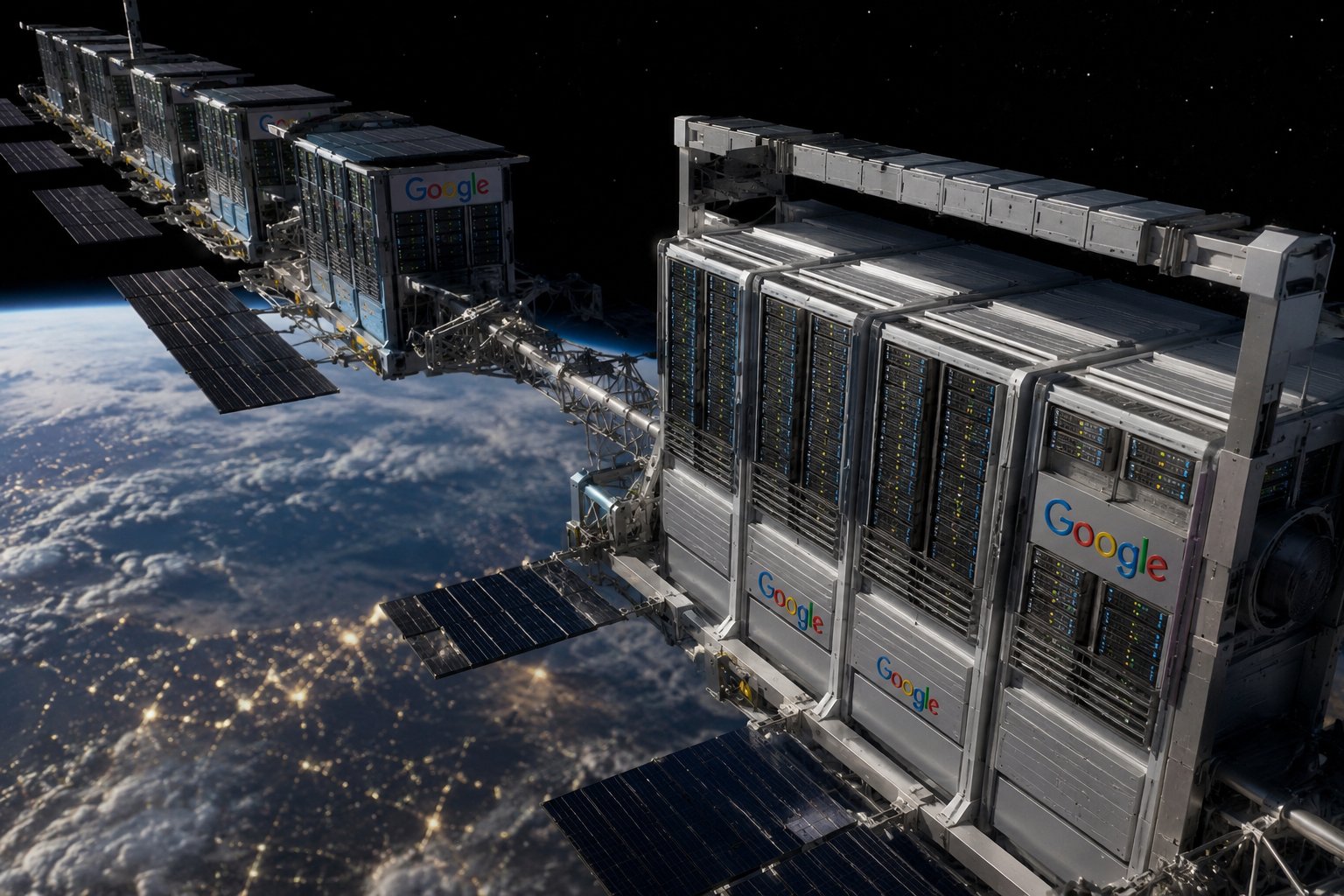
Google and SpaceX are discussing groundbreaking orbital data centers to reduce latency, boost cloud services, and transform data delivery in South and Southeast Asia.
Google is reportedly in advanced discussions with SpaceX to develop and deploy orbital data centers.
This initiative aims to significantly reduce data latency and enhance cloud service delivery, particularly across South and Southeast Asia.
Google and SpaceX are reportedly in advanced discussions to establish a network of orbital data centers, a groundbreaking move that could redefine cloud computing infrastructure globally, potentially involving billions of USD in investment. This ambitious collaboration seeks to leverage SpaceX's launch capabilities, fundamentally altering the landscape for hyperscale cloud providers. The initiative signals a bold play to extend Google Cloud's reach, particularly across underserved and rapidly growing digital markets in South and Southeast Asia. This strategic pivot comes as hyperscale cloud providers intensify their competition for market share in regions like India, Indonesia, and Vietnam, where digital transformation is accelerating rapidly. By housing data processing capabilities in low Earth orbit (LEO), Google aims to drastically reduce latency and improve data sovereignty for regional clients, bypassing traditional terrestrial infrastructure limitations. The long-term vision includes a distributed network enhancing resilience against terrestrial outages and natural disasters, offering a significant competitive edge in critical sectors.
The Bigger Picture: Reshaping Asia's Digital Landscape
Low Latency Imperative for Asia For rapidly digitizing economies in South and Southeast Asia, low latency is critical for emerging sectors such as fintech, online gaming, and AI-driven services. Reducing data transmission times from orbital data centers could unlock new levels of performance for real-time applications and complex computational tasks across vast geographical areas.
Hyperscale Cloud Market Growth The cloud market in Asia Pacific, including SEA and South Asia, is projected to grow significantly, with countries like India alone expected to see cloud spending reach tens of billions of USD by the mid-2020s. This orbital strategy could allow Google to capture a larger share by offering unparalleled performance and reliability, appealing to enterprises navigating complex regulatory environments.
Space-Based Infrastructure Advantage Deploying data centers in orbit offers direct line-of-sight communication with ground stations, bypassing extensive terrestrial fiber networks and reducing physical infrastructure vulnerability. This could lead to a more resilient and globally uniform cloud experience, particularly beneficial for countries with challenging topographies or developing infrastructure in the Indo-Pacific region.
The potential Google-Spacex synergy could fundamentally redefine digital access and cloud computing paradigms across South and Southeast Asia, demanding close observation from regional enterprises and policymakers. Future developments will reveal the operational feasibility, regulatory challenges, and environmental impact of this extraterrestrial expansion.
Frequently asked questions
What are Google and SpaceX discussing?
Google and SpaceX are reportedly in advanced discussions to develop and deploy a network of orbital data centers. This ambitious project aims to host cloud computing infrastructure in space, significantly reducing data latency and improving service delivery, especially in underserved regions.
What is the main goal of orbital data centers?
The primary goal is to significantly reduce data latency and enhance the speed and reliability of cloud service delivery globally, with a specific focus on South and Southeast Asia.
How will this initiative benefit South and Southeast Asia?
It will improve access to high-speed cloud services, reduce data lag, and potentially accelerate digital transformation across these regions.
What technology will be used for these data centers?
While specific technologies are under wraps, it's expected to involve space-hardened server infrastructure deployed in Low Earth Orbit (LEO), leveraging SpaceX's launch capabilities.
When are these orbital data centers expected to be operational?
The article indicates discussions are in advanced stages, but no timeline for operational deployment has been publicly announced.
Will this impact existing ground-based data centers?
Orbital data centers are expected to complement, rather than entirely replace, ground-based infrastructure, offering specialized low-latency services for specific applications and regions.