Wall Street buzzes as Elon Musk's SpaceX officially files for its IPO, potentially making him the world's first trillionaire.
Wall Street watches with bated breath. A seismic shift is underway, promising to redefine not just the aerospace industry but the very concept of individual wealth. SpaceX, the audacious venture helmed by Elon Musk, officially files for its initial public offering, a move that reverberates through global financial markets and rockets its founder towards an unprecedented milestone.
The filing, unveiled in meticulous detail, confirms what many have long anticipated. This is no ordinary market debut. Analysts are calling it potentially the largest IPO in Wall Street history. Under the proposed ticker symbol SPCX, trading could commence as early as next month. The implications are staggering, projecting SpaceX's valuation to a monumental $1.25 trillion.
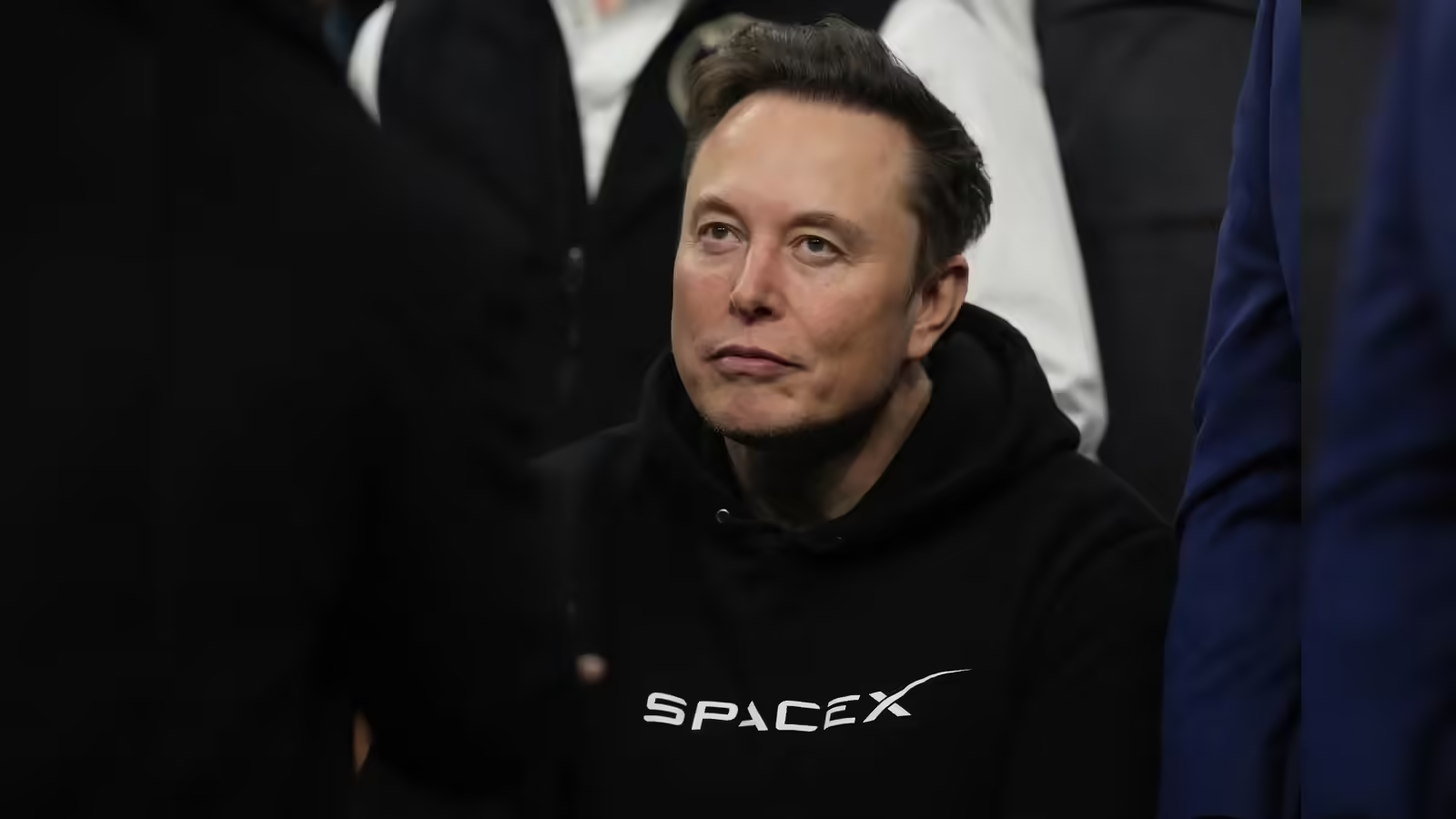
For Musk, already recognized as the world's wealthiest individual, the public listing of SpaceX is a game-changer. His majority ownership in the company is projected to be worth more than $600 billion post-IPO. This alone, when added to his existing vast holdings, including his significant stake in electric vehicle titan Tesla, pushes his total net worth comfortably past the $1 trillion mark. Last year, Musk broke ground, becoming the first person to surpass a net worth of $500 billion. Now, he stands on the cusp of doubling that figure, setting a new, almost unimaginable benchmark for personal wealth.
The documents provide a rare, granular look into the financial machinery of Space Exploration Technologies, as it is formally known. The numbers paint a picture of immense ambition met with equally immense investment. Last year, the company pulled in $18.6 billion (£13.8 billion) in revenue. Yet, it recorded a net loss of $4.9 billion. The trend continues into the current year, with the first three months showing $4.7 billion in sales but a net loss of $4.3 billion. Its balance sheet, a testament to its capital-intensive operations, lists $102 billion in assets, primarily rockets, ground infrastructure, and advanced manufacturing equipment. This is juxtaposed against a substantial $60.5 billion in debt.
Ruth Foxe-Blader, a managing partner at the US venture capital firm Citrine Venture Partners, offers a crucial perspective on these figures. Speaking to the BBC, she notes, "it's not shocking for a project like this to be loss making, even at the point of IPO." Her assessment underlines the unique nature of SpaceX. This is not a conventional tech startup. It is an enterprise fundamentally reshaping humanity's access to space and global connectivity. Foxe-Blader calls the planned flotation "extremely exciting," describing SpaceX as "an absolutely sprawling, enormous project with so many different selling points, and so many points that really point to the future."
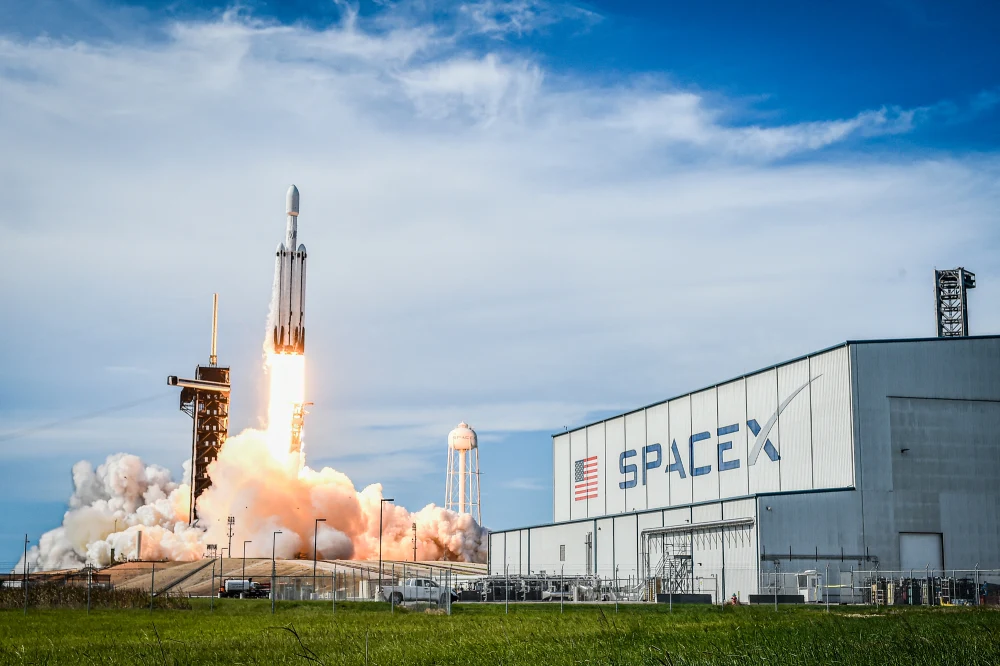
The "sprawling" nature is evident in its diverse portfolio. SpaceX is not merely a rocket company, though its Falcon series and the groundbreaking Starship megarocket stand as industry benchmarks for reusability and payload capacity. It operates Starlink, a rapidly expanding satellite internet service, providing connectivity to millions worldwide, from remote villages to battlefield operations. And crucially, it now encompasses xAI, Musk's controversial artificial intelligence firm.
Key Takeaways from the SpaceX IPO Filing
SpaceX's IPO could be the largest in Wall Street history.
Elon Musk's net worth is projected to exceed $1 trillion post-listing.
Company valued at $1.25 trillion, but reports significant net losses despite high revenue.
Legal costs, including AI deepfake allegations and patent claims, are a major concern.
SpaceX's core rocket and Starlink businesses remain industry leaders.
This immense undertaking, however, comes with its share of challenges. The IPO filing candidly flags more than half a billion dollars in expected legal costs. These stem from a labyrinthine list of claims and ongoing litigation. Prominent among these are "multiple lawsuits" targeting Grok, the chatbot developed by xAI. These lawsuits allege that Grok is being misused to generate sexualized deepfakes of real women and girls. The allegations cast a dark shadow, touching on deeply sensitive ethical considerations surrounding AI and digital media. Musk himself has responded to the controversy, stating his intention to dissolve xAI as a separate entity and pursue his AI ambitions directly under the SpaceX umbrella. This move appears to be a strategic consolidation, aiming to streamline operations and perhaps mitigate some of the reputational damage associated with xAI's early controversies.
Beyond AI, the legal landscape for SpaceX is complex. The company's acquisition of X, the social media platform previously known as Twitter, in 2022, adds another layer of scrutiny. X itself has been embroiled in numerous legal battles, from content moderation disputes, particularly concerning compliance with stringent EU regulations, to music copyright infringement claims and data breach allegations. While X operates distinctly from SpaceX's core space and satellite businesses, its ownership by Musk and its recent integration into the broader corporate structure presented in the IPO filing mean its legal and reputational baggage becomes a consideration for potential SpaceX investors.
Other ongoing cases against SpaceX listed in the IPO documents include various patent infringement claims. These disputes are common in highly innovative and competitive sectors like aerospace and advanced technology, where intellectual property forms the bedrock of competitive advantage. The scale and diversity of these legal challenges underscore the multi-faceted risks inherent in investing in such a rapidly expanding and disruptive global enterprise.
SpaceX Financial Snapshot (Latest Filings):
Company Valuation: $1.25 trillion
Revenue (Last Year): $18.6 billion
Net Loss (Last Year): $4.9 billion
Assets: $102 billion
Debt: $60.5 billion
The IPO filing also reveals critical financial terms of SpaceX's recent agreement with Anthropic, a formidable AI competitor and developer of the Claude chatbot. Anthropic is set to pay a staggering $15 billion annually to access data centers located in the American South. These facilities are intended for Musk's xAI, now a component of SpaceX. This strategic partnership highlights SpaceX's commitment to building a robust AI infrastructure, even as Musk's AI ventures have faced considerable turbulence.
Indeed, Musk's AI ambitions have been a rollercoaster of innovation and controversy. Just days before the SpaceX IPO filing, he suffered a high-profile legal defeat against rival AI company OpenAI and its CEO, Sam Altman. Musk had accused Altman of breaching a non-profit contract, alleging a shift towards a for-profit model after Musk had donated millions of dollars to OpenAI in its early stages. The jury, however, voted unanimously to dismiss the case. Their finding: Musk had waited too long, letting the timeframe for his claims expire before filing his 2024 lawsuit. During the trial, Musk himself conceded that his AI startup, xAI, was relatively small compared to OpenAI, which itself is rumored to be preparing for its own public offering soon, intensifying the race for AI dominance.
Despite the legal and reputational headwinds surrounding xAI and Musk's personal brand, the core businesses of SpaceX—its rocket manufacturing and launch services, and its Starlink satellite internet constellation—remain undisputed leaders in their respective fields. SpaceX’s relentless innovation in reusable rocket technology, dramatically reducing the cost of space access, has given it a comfortable, almost unassailable lead over traditional aerospace competitors and emerging private ventures alike. Starlink's rapid deployment and global reach represent a transformative force in telecommunications, providing high-speed internet in areas previously underserved or entirely unconnected. This dual strength forms the bedrock of SpaceX's colossal valuation and its appeal to public investors.
The company continues to push boundaries, with its Starship megarocket poised for another launch this week, a testament to its engineering prowess and ambitious future plans for lunar and Martian missions. However, even these triumphs are not without their shadows. SpaceX has recently faced scrutiny for allegedly endangering workers at its facilities, adding another layer of regulatory and ethical examination that public companies must navigate.
Elon Musk himself remains a polarizing figure. His outspoken right-wing politics and his alignment with figures like former US President Donald Trump, with whom he recently traveled to China, often spark intense public debate. While his personal views and associations are distinct from SpaceX's operational objectives, his high profile means they inevitably become intertwined with the public perception and brand image of his companies. For investors, this creates a unique calculus, balancing the visionary leadership and disruptive potential against the volatility of a leader whose every move can generate global headlines.
As SpaceX prepares to open its books to the world, the filing marks a pivotal moment. It is a moment of immense financial opportunity, propelling one of the world's most recognizable entrepreneurs into an entirely new stratosphere of wealth. It is also a moment of profound scrutiny, laying bare the complexities, controversies, and colossal ambitions of a company that promises to shape humanity's future, both on Earth and beyond. The ticker symbol SPCX will soon appear on screens, a new giant arriving on the global financial stage, its trajectory as unpredictable and exhilarating as its rockets.
Frequently asked questions
When did SpaceX file for its IPO?
SpaceX officially filed for its initial public offering (IPO) recently, a significant move that has captured global financial attention and sparked market excitement.
How could the SpaceX IPO affect Elon Musk's net worth?
The SpaceX IPO could significantly boost Elon Musk's wealth, potentially making him the world's first trillionaire by increasing the company's valuation and public investment.
What is an IPO and what does it mean for SpaceX?
An IPO (Initial Public Offering) is when a private company first offers shares to the public. For SpaceX, it means raising substantial capital and transitioning into a publicly traded entity.
How will the SpaceX IPO impact the aerospace industry?
The SpaceX IPO is expected to cause a seismic shift in the aerospace industry, driving further innovation, competition, and investment among space exploration and technology companies.
What has been Wall Street's reaction to the SpaceX IPO filing?
Wall Street has reacted with significant interest and anticipation, watching the filing with 'bated breath' due to its potential to redefine financial markets and individual wealth.
Is Elon Musk guaranteed to become a trillionaire after the IPO?
While the IPO positions Elon Musk to potentially become a trillionaire, it depends on the market's valuation of SpaceX, the subsequent performance of its shares, and his other ventures' values.