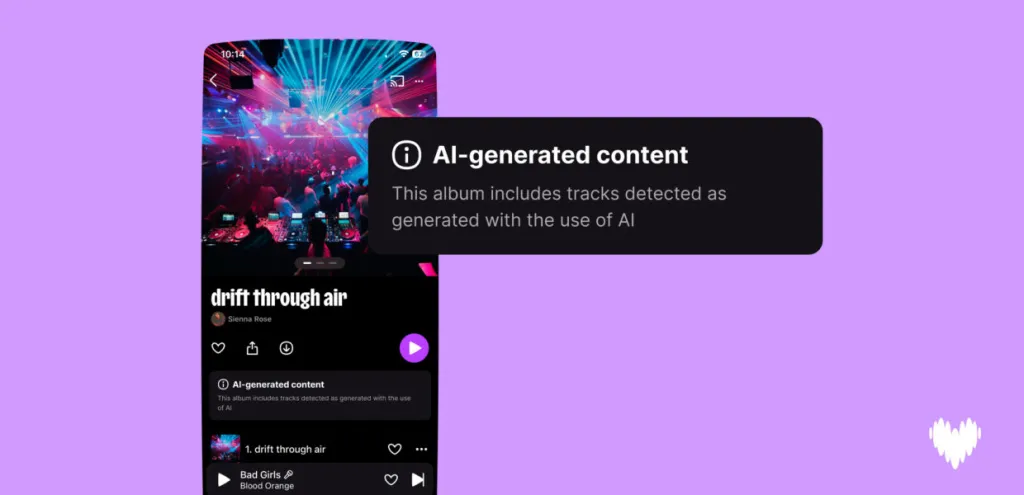
Deezer says that 44% of the songs uploaded daily to its service are AI-generated — a statistic that underscores how quickly generative tools are reshaping the music ecosystem.
The number reflects a dramatic shift in content creation dynamics. Just a few years ago, AI-generated music was experimental. Today, it is becoming a dominant input into streaming libraries.
A Flood of Algorithmic Content
Generative AI models can now produce full tracks — including vocals, instrumentals and mastering — with minimal human intervention. For aspiring creators, the barrier to entry has dropped sharply.
The result is an explosion in volume.
Streaming platforms, already grappling with millions of uploads per week, now face a surge in algorithmically produced songs. This growth challenges traditional curation systems and recommendation engines.
The sheer quantity of AI-generated content raises practical questions about discoverability and listener experience.
Economic Pressure on Streaming Models
Music streaming economics are built on pro-rata payout systems, where subscription revenue is distributed based on total streams.
If AI-generated tracks proliferate at scale, they could dilute royalty pools for human artists. Platforms must decide whether to treat AI-generated content identically to human-created music or apply differentiated policies.
For artists and labels, the concern is not just artistic authenticity — it is income stability.
The 44% figure signals that this is no longer a theoretical debate.
Copyright and Attribution Challenges
AI-generated music also intensifies copyright disputes.
Many generative models are trained on large datasets of existing songs. Artists and rights holders have raised concerns about unauthorized training data and stylistic mimicry.
Regulators in the U.S. and Europe are still determining how copyright frameworks apply to AI-generated works. Questions remain around authorship, licensing and liability.
Platforms like Deezer increasingly find themselves mediating between technological innovation and legal compliance.
Platform Response
Streaming services are experimenting with AI detection tools to identify algorithmically generated tracks. Some have introduced labeling systems or policies designed to reduce fraudulent streaming behavior.
Deezer’s transparency around the 44% statistic suggests recognition of the scale of transformation underway.
However, separating legitimate creative experimentation from spam or manipulative uploads remains a technical challenge.
A Structural Shift in Music Creation
The rise of AI-generated music mirrors broader changes in digital content creation.
Just as AI tools are reshaping writing, coding and visual design, music production is becoming more automated and accessible.
The core question is not whether AI will participate in music creation — it already does.
The question is how platforms, artists and regulators will structure incentives in a market where nearly half of new uploads originate from algorithms.