Silicon Valley's biggest lie is that "agile" startups can always outrun legacy giants in a nascent market. But in the high-stakes world of Large Language Model (LLM) orchestration, Palo Alto Networks just proved that when the product is "trust," the incumbent with the biggest distribution network usually wins by simply buying the finish line.
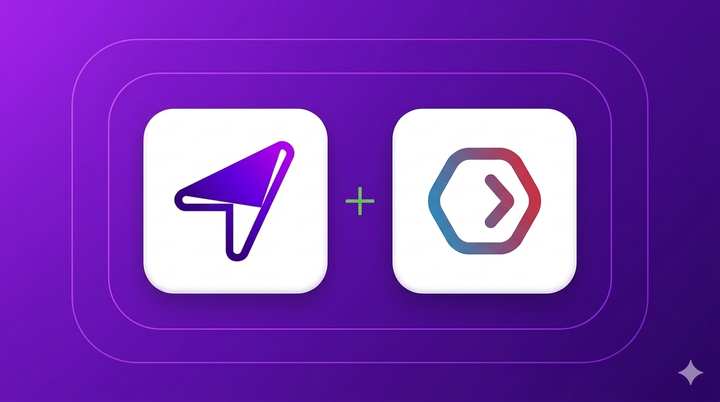
The acquisition of Portkey—a startup that built its reputation on being the Swiss Army knife for AI app developers—marks the end of the "Wild West" era of enterprise AI integration. For months, founders have been stitching together Open AI APIs with open-source models using Portkey’s gateway to manage prompts, latency, and costs. Now, that gateway is being integrated into a security platform that protects 85% of the Fortune 100. It is a move that transforms AI observability from a "developer tool" into a "compliance mandate."
The Gateway Gambit: What Actually Happened?
This deal isn't about traditional cybersecurity; it’s about control over the "AI egress." In the same way that companies used to monitor every byte of data leaving their network via email or web traffic, they now need to monitor every "prompt" sent to a third-party model.
Portkey provided the plumbing: a unified interface to manage multiple LLMs, cache responses to save money, and log every interaction for debugging. By bringing this under the Palo Alto Networks umbrella, the security giant is effectively taxing the AI revolution. If you want to use AI in the enterprise, you have to pass through their toll booth.
The Consolidation Ledger: By the Numbers
Target: Portkey (AI Gateway & Observability)
Acquirer: Palo Alto Networks
The "Shadow AI" Problem: An estimated 65% of enterprise AI usage currently happens outside the purview of IT departments via unsanctioned browser extensions and personal API keys.
The Integration Play: Portkey will likely be folded into the Prisma Cloud or Cortex suites, providing a single pane of glass for AI risk management.
Why the Governance Layer is the New Firewall
For global operators, particularly those navigating the European Union’s AI Act or Singapore’s Model AI Governance Framework, this acquisition solves a massive operational headache. You cannot secure what you cannot see.
In markets like India and Israel—hubs for both AI talent and cybersecurity innovation—the "AI Gateway" had become the hottest investment thesis for VCs like Lightspeed and Peak XV. This acquisition effectively sets a "floor" for the valuation of these governance startups, while simultaneously making it much harder for independent players to compete against a bundled platform.
"The enterprise doesn't want another twenty point-solutions for AI security. They want a single vendor who can tell them which employee leaked sensitive IP to a Claude 3.5 instance in the last ten minutes. Palo Alto is betting that 'security' is the ultimate Trojan horse for owning the entire AI orchestration stack." — Sarah Guo, Founder of Conviction and prominent AI investor
Who Wins, Who Loses, and Who is Next?
The Winners: The "Single-Vendor" CTOs Corporate IT leaders are exhausted. They are currently being pitched "AI Security" by a hundred different startups. By integrating Portkey, Palo Alto Networks gives these executives a reason to stop taking meetings with seed-stage founders. The message is simple: You already trust us with your network; let us handle your prompts too.
The Losers: Pure-Play AI Observability Startups Companies like LangSmith, Helicone, and Weights & Biases now find themselves in a pincer movement. On one side, the cloud providers (AWS Bedrock, Azure AI) are building native logging; on the other, the security giants are acquiring the independent gateways. The "standalone gateway" category is rapidly evaporating into a feature set of larger platforms.
The Skeptic's Corner: Is This Overkill? Let’s be blunt: Portkey was built for developers who care about latency and "vibe checks" on model outputs. Palo Alto Networks is built for CISOs who care about SOC 2 compliance and data exfiltration. There is a non-zero risk that by "securitizing" the developer experience, Palo Alto will bloat Portkey’s lightweight architecture, driving developers back toward open-source proxies that don't come with a corporate enterprise license agreement (ELA).
The Global Regulatory Ripple Effect
The geography of this deal matters. We are seeing a divergence in how AI is secured globally.
In the US: The focus is on Executive Order 14110, pushing for safety testing.
In the UK: The "pro-innovation" stance is leaning heavily on technical standards rather than rigid laws.
In Australia: The recent Safe and Responsible AI interim response suggests a mandatory guardrail approach for high-risk settings.
By acquiring a tool that can enforce these varied global rules at the API level, Palo Alto is positioning itself as the "Regulatory Interface" for the planet.
Key Takeaways for Founders
The "Bundle" is Back: If you’re building a standalone AI tool, your exit strategy is likely a platform play. The enterprise market is losing its appetite for fragmented stacks.
Egress is the New Perimeter: Forget the network edge; the new edge is the API call. Startups that can intercept, sanitize, and optimize these calls are the new high-value targets.
Compliance as a Feature: Don't just sell "better AI." Sell "AI that won't get the CISO fired." That is the premium Palo Alto just paid for.
What to Watch Next
The Response from CrowdStrike: Expect a retaliatory acquisition in the AI security space within the next 90 days.
The "Prompt Injection" Arms Race: As gateways become standard, attackers will move toward more sophisticated jailbreaking techniques that bypass semantic filters.
Local LLM Adoption: To avoid the "Gateway Tax," more enterprises may pivot toward running small language models (SLMs) locally on-prem, bypassing the need for cloud-based gateways entirely.
The acquisition of Portkey confirms what many in the industry suspected but few wanted to admit: the AI infrastructure layer is maturing at breakneck speed. By the time a startup identifies a pain point, a platform like Palo Alto Networks is already drafting the Term Sheet to absorb it. For founders, the window to build "pure-play" AI infrastructure is closing; the window to build "deeply integrated, security-first AI" is just beginning.