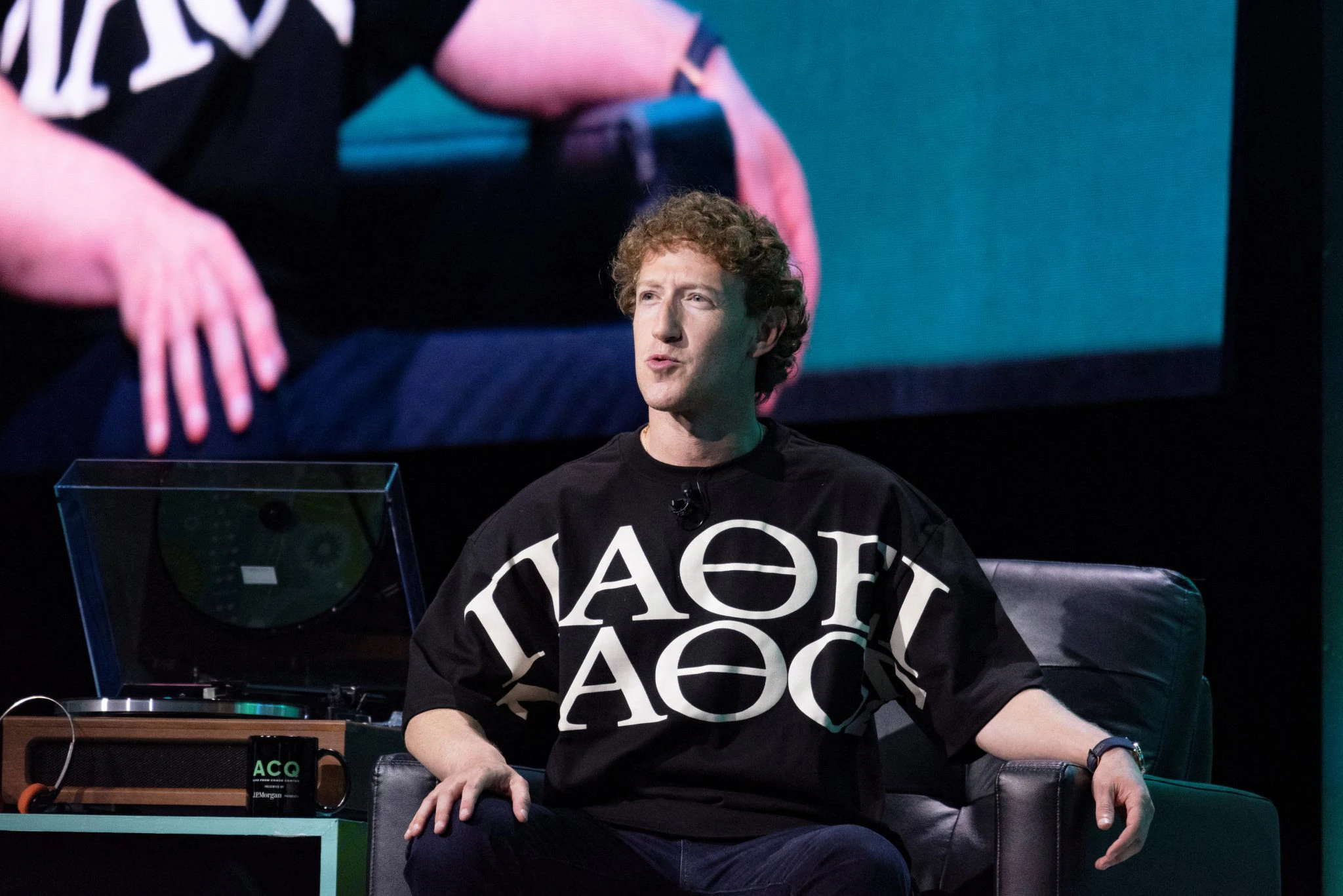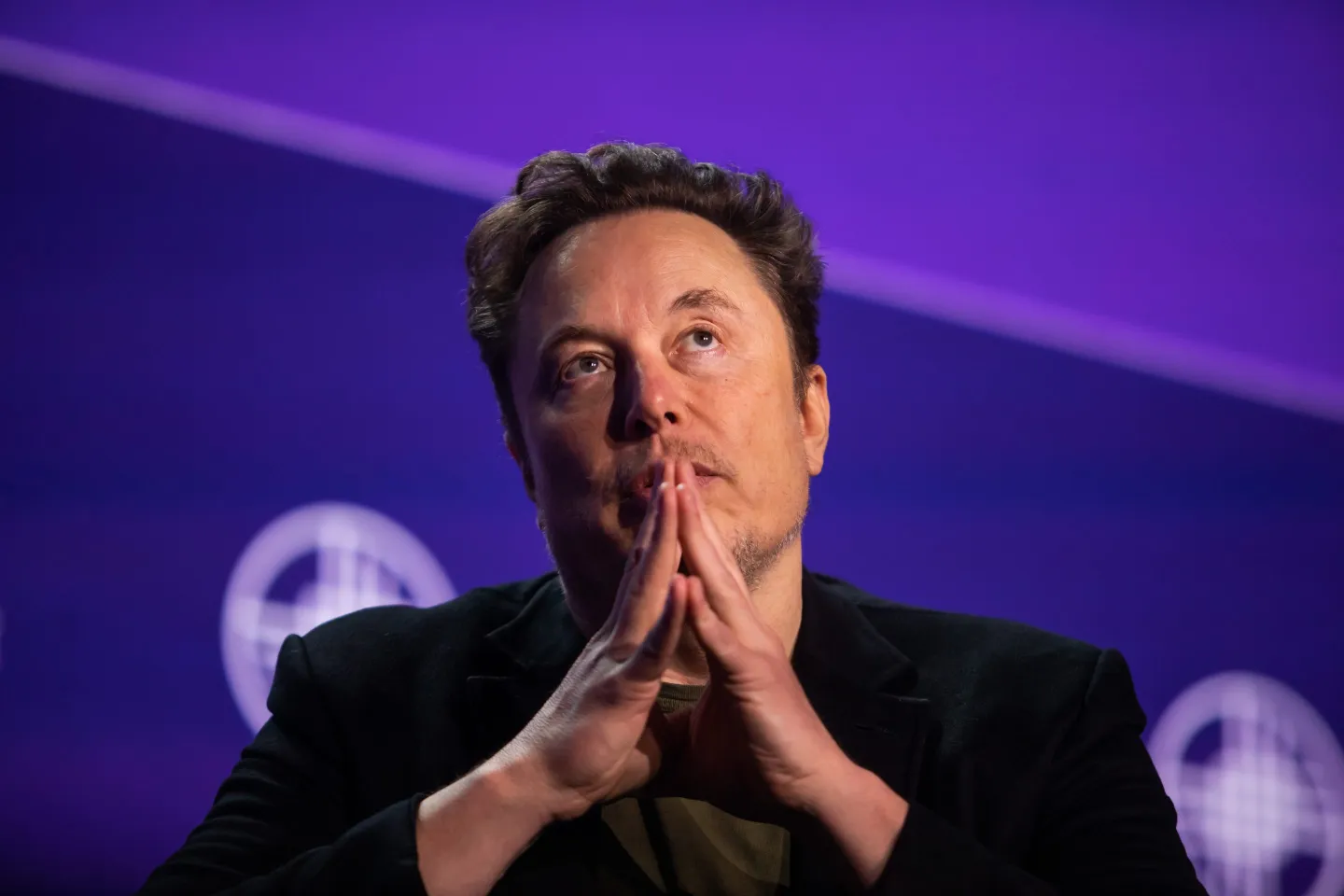
Elon Musk returned to the witness stand on Wednesday, April 29, for a second day of testimony in his blockbuster case against OpenAI — a trial he launched in 2024, alleging that OpenAI and its founders violated the promises they made to him and to the public when they founded the company as a nonprofit in 2015. Musk helped found OpenAI. He donated to it. He left it. Then, three years after watching Sam Altman and Greg Brockman take his initial infrastructure to a valuation that dwarfs most national economies, he sued them. GV Wire
Wednesday's session was, by any measure, a spectacle. And also a case study in how power operates at the apex of the tech industry.
What Musk Actually Said Under Oath
Strip away the theatre — and there was plenty of it — and Musk's two days of testimony centred on a simple, verifiable claim: he contributed $38 million to OpenAI between December 2015 and May 2017, and he would not have done so if the company's founders intended to build a for-profit enterprise. "Without me, OpenAI would not exist," he testified. "I came up with the name. I came up with the idea." The San Francisco Standard
OpenAI's lead counsel, William Savitt, pressed the point that Musk had pledged $1 billion in funding but didn't come close, contributing only $38 million. Musk pushed back, arguing he contributed his reputation, his network, and other intangibles that he believed exceeded $100 million in value. "These things have value," he said. NPR
That exchange crystallises the legal problem at the core of Musk's case. His documented cash contribution was $38 million. He is now seeking damages that his lawyers have pegged at up to $134 billion in "wrongful gains" — though he's shifted to asking for those gains to flow back to OpenAI's nonprofit foundation rather than to himself personally. The ratio of contribution to claimed damages is approximately 3,500:1. OpenAI's lawyers will lean on that number hard. Tech Market Briefs
The Structural Stakes
Founders and operators reading this need to understand what's actually at risk here — because it goes well beyond two tech billionaires settling a grudge in a federal courtroom.
A loss for Musk would mean that OpenAI, currently valued at approximately $730 billion, will be free to continue its commercial course as it heads toward one of the biggest initial public offerings in history. A win for Musk could require OpenAI to revert to a nonprofit structure and remove Altman and Brockman from the board. GV Wire
Let's sit with what that means for a moment. OpenAI raised $122 billion at an $852 billion valuation in March 2026 — the largest private funding round in the history of Silicon Valley. Its IPO, targeting a Q4 2026 listing, could value the company at close to $1 trillion. The company projects $14 billion in operating losses in 2026 alone, with profitability not expected before 2030. It has committed to over $1.4 trillion in cloud infrastructure spending across Microsoft Azure, Amazon AWS, and Oracle Cloud through 2033. Tech Market Briefs
A forced reversion to nonprofit status wouldn't just disrupt an IPO. It would unwind one of the most complex capital structures in technology history, potentially triggering cascading contractual defaults across Microsoft, Amazon, SoftBank, and Nvidia — all of whom hold equity stakes or have infrastructure commitments predicated on OpenAI's for-profit structure.
The numbers at stake:
Metric | Figure |
|---|---|
Musk's documented cash contribution to OpenAI | $38 million |
Damages sought by Musk's legal team | Up to $134 billion |
OpenAI's current valuation | ~$852 billion |
OpenAI's projected 2026 operating loss | ~$14 billion |
Microsoft equity stake (approximate) | ~$135 billion |
Target IPO valuation | ~$1 trillion |
The Counterintuitive Observation Nobody's Making
Here's what most coverage is missing: Elon Musk admitted under cross-examination that for-profit AI companies create safety risks — and then acknowledged that statement included his own company, xAI.
"Does a for-profit AI company create a safety risk?" OpenAI's lawyer Savitt asked. "Yes, I think it creates a safety risk," Musk replied — noting the assertion included xAI. CNBC
This is the most revealing moment of the trial so far, and it's been largely buried in the drama surrounding everything else. Musk has structured his entire legal argument around OpenAI's corruption of a charitable mission to develop safe, open AI for humanity's benefit. His implicit claim is that he — and by extension his own AI company — represents the safer, more mission-aligned alternative. But his own sworn testimony contradicts that.
xAI, which Musk founded in March 2023 as a for-profit, public benefit corporation, shed its public benefit commitments in 2024. Musk then merged xAI with his social network X in 2025, and subsequently folded it into SpaceX. The company's Grok chatbot has generated deepfake scandals across multiple jurisdictions. The ideological purity of Musk's case against OpenAI is, to put it gently, complicated by the fact that his own AI company operates under exactly the commercial incentive structures he's suing to prevent.
"Musk said he 'was a fool' for giving OpenAI and Altman the funding that was then used to create an $800 billion company." — CNBC trial coverage, April 29, 2026
What the Trial Means Globally
This case isn't primarily a US story, even though it's being heard in Oakland. The precedent it sets — or fails to set — will ripple through AI governance frameworks from Brussels to Singapore.
The EU's AI Act, which came into full effect in August 2026, includes provisions around high-risk AI systems and governance accountability for large AI providers. If a US court rules that an AI nonprofit cannot convert to for-profit status without satisfying original charitable purpose requirements, European regulators will take note. It strengthens the hand of those arguing for structural accountability in AI development — not just technical safety standards.
In the UK, which has been positioning itself as the AI safety capital of the world since hosting the Bletchley Park summit, this case lands differently. British policymakers have been watching OpenAI's governance transformation with concern. A ruling that forces OpenAI to address its charitable trust obligations could accelerate calls for mandatory governance frameworks for frontier AI labs operating in the UK and EU.
In China, the dynamic is almost inverted. The Musk-Altman trial is being read by Chinese AI companies — Baidu, ByteDance's AI division, DeepSeek — as confirmation that America's AI industry is fracturing politically at precisely the moment it needs to consolidate. Whatever outcome emerges from Oakland, the trial itself has damaged OpenAI's carefully cultivated brand of responsible, mission-driven AI development.
The Founder Perspective
Consider what this looks like from inside any AI startup right now. If Musk wins, the message is that nonprofit structures can create binding contractual obligations that outlast their usefulness — that donors to charitable tech organisations have perpetual enforcement rights over commercial evolution. Every founder who took philanthropic seed capital to solve a public-interest problem is now watching this case carefully.
If Musk loses, a different message lands: founding documents are less binding than capital, and the organisation that attracts the most investment ultimately gets to define what its mission means in practice. Altman himself may testify later in the trial — along with Microsoft CEO Satya Nadella and OpenAI's former CTO Mira Murati, who founded her own AI lab after leaving OpenAI and who may have unique insight into the internal governance culture Musk is challenging.
What to Watch
Judge Gonzalez Rogers on remedies. The jury advises, but she decides. She already presided over the high-profile Apple App Store case, where she rejected both Apple's and Epic's maximalist positions and carved her own middle path. Expect a similar approach here — finding liability but limiting the structural remedies Musk wants.
Jared Birchall's testimony. Musk's family office manager, who processed the wire transfers to OpenAI and holds executive roles at both xAI and Neuralink, takes the stand next. His testimony on the intent behind Musk's donations — and how those funds were tracked by Excession LLC — could either strengthen or undercut Musk's unjust enrichment claim.
OpenAI's IPO timeline. The trial runs four weeks. That takes it to late May 2026, right when OpenAI is reportedly planning to make confidential SEC filing preparations. A messy verdict — or a prolonged remedies phase — could push the IPO from Q4 2026 into 2027, with cascading effects on the $110 billion in funding contingent on milestone delivery.
Elon Musk spent two days on a witness stand telling a jury he invented OpenAI, funded it, recruited for it, and then watched the people who took his money use it to build a trillion-dollar company that competes directly with his own. His anger is comprehensible. His case is genuinely complex. His credibility as the ideologically pure alternative to OpenAI's commercialism is, at best, a difficult position to hold given the documented trajectory of xAI.
What happens in Oakland over the next four weeks won't just determine who controls OpenAI. It will determine the rules by which the next generation of frontier AI companies are allowed to evolve — from nonprofit research labs into commercial juggernauts, or not. That's the story underneath the spectacle. And it's one every founder building anything in AI needs to follow closely.