But that framing misses the actually interesting part.
In March 2026, just four months after founding, Advanced Machine Intelligence Labs — AMI Labs — announced a $1.03 billion seed round at a $3.5 billion pre-money valuation, backed by Jeff Bezos, Nvidia, Samsung, Temasek, Toyota Ventures, and former Google CEO Eric Schmidt. The round didn't just make AMI the largest seed raise in European history. It represented a genuine institutional bet, by some of the most technically sophisticated capital in the world, that the foundational assumption of the current AI era — that predicting the next token is the path to intelligence — might be wrong. Build Fast with AI
That's not a minor claim. It's an existential one.
The Exit
LeCun spent twelve years building Meta's Fundamental AI Research lab into a world-class operation — publishing thousands of papers, open-sourcing models that became industry standards, and positioning Paris as a credible node in a field dominated by California zip codes. His departure was shaped by organizational changes at Meta, including restructuring of FAIR's robotics team, and an increasing sense that his research directions were beyond what Meta was commercially interested in pursuing. Tech Insider
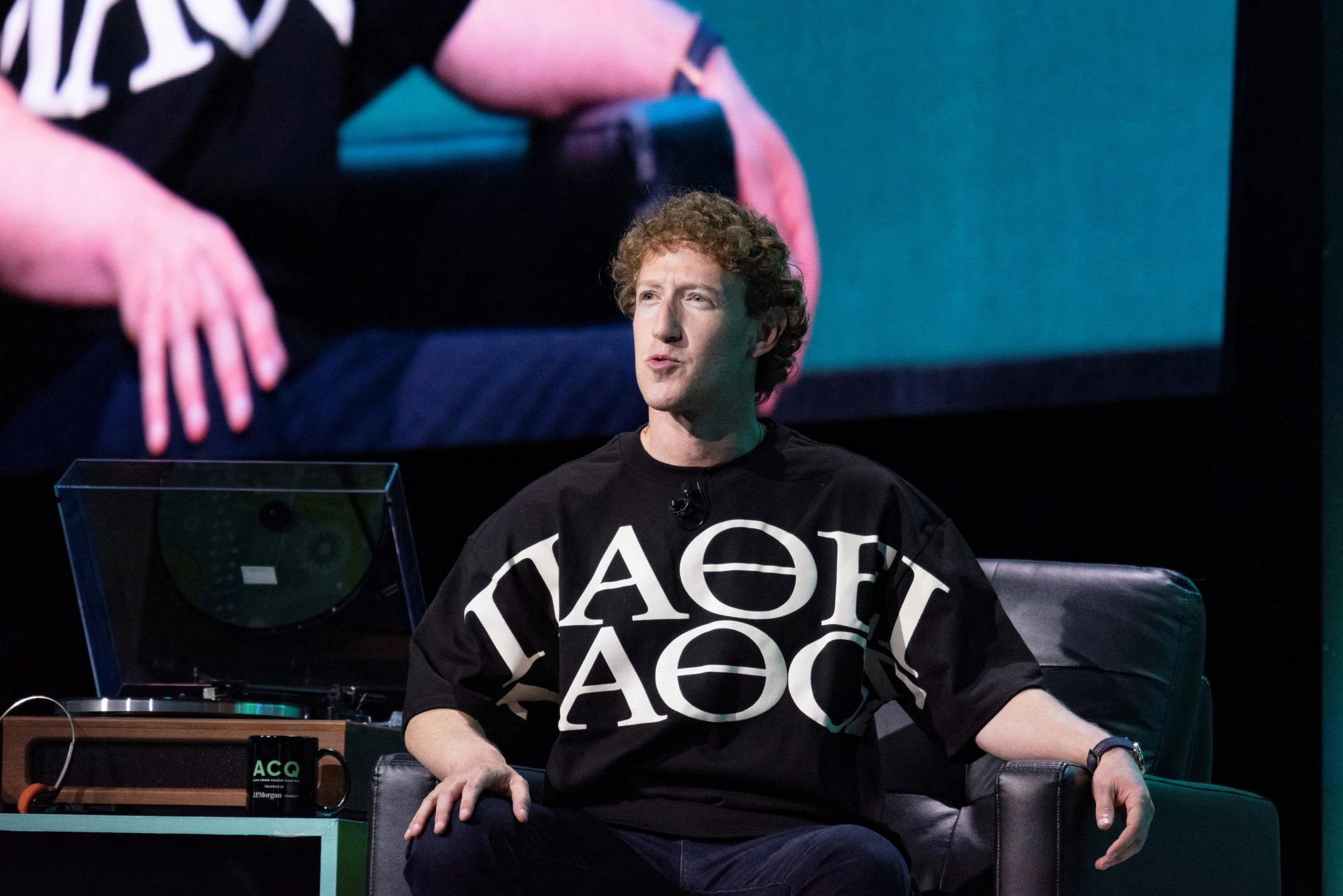
As LeCun told Business Insider: "He and I both realized that the potential spectrum of applications of this was kind of beyond what Meta was interested in" — referring to conversations with Mark Zuckerberg about the future of world model research. Tech Insider
Meta, for its part, has committed over $65 billion in AI infrastructure spending for 2026, released Llama 4, and is doubling down on LLM-based consumer products. The company's direction is clear. So is LeCun's disagreement with it.
LeCun has said bluntly: "Silicon Valley is completely hypnotised by generative models, and so you have to do this kind of work outside of Silicon Valley, in Paris." Sifted
The Bet Against the Room
What, precisely, is LeCun building?
AMI Labs is pursuing what LeCun calls "world models" — AI systems grounded in physical reality rather than statistical patterns scraped from text. The technical core is JEPA, the Joint Embedding Predictive Architecture, which LeCun proposed in 2022. Unlike LLMs, which generate output by predicting the next token in a sequence, JEPA operates in latent space — learning abstract representations of reality. Early benchmarks suggest 2–10x better GPU utilization compared to transformer-based approaches for certain physical reasoning tasks. Tech Insider
The practical ambition: AI that understands physics, maintains persistent memory, and can plan action sequences — not just produce fluent text.
"AMI Labs is a very ambitious project, because it starts with fundamental research. It's not your typical applied AI startup that can release a product in three months, have revenue in six months, and make $10 million in [annual recurring revenue] in 12 months." — Alexandre LeBrun, CEO, AMI Labs
LeBrun, the former CEO of clinical AI startup Nabla, took the AMI Labs job after reaching the same conclusion as LeCun about LLMs' limits — specifically, that hallucinations in healthcare contexts could have life-threatening repercussions, and that the architecture itself was the problem, not a tunable parameter. TechCrunch
This is the counterintuitive observation most coverage buries: AMI Labs isn't competing with OpenAI. It's betting that OpenAI's entire approach has a ceiling — and that when the industry hits it, there'll be only one serious alternative architecture funded and ready.
The Departure Wave
The AMI Labs raise didn't happen in a vacuum. In 2026, VCs have funnelled $18.8 billion into AI startups founded since the start of 2025, according to Dealroom — on track to surpass the $27.9 billion picked up last year by companies launched since the start of 2024. The pattern is consistent: a senior researcher exits one of the major labs, announces a startup, and within months has raised nine or ten figures from investors who clearly believe that insider knowledge compounds into commercial advantage. CNBC
Former Meta, OpenAI, DeepMind, Anthropic, and xAI staff have all raised hundreds of millions from investors for months-old ventures, including AI labs Periodic Labs, Ricursive Intelligence, and Humans&. On April 28, former Google DeepMind researcher David Silver announced he'd raised a record $1.1 billion seed round for his months-old startup Ineffable Intelligence. Tim Rocktäschel, another former DeepMind employee, is reportedly raising up to $1 billion for his own new venture. CNBC
Why are investors writing these checks so fast?
Alexander Joël-Carbonell, partner at HV Capital — which backed AMI Labs — told CNBC: "Inside the large foundational labs, the pressure to deliver benchmark performance and maintain rapid release cycles leaves limited room for genuinely exploratory research, particularly outside the dominant LLM paradigm." CNBC
Translated: the labs are too commercially pressed to take the long bets. The people who know where those bets are are leaving to take them.
The Paris Dimension
AMI Labs is headquartered in Paris, with satellite operations in New York, Montreal, and Singapore. That geographic spread matters in ways the funding headline obscures.
The numbers behind the European bet:
Metric | Figure |
|---|---|
AMI Labs seed round | $1.03B |
Pre-money valuation | $3.5B |
Prior record European seed round | ~$500M |
AMI Labs' age at funding announcement | ~4 months |
AMI Labs full-time employees at launch | ~12 |
Europe's AI investment environment has historically lagged the United States by a wide margin — private AI investment in the US has reached approximately $109.1 billion, nearly 12 times China at $9.3 billion and 24 times the UK at $4.5 billion. France specifically sits well below those numbers. But LeCun is making an explicit geographic argument: that distance from Silicon Valley's LLM groupthink is a feature, not a limitation. Qubit Capital
He's building AMI's team across four locations — Paris for headquarters, New York (where he teaches at NYU), Montreal (where chief world models researcher Michael Rabbat is based), and Singapore, "both to recruit AI talent and to be close to future clients in Asia." Singapore's presence is notable. Southeast Asian enterprise and healthcare markets have significant appetite for AI that handles regulated, physical-world environments — exactly the use cases AMI is targeting. Nabla, AMI's first disclosed commercial partner, will gain first access to world model technologies to develop what it's calling FDA-certifiable agentic AI systems for healthcare. TechCrunch
The Skeptic's Corner
Should you believe the valuation? There are real reasons not to.
AMI Labs has no product, no revenue, and a research roadmap that LeBrun himself says could take years before yielding commercial applications. The $3.5 billion pre-money valuation prices in a future that's still theoretical. The spectacular valuation for a pre-revenue startup has amplified concerns about an AI investment bubble, with industry leaders warning that excitement around AI may be outpacing business fundamentals. Fortune
There's also the competitive landscape to consider. Fei-Fei Li's World Labs raised $1 billion in a single month. DeepMind's Demis Hassabis has acknowledged the limitations of language for physical reasoning and is pursuing world model directions through projects like Genie and SIMA. LeCun himself acknowledged the risk: the pessimistic scenario has physical world understanding getting grafted onto transformer architectures through multimodal training, AMI Labs producing interesting research but no commercially viable product, and the $1.03 billion funding five years of academic papers followed by a pivot. Tech Insider
And there's a darker reading of the departure wave as a whole. When the most technically credible people in the field are all leaving to raise billions on the premise that their former employers' core technology is fundamentally limited — what does that say about what the people still inside those labs actually believe?
What Founders Should Track
Three signals worth monitoring over the next 12 months:
Whether world model startups ship anything. AMI Labs, World Labs, and the companies clustering around non-LLM architectures all face the same test: at some point, the research has to become a product. Nabla is the first deployable context. Watch for any FDA certification progress.
Meta's response to LeCun's departure thesis. Meta has $65 billion in AI infrastructure committed for 2026 and a FAIR lab that's lost its intellectual anchor. Whether the company publicly engages with the JEPA challenge or simply out-scales it tells you something about leadership's confidence in the LLM path.
The Singapore-Asia pipeline. AMI's explicit move to position in Singapore for Asian enterprise clients is early evidence that the next wave of world model applications could emerge in healthcare, manufacturing, and logistics contexts — sectors where hallucination risk is high and physical accuracy requirements are non-negotiable. That's the Southeast Asian AI market to watch: not consumer AI, but regulated-industry AI with genuine tolerance for longer commercial timelines.
The honest assessment is that LeCun might be right, might be early, or might be wrong. All three options are live. But here's what isn't debatable: investors with deep technical backgrounds — Nvidia, Bezos Expeditions, former Google leadership — looked at a 65-year-old researcher with no product and a four-month-old company and handed him a billion dollars. That's not sentiment. That's a risk-adjusted bet that the current paradigm has an expiration date.
Founders should understand what that bet actually means. It doesn't mean LLMs stop working next year. It means the people who built this industry believe there's a ceiling — and that whoever's first through the next architectural wall wins everything above it.
LeCun left Meta to be that person. Whether he succeeds is a separate question from whether his leaving mattered. It did.