The move signals that AI-powered assistance is no longer confined to standalone apps. It is becoming part of the browser itself — the gateway to the internet for billions of users.
From Search Box to Embedded Assistant
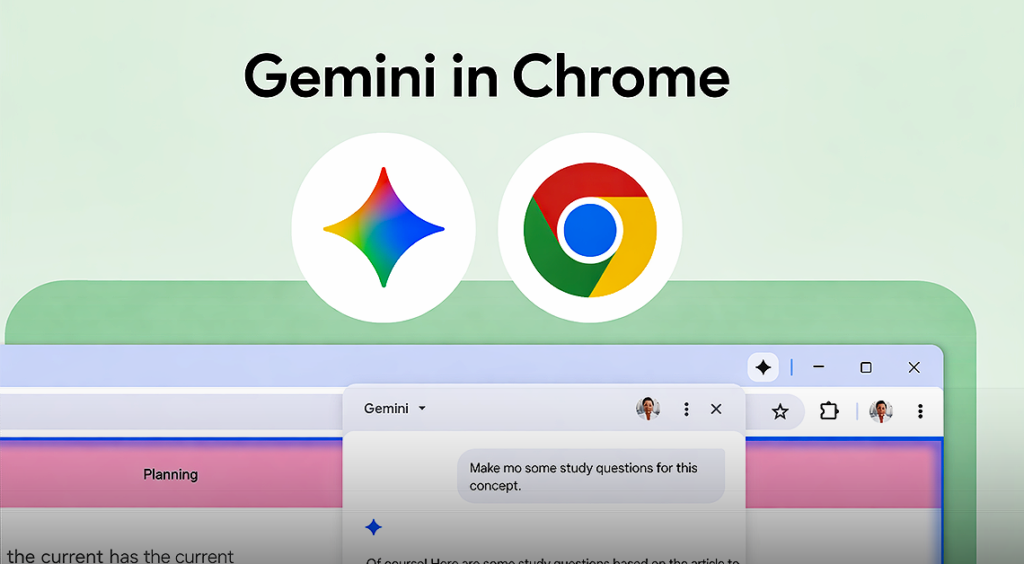
Gemini’s integration in Chrome allows users to interact with AI directly while navigating web pages. Instead of switching tabs or apps, users can summarize articles, draft responses, clarify complex content or generate insights within the browser window.
This shift reflects a broader strategy: repositioning AI as contextual infrastructure rather than a separate destination.
By embedding Gemini in Chrome, Google reduces friction between search, browsing and generative assistance.
International Expansion Signals Confidence
Rolling out the feature to seven additional countries suggests Google is confident in both infrastructure readiness and regulatory positioning.
Global AI deployments often require localization — language adaptation, regional compliance and performance optimization. Expanding access indicates that Google sees strong demand for AI-assisted browsing beyond early-launch markets.
International rollout also strengthens Google’s competitive posture as rival tech companies push AI features into their own platforms.
Browser as Battleground
The browser has become a critical battleground in the AI era.
As large language models reshape how users interact with information, control over the browser environment allows companies to shape user workflows directly. Embedding AI tools at the browsing layer creates opportunities to influence search behavior, content consumption and productivity tasks.
For Google, integrating Gemini within Chrome helps defend its search ecosystem while expanding AI utility.
Enterprise and Consumer Implications
AI inside the browser is particularly relevant for enterprise users. Summarizing reports, analyzing documents and drafting communications directly within Chrome can streamline workflows.
For consumers, AI-enabled browsing may reduce reliance on multiple apps and search queries.
The strategic value lies in making AI assistance feel ambient — available whenever needed, without requiring a separate interface.
The Bigger Picture
Google’s expansion of Gemini in Chrome reflects a broader shift in AI deployment strategy.
Instead of positioning AI as a discrete chatbot product, the company is weaving it into existing digital touchpoints.
As AI assistants move from novelty to default interface, geographic expansion becomes critical to maintaining global relevance.
With Gemini now live in seven additional countries, Google is signaling that browser-native AI is not an experiment.