On Thursday, OpenAI dropped GPT-5.5 into the world — and if you read it as a routine model update, you're reading it wrong.
OpenAI's newest model, which the company calls its "smartest and most intuitive to use" yet, comes loaded with improvements across agentic coding, scientific reasoning, and knowledge work. The benchmarks look good. Reported figures include 82.7% on Terminal-Bench 2.0, 58.6% on SWE-Bench Pro, and 84.4% on BrowseComp — the kind of numbers that tend to circulate fast in engineering Slack channels. But the more important signal was buried in what Greg Brockman said on the press call.
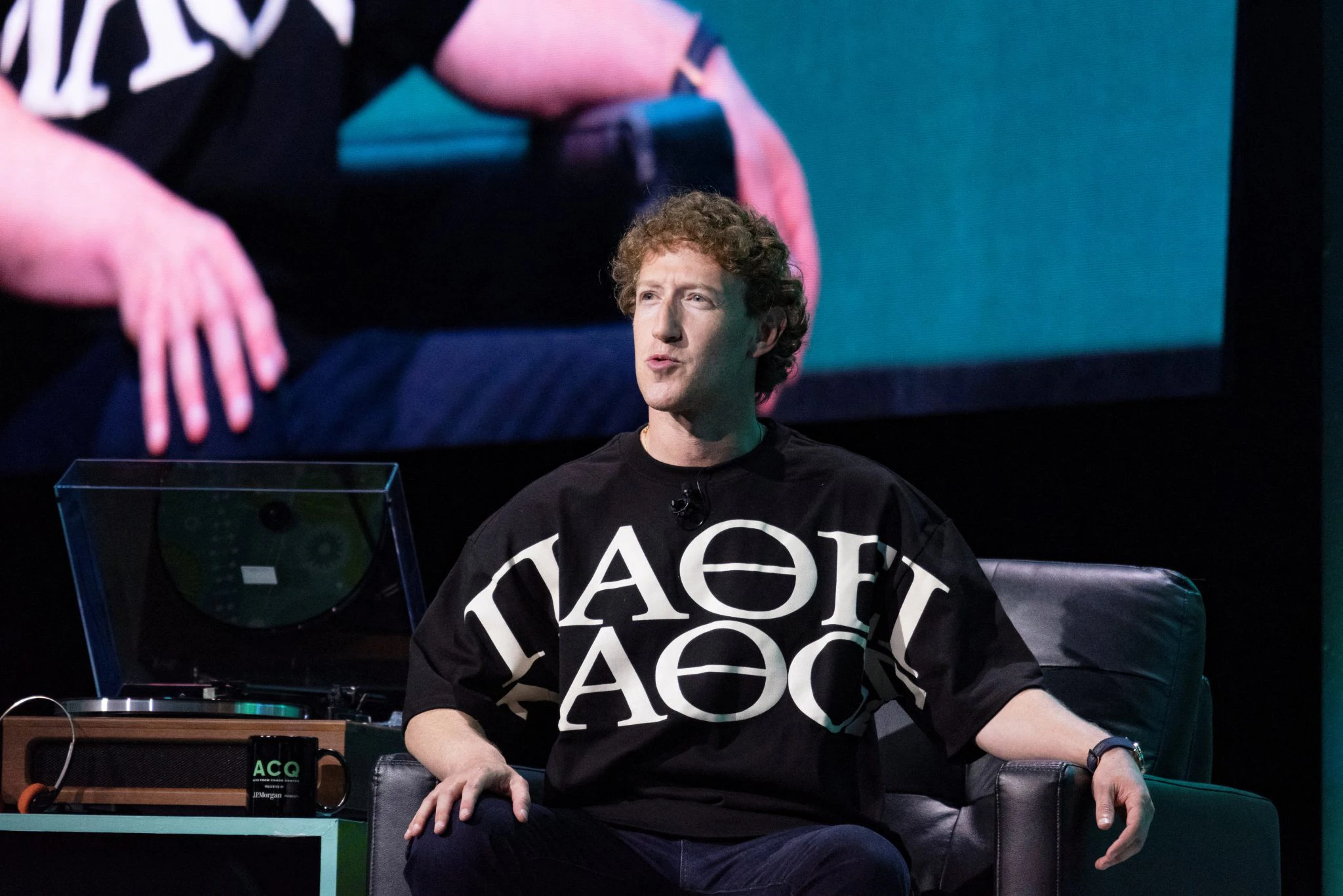
OpenAI's co-founder and president tied the release directly to the company's ambition to build a "superapp" — a multi-purpose, unified program that would combine ChatGPT, Codex, and an AI browser into a single service for enterprise customers. That framing, more than any benchmark, is what Thursday's announcement was actually about.
"This model is a real step forward towards the kind of computing that we expect in the future — but it is one step, and we expect to see many in the future. It's a faster, sharper thinker for fewer tokens." — Greg Brockman, Co-Founder & President, OpenAI
The product logic here is worth spelling out. A unified product only works if the model underneath can handle that range of tasks. That's why GPT-5.5 should be read through a product lens as much as a model-ranking lens. A stronger core model makes it easier for OpenAI to ask users to stay in one place — it increases time spent in OpenAI's environment, raises switching costs, and makes adjacent products easier to bundle into one subscription relationship.
GPT-5.5 is priced at $5 per million input tokens and $30 per million output tokens for API access — roughly double GPT-5.4 pricing. That's a significant hike, and OpenAI's argument is that token efficiency offsets the sticker price. The company says GPT-5.5 matches its predecessor's per-token latency in real-world serving while using significantly fewer tokens to complete the same Codex tasks. Whether that math actually holds for most enterprise workflows will be tested in the coming weeks by the developers already poring over usage logs.
The Superapp Play — And Why It's a Bigger Bet Than It Looks
OpenAI has been explicit about the goal in its investor communications: the company wants to build a unified AI superapp that brings together ChatGPT, Codex, browsing, and broader agentic capabilities into one agent-first experience. In their framing, it's not just product simplification — it's a distribution and deployment strategy.
That distinction matters. If OpenAI can make chat, coding, and browser assistance feel like a single governed platform, it's not just selling a model — it's selling the control layer for an organization's entire AI workflow. That's a fundamentally different market position than being the best chatbot.
Codex has already added computer use, in-app browsing, image generation, memory, and plugins in recent weeks, and the updated Codex app for macOS and Windows represents OpenAI's clearest public prototype of what the superapp might look like. GPT-5.5 is the engine now being bolted into it.
The contrarian case? This kind of "everything in one place" ambition tends to produce products that are fine at everything and excellent at nothing. Cursor and other focused coding tools still offer deeper IDE integration than Codex. Anthropic's Claude Code has its own enterprise following among developers who prefer not to centralize their stack inside one vendor. Consolidation strategies can create as much friction as they relieve, especially in enterprise environments with procurement processes built around point solutions. OpenAI is betting that convenience beats depth. That's not a given.
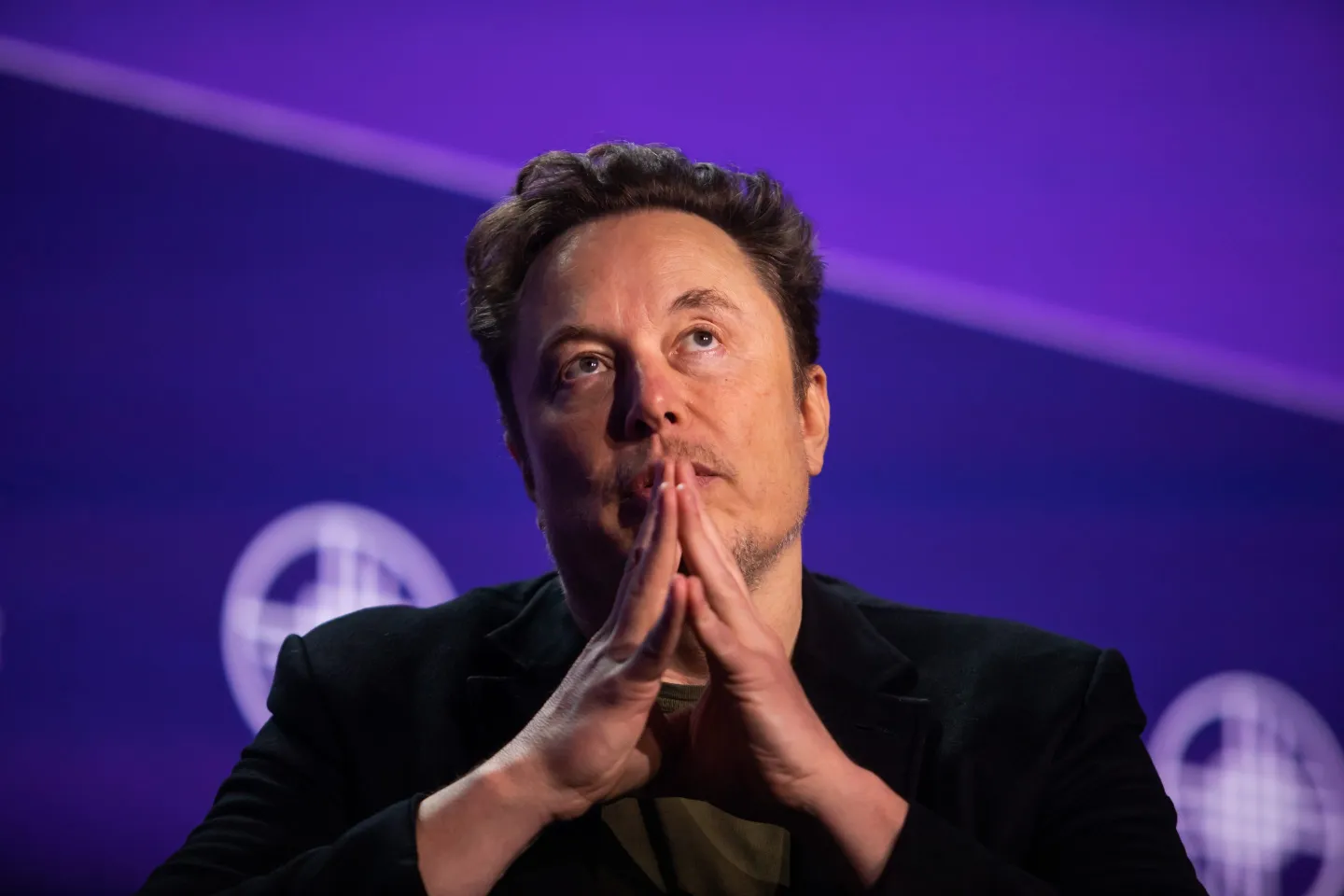
There's also the small matter of Elon Musk. The superapp concept is a hot topic with Altman rival and former OpenAI colleague Elon Musk, who has said he wants to turn X into its own so-called superapp. Musk's X has struggled to execute on that vision in Western markets, where apps like WeChat — the genuine article of an AI-native superapp — never found comparable traction. OpenAI is attempting something the Western tech industry has tried and mostly failed to pull off. That's worth keeping in mind before treating the superapp thesis as settled.
The Pace Is Relentless, and That's Intentional
OpenAI released its previous model only last month, with a prior release in December and one before that in November. The cadence isn't accidental. When Jakub Pachocki, OpenAI's chief scientist, told journalists "the last two years have been surprisingly slow," he was telegraphing that the pace you're seeing now is closer to what the company considers normal.
ChatGPT now has more than 900 million weekly active users and over 50 million paying subscribers, with enterprise revenue making up more than 40% of total revenue and on track to reach parity with consumer by the end of 2026. That's the business context in which every model release sits. Each new model is also a retention mechanism, a reason to stay subscribed, a reason to upgrade.
India and the Emerging-Market Problem OpenAI Can't Ignore
Here's where the story gets genuinely complicated at the global level.
India is now OpenAI's second-largest market behind the US, with over 100 million weekly active ChatGPT users, particularly concentrated in coding, reasoning, and data-heavy tasks. That's an enormous number. Nearly half of all ChatGPT usage in India comes from the 18-to-24 demographic — students and early-career workers who've adopted the tool for competitive exam prep, coding practice, and job market navigation.
But the ChatGPT Plus subscription at $20 per month represents nearly 10% of India's per capita annual income, which makes the standard monetization playbook essentially unworkable at scale. GPT-5.5 Pro — the tier designed for OpenAI's most demanding use cases — is priced even higher. OpenAI has experimented with localized pricing, including a ₹399/month ChatGPT Go tier for India, but the fundamental tension between usage scale and revenue conversion remains unresolved.
The enterprise route is more promising. OpenAI has partnered with Tata Group to secure 100 megawatts of AI-ready data center capacity in India, with plans to scale to 1 gigawatt, and Tata Consultancy Services plans to deploy ChatGPT Enterprise across hundreds of thousands of employees in what would be one of the largest enterprise AI rollouts anywhere. GPT-5.5's coding improvements make it a natural fit for TCS's engineering teams, which already have OpenAI's Codex in their standardization plans. Data residency is now available in India for ChatGPT Enterprise and API Platform customers, addressing the compliance barrier that had slowed adoption in regulated Indian sectors.
The regulatory posture matters too. India's government has taken an increasingly active interest in AI, though its approach has been more permissive than the EU's — issuing advisories around content safety without imposing licensing requirements on model deployment. That relative openness has let OpenAI move faster in India than it can in Europe, where the EU AI Act is forcing more deliberate deployment timelines for high-capability systems.
Drug Discovery, Cybersecurity, and the Claims Worth Watching
Mark Chen, OpenAI's chief research officer, said GPT-5.5 shows meaningful gains on scientific and technical research workflows and could genuinely help expert scientists make progress — including in drug discovery, an area of significant industry investment. That's a meaningful claim. AI-assisted drug discovery has attracted serious capital, and if GPT-5.5 actually accelerates the research cycle in ways that GPT-5.4 couldn't, the downstream implications extend well beyond a model leaderboard.
The cybersecurity angle is more complicated. During the press briefing, a reporter asked whether GPT-5.5 would mirror the capabilities of Anthropic's Mythos — a cybersecurity-focused model that's been in the news this week after reports of unauthorized access to the program. OpenAI's Mia Glaese said the company has a "strong and long standing strategy" for cyber applications and has "refined a durable approach to rolling out models safely." That's a careful non-answer, which tells you something about how sensitive the defensive-AI space has become.
What to watch next
The superapp timeline. OpenAI's investor materials now explicitly name the unified product as a strategic priority. Watch for a formal product announcement, likely before the end of 2026, that positions the combined ChatGPT-Codex-browser experience as a distinct offering with its own branding and enterprise pricing tier.
Competitor response cadence. ChatGPT's global market share has dropped from 87% to 68% over the past year as Google Gemini tripled its position. Anthropic and Google DeepMind will both have responses to GPT-5.5 in the near term. The benchmark wars are accelerating, not stabilizing.
India monetization. The 100 million weekly user figure in India is strategically significant, but it's a usage number, not a revenue number. How OpenAI converts its Indian footprint — especially among the student cohort — into durable enterprise contracts will be a key indicator of whether its global growth story holds up under financial scrutiny.
If you want to understand where AI product development is headed, try GPT-5.5 in Codex with a real coding task and pay attention not to how good it is, but to how much it keeps you inside OpenAI's environment. That stickiness is what the company is actually building.