Price War Intensifies
China accounts for more than half of global EV sales, but growth has moderated compared to the explosive expansion of previous years.
As subsidies fade and consumer sentiment fluctuates, automakers are competing aggressively to maintain volume.
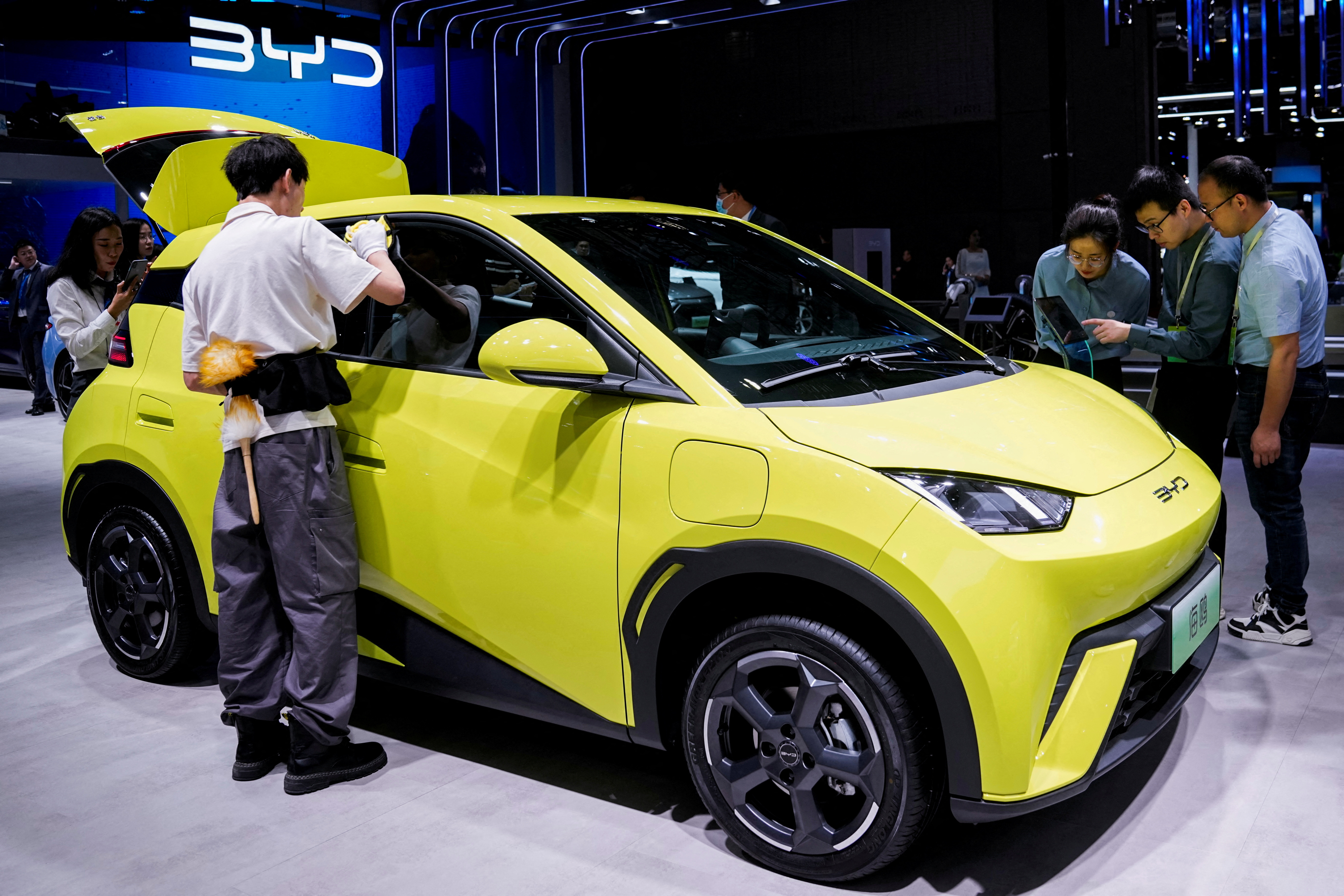
BYD’s pricing adjustments are widely viewed as strategic moves to defend market share in the mid-range and entry-level EV segments.
Competitors — including both Chinese startups and international players — have responded with their own incentives and discount programs.
Margin Pressure Builds
Sustained price cuts inevitably compress margins.
Chinese automakers have previously relied on scale efficiencies and vertical integration — particularly in battery production — to absorb cost pressures.
BYD’s in-house battery capabilities have historically given it a structural cost advantage.
However, prolonged discounting risks eroding profitability across the sector.
Investors are increasingly scrutinizing how long manufacturers can sustain aggressive pricing without sacrificing long-term financial stability.
Competitive Landscape
China’s EV ecosystem is crowded.
Domestic manufacturers compete not only on price but also on software features, charging speed and advanced driver assistance capabilities.
International brands such as Tesla have also engaged in periodic price adjustments in the Chinese market, further intensifying competitive dynamics.
The result is a highly elastic pricing environment where promotions can quickly ripple across the industry.
Export Implications
Chinese EV makers, including BYD, are expanding aggressively into international markets.
Price competition at home may accelerate overseas expansion as companies seek new revenue pools and margin stability.
Lower domestic prices can also enhance global competitiveness — though trade tensions and tariff scrutiny remain variables.
Industry Outlook
Despite the immediate pressure, long-term EV adoption in China remains structurally strong.
Government policy continues to favor electrification, and charging infrastructure has expanded rapidly.
Market share growth, however, is increasingly zero-sum among manufacturers.
The sector appears to be consolidating toward companies capable of combining cost discipline with technological differentiation.
What It Signals
BYD’s latest price cuts signal that China’s EV market is entering a more mature and competitive stage.
Growth alone is no longer sufficient.
Efficiency, scale and product differentiation now determine survival.
For global observers, China remains both a proving ground and a warning.
In the world’s largest EV market, leadership demands constant recalibration.