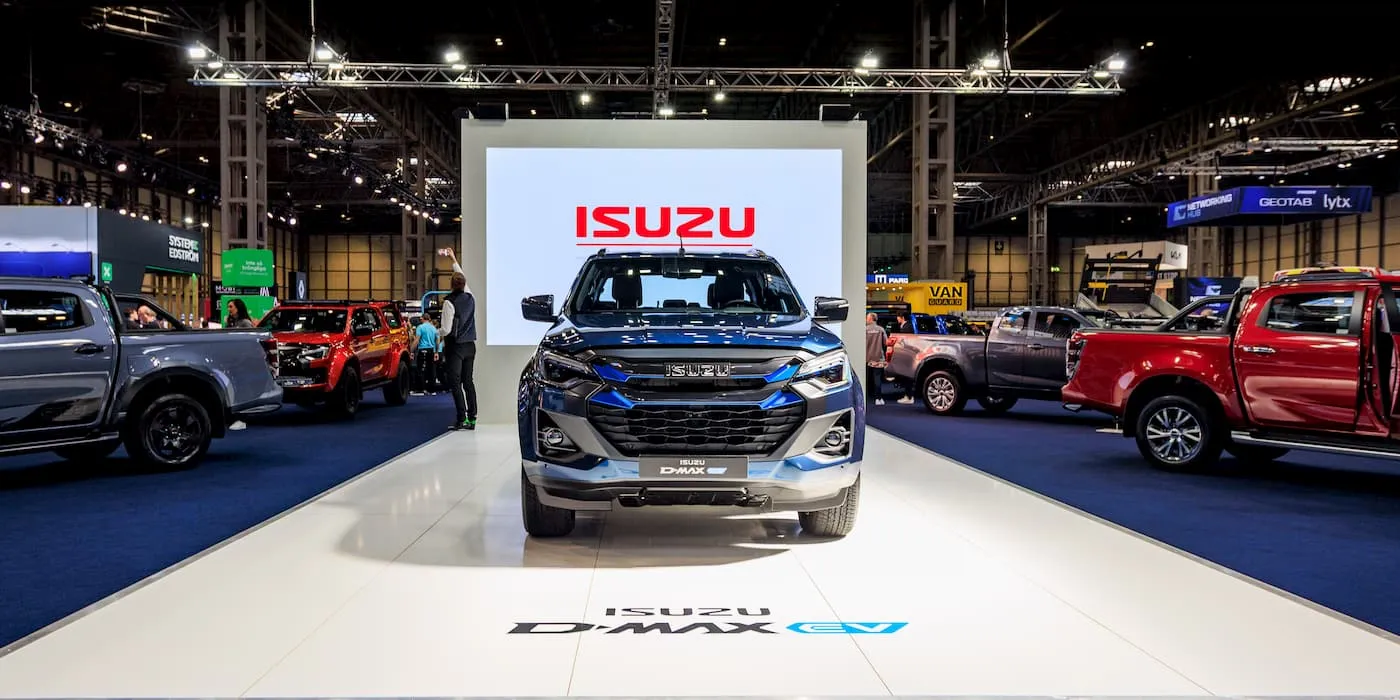
But early adopters will need to pay a premium.
A Strategic Shift for a Diesel Mainstay
Isuzu’s pickup lineup has traditionally been anchored by the D-Max, a model popular among construction firms, utility providers and agricultural operators.
The electric version represents a significant departure from that diesel-first legacy. For fleet operators facing tightening emissions regulations in the UK and across Europe, electrification is becoming less optional and more strategic.
Cities are expanding low-emission zones, and corporate sustainability mandates are reshaping procurement decisions.
Entering the electric pickup market allows Isuzu to remain competitive as regulatory frameworks evolve.
Why the Price Is Higher
Electric pickups are structurally more expensive to produce than their internal combustion counterparts.
Battery packs account for a substantial portion of manufacturing cost, and commercial vehicles require larger packs to maintain towing capacity and payload performance.
In addition, early production runs typically lack the economies of scale enjoyed by established diesel models.
The higher upfront cost may be offset over time through lower fuel and maintenance expenses, particularly for high-mileage fleet operators.
However, small businesses and independent contractors may hesitate at the initial investment.
Competitive Landscape in the UK
The UK market for electric pickups is still nascent compared to passenger EV adoption. Manufacturers entering this segment face infrastructure considerations, including charging availability in rural and industrial areas.
Isuzu’s entry adds competitive pressure as other automakers explore electrified work trucks.
The key differentiator will likely be durability and range under heavy load — critical metrics for commercial buyers.
Fleet Economics and Policy Tailwinds
Government incentives and tax benefits may soften the financial impact for fleet buyers. In the UK, various schemes encourage businesses to transition to low-emission vehicles.
Rising fuel costs also strengthen the economic argument for electrification, especially in sectors with predictable routes and depot-based charging setups.
The calculus increasingly depends on total cost of ownership rather than sticker price alone.
A Broader Commercial EV Transition
Isuzu’s electric pickup launch reflects a broader shift within the automotive industry.
Passenger EV adoption has advanced rapidly, but commercial vehicles have lagged due to performance requirements and cost sensitivity. That gap is narrowing as battery technology improves and regulatory pressure intensifies.
The question is no longer whether work trucks will electrify.
It is how quickly the economics align.
For Isuzu, entering the UK market now positions the company for long-term relevance in a segment undergoing structural transformation.
The price may be high.
But so are the stakes in the race to electrify commercial transport.