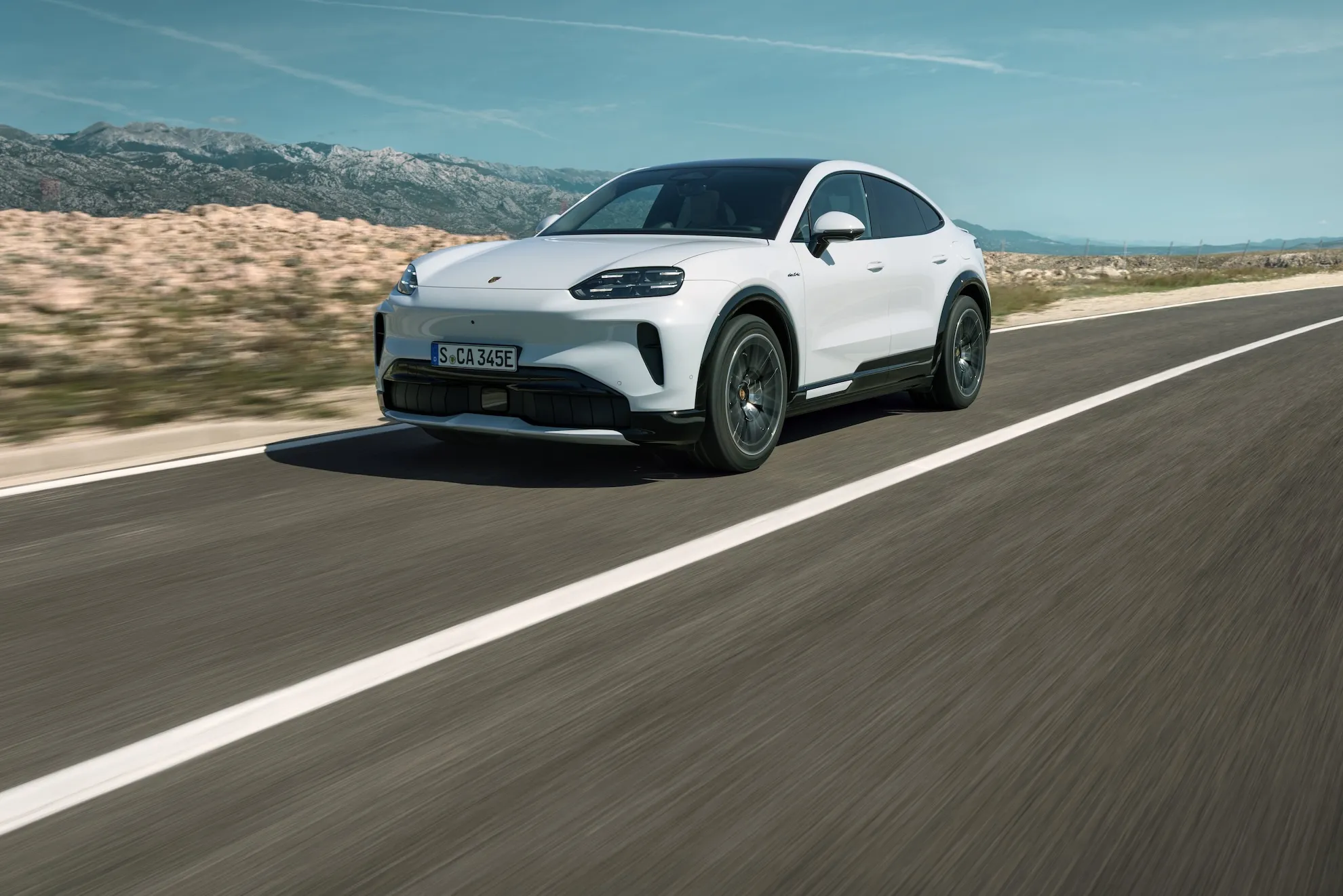
The Cayenne has long been one of Porsche’s most commercially important models, particularly in North America and China. Electrifying the Coupe variant underscores the company’s intent to convert high-volume luxury SUVs into battery-powered offerings while maintaining brand identity.
A Strategic SUV Play
Luxury SUVs remain one of the most profitable segments in the global automotive market. For Porsche, the Cayenne is not merely a halo vehicle — it is a revenue engine.
Adding an all-electric Coupe variant allows the automaker to compete directly with premium EV rivals while preserving the sporty design cues that differentiate the Coupe from the standard SUV body style.
The timing is significant. As EV adoption matures in the U.S., Europe, and parts of Asia, consumers increasingly expect electric options across all major segments, including high-performance SUVs.
Competition in the Premium EV Segment
The electric luxury SUV market has become increasingly crowded. Tesla’s Model X established early dominance, while European automakers have introduced electric flagships aimed at capturing affluent buyers seeking performance and sustainability.
Porsche’s broader EV strategy, which began with the Taycan, has focused on maintaining performance credentials while adapting to battery-electric architecture. The Cayenne EV will likely follow that formula — blending acceleration, handling precision, and digital cockpit enhancements.
For Volkswagen Group, Porsche’s electrification push also plays a strategic role in offsetting broader group-level transition costs.
Platform and Technology Implications
While technical specifications have not yet been disclosed, Porsche’s electric SUVs are expected to leverage next-generation battery platforms capable of high-voltage charging and extended range.
Fast-charging capability is becoming a key differentiator in the premium segment, particularly in the U.S. where infrastructure expansion is ongoing but uneven.
Battery efficiency, software integration, and driving dynamics will determine how effectively the electric Cayenne competes against both legacy automakers and EV-native brands.
Market Context: EV Growth Amid Volatility
Global EV adoption continues to expand, though growth rates have moderated in some markets due to pricing pressures and subsidy adjustments.
Luxury buyers, however, tend to be less price-sensitive and more receptive to early adoption of new technologies.
For Porsche, electrifying the Cayenne Coupe allows it to defend market share while aligning with tightening emissions regulations in Europe and California.
It also signals confidence that performance-oriented buyers are ready to transition from internal combustion to electric powertrains without compromising brand expectations.
The Broader Signal
Porsche’s move illustrates a broader industry shift: electrification is no longer experimental — it is foundational.
Rather than launching niche EV models, automakers are converting their core franchises into electric form. That strategy reduces brand risk and preserves customer loyalty during the transition.
The electric Cayenne Coupe is less about expanding Porsche’s lineup and more about redefining its future identity.
In the next decade, the question for legacy performance brands will not be whether they build EVs.
It will be whether they can make electric vehicles feel unmistakably like their own.
With the Cayenne Coupe EV, Porsche is betting that it can.