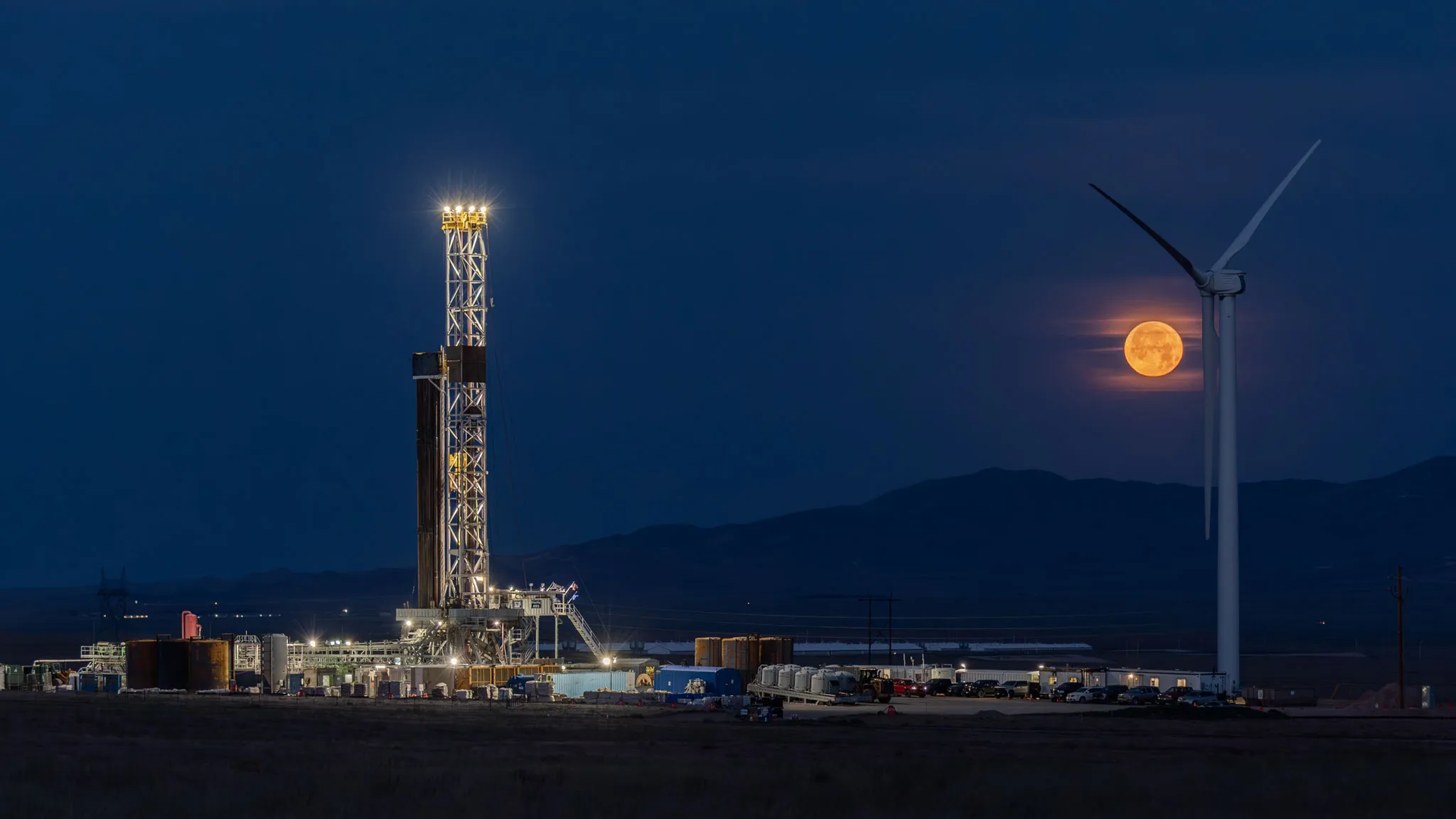
Here's the number that makes Fervo's IPO filing uncomfortable to dismiss: $7 billion. That's the estimated revenue backlog sitting behind 658 megawatts of aggregated binding power purchase agreements with buyers including Southern California Edison and Shell, as disclosed in Fervo's SEC filing on May 4, 2026. Before a single share of FRVO trades on Nasdaq, the Houston company has already pre-sold most of what it plans to build. That's not a startup story. That's an infrastructure company story — and the public markets are only now being invited to catch up.
US geothermal startup Fervo Energy is looking to raise as much as $1.33 billion in an initial public offering, marketing 55.56 million shares at $21 to $24 each. At the top of that range, Fervo would carry a market value of $6.5 billion. For context: that's more than double the $2 billion to $3 billion valuation the company was reportedly targeting in January when it first filed confidential SEC paperwork — a figure Axios at the time called "lofty." Four months later, Fervo doubled it, and nobody in the room apparently blinked.
What changed? Partly the Cape Station project financing locked in March, which added credibility. Partly X-energy's successful nuclear IPO demonstrating that public market appetite for firm clean power infrastructure is real. But mostly, it's the data centre problem getting worse faster than anyone modelled.
The Drilling Play Nobody Saw Coming
The story of Fervo is, at its core, a story about intellectual arbitrage. Tim Latimer, the company's CEO, trained as a drilling engineer at BHP before co-founding Fervo with CTO Jack Norbeck in 2017. Their insight wasn't geothermal-first — it was oil-and-gas-first. The American shale boom had spent two decades developing horizontal drilling techniques, fibre-optic downhole sensing, and real-time subsurface analytics that geothermal engineers had largely ignored because conventional geothermal — drilling into naturally occurring hot springs — didn't need them. Enhanced geothermal, which creates its own reservoirs by fracturing hot dry rock and circulating water through it, absolutely does.
Between 2022 and 2025, Fervo reduced drilling times by about 75% and slashed per-foot drilling costs by about 70%. That compression is what makes the IPO math work. The company's first wells took about a month to drill; by late 2025, Fervo had completed one in 16 days, with mid-teens averages across the fleet. Roughly half of well cost is drilling time. Faster drilling is cheaper drilling, and cheaper drilling is what transforms enhanced geothermal from an engineering curiosity into a financeable utility asset. Motilal OswalTimes Drive
On March 19, 2026, Fervo closed $421 million in non-recourse project financing for Cape Station's first phase — a $309 million construction-to-term loan, a $61 million tax credit bridge loan, and a $51 million letter of credit facility, arranged by RBC Capital Markets and co-led by Barclays, BBVA, HSBC, MUFG, and Société Générale. J.P. Morgan and Bank of America also participated. When that roster of lenders backs infrastructure on a non-recourse basis — meaning Cape Station itself is the collateral, not Fervo's balance sheet — it tells you something important: the financial establishment has decided this isn't a science project anymore. Upstox
The Google Dependency (And What It Actually Means)
"There's clearly a huge hunger in the public markets right now to figure out — how are we going to solve the power demand story?"
— Tim Latimer, CEO, Fervo Energy, speaking to Axios in March 2025
Latimer has been saying versions of this for over a year. He's not wrong. The data centre power problem is structural, not cyclical. US electricity demand from AI infrastructure is projected to double by 2030, and utilities simply don't have the firm clean power to serve it. Wind and solar are intermittent. Nuclear takes a decade to permit and build. Batteries don't solve the multi-day storage problem at grid scale. Geothermal — which runs at 90%+ capacity factor, 24 hours a day, 365 days a year, with a land footprint a fraction of solar — looks increasingly like the only baseload clean answer that doesn't require reinventing regulatory frameworks.
Google has backed Fervo since 2021, committing first to a 5MW demonstration plant in Nevada and later to 115MW of capacity via a "clean transition tariff" to power its Nevada data centres. Google then joined Fervo's Series E as an equity investor in December 2025. Microsoft has also gotten involved. Latimer has said that essentially any company building a data centre in the United States is a potential Fervo customer. That's not hubris — it's the arithmetic of the grid. DriveSpark5paisa
The counterintuitive observation here is this: Fervo's cleanest political asset under the current US administration isn't its carbon-free credentials. It's that enhanced geothermal uses the same drilling rigs, the same wellbore technology, and employs many of the same engineers as the oil and gas industry Trump's energy "emergency" order explicitly champions. Geothermal is among the technologies the administration looks favourably on, precisely because the skills transfer is direct. A climate company that benefits from an energy-nationalist policy environment is a rare thing. Fervo has stumbled into being one. 5paisa
The Numbers That Investors Will Actually Fight Over
Key metrics from the IPO filing and prior disclosures:
IPO target raise: Up to $1.33 billion (55.56M shares at $21–$24)
Target valuation at top of range: $6.5 billion
Total capital raised to date: Over $1.5 billion (equity, debt, grants) including a $462M Series E in December 2025
Cape Station Phase I: 100MW target by late 2026 / early 2027 in Beaver County, Utah
Cape Station Phase II: 400MW additional by 2028; DOI approval for up to 2GW on-site
Contracted capacity: 658MW across portfolio with $7B+ estimated revenue backlog
Net loss FY2025: $57.8 million (up from $41.1 million the prior year)
Cape Station Phase I financing: $421M non-recourse project debt closed March 19, 2026
Drilling cost reduction: ~70% per-foot cost reduction between 2022 and 2025
Fervo says Cape Station will generate electricity at $7,000 per kilowatt of installed capacity. The company's goal is to get that to $3,000 per kilowatt — the point at which enhanced geothermal becomes cost-competitive with natural gas. That gap — $7,000 to $3,000 — is the central investment thesis. Investors are being asked to fund the learning curve. Electrical Mirror
That's the ask, plainly stated. Not profit now. Not even near-term positive EBITDA. Fervo warns in its IPO filing that losses will continue for the next "several years" as it increases spending and scales. What investors get instead is a contracted revenue backlog, a proven technology that's getting cheaper fast, and a structural tailwind — AI infrastructure power demand — that nobody credibly argues will reverse. Motilal Oswal
The Skeptic's Case, Briefly
Is $6.5 billion the right number for a company that lost $57.8 million last year and hasn't yet delivered power at scale? The valuation math requires believing that Cape Station delivers on time, that costs compress on the projected curve, and that the Inflation Reduction Act's energy tax credits survive whatever Congress does next. That last variable isn't in Fervo's control. Latimer has been actively lobbying to preserve the clean energy tax credits that are on the chopping block in Congress — an admission that the financial model has a political dependency baked in. 5paisa
There's also geological risk, full stop. Enhanced geothermal is an engineering process applied to the earth's crust, and the earth's crust doesn't always cooperate. The Cape Station site in Beaver County, Utah, sits in a geologically favourable region — hot rock at 8,500 feet, 450°F temperatures — but every new site is a new bet. The company's plan to scale beyond Cape Station requires replicating those conditions elsewhere, and the subsurface is not a commodity you can simply order more of.
The valuation doubling from January's $3 billion target to today's $6.5 billion in four months isn't necessarily a red flag — X-energy's nuclear IPO validated that public markets will pay up for firm clean power infrastructure when they believe the technology is real. But it does mean that if Cape Station Phase I slips its 2026 delivery window by even a quarter, the stock will feel it immediately and publicly.
What to Watch
Cape Station Phase I first-power delivery. The 100MW installation is on track to start delivering power to the grid in October 2026, which would make it the first commercial-scale enhanced geothermal project to reach this milestone globally. That date is now a public market event, not just a construction target. Autocar Professional
Nasdaq pricing day. The spread between $21 and $24 per share isn't just about raising capital — it's about what sophisticated institutional investors think the technology risk premium should be. A deal priced at the top signals confidence; a deal priced at the low end or restructured signals hesitation in the order book.
The next power purchase agreement. Fervo is in active discussions with additional big tech companies beyond Google, and any new hyperscaler PPA announced around or after the IPO would immediately validate the $7 billion backlog argument and then some. 5paisa
The IPO market for clean energy infrastructure in 2026 is thinner than it was in 2021, and the macro backdrop — tariff uncertainty, rising capital costs, a Congress that hasn't decided what it thinks about the IRA — isn't forgiving. US geothermal startup Fervo Energy has built the most credible case for commercial-scale enhanced geothermal that anyone has ever assembled. The public markets will now decide whether that case is worth $6.5 billion or something considerably more cautious.The answer, expected sometime this summer on Nasdaq, will matter well beyond Fervo's cap table. If it works, it opens the funding door for every other hard infrastructure climate company that's been told the public markets aren't ready. If it doesn't, that door closes again — probably for years.

![Apple reports Q2 2026 earnings: $111.2 billion in revenue, up 17% [Charts]](https://startupnews-media-2026.s3.us-east-1.amazonaws.com/startupnews-in/uploads/2026/05/manual-1777704093949-pjwq8qf0b.jpeg?X-Amz-Algorithm=AWS4-HMAC-SHA256&X-Amz-Content-Sha256=UNSIGNED-PAYLOAD&X-Amz-Credential=AKIAZQ3DRHCSCL44VIMT%2F20260505%2Fus-east-1%2Fs3%2Faws4_request&X-Amz-Date=20260505T090554Z&X-Amz-Expires=604800&X-Amz-Signature=6ee7e4fe4519b4fe09c0d48e5b39765c5c0d52c881fe26cf932501e1c5508814&X-Amz-SignedHeaders=host&x-amz-checksum-mode=ENABLED&x-id=GetObject)