Discover how Tesla's Model Y sets a new standard for ADAS, offering enhanced safety and a transformative driving experience for US motorists.
The quiet hum of an electric motor, the subtle steering corrections, the measured deceleration. For many modern drivers, these sensations represent not just convenience, but a profound shift in the driving experience. They signify the vigilant, often imperceptible, assistance of advanced driver assistance systems (ADAS). Imagine a late night return from a demanding business trip, fatigue setting in, when a sudden lane deviation is gently corrected, or an unanticipated brake light ahead triggers a smooth, preemptive slowdown. These are the moments where technology transcends mere utility, offering a layer of safety that was once the sole domain of human alertness, and sometimes, human error.
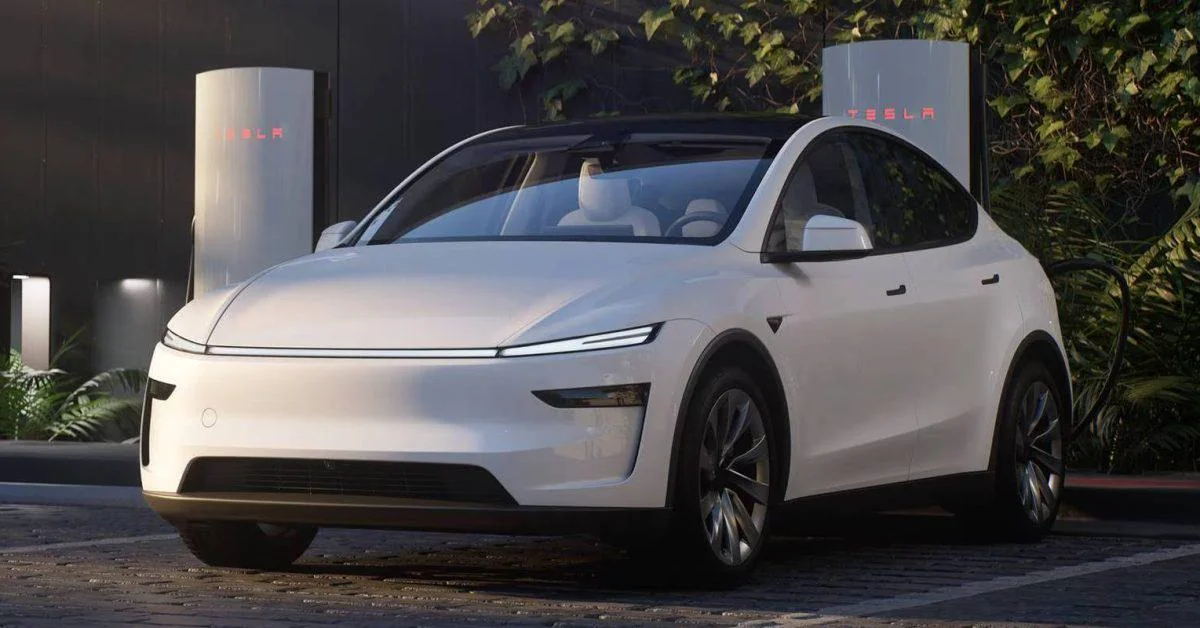
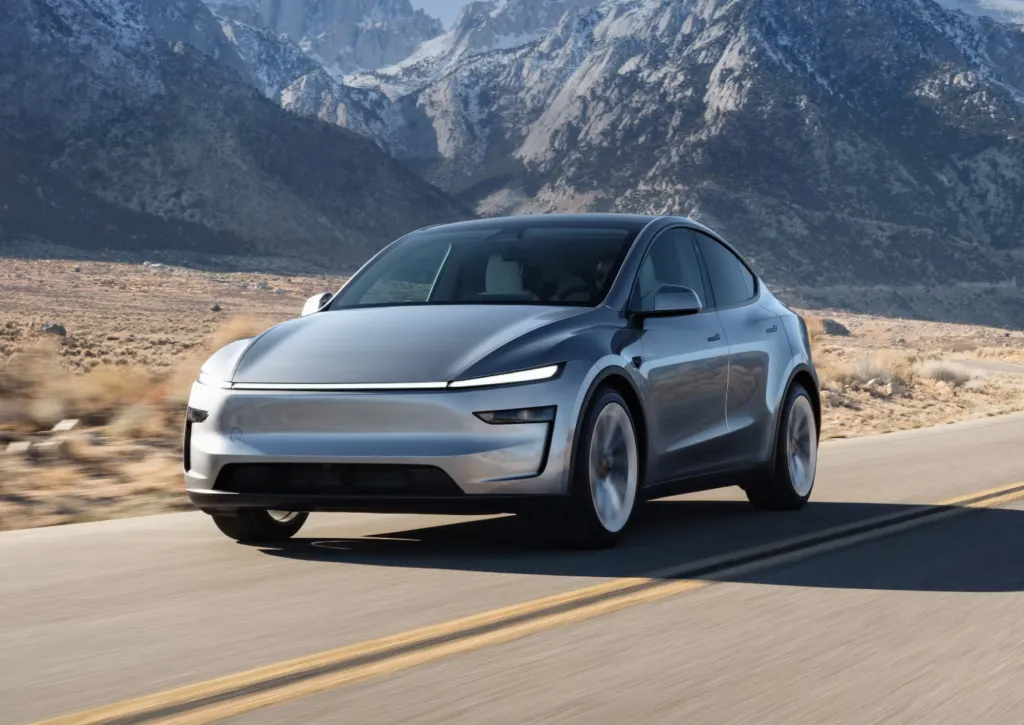
This evolving landscape of automotive safety has just seen a landmark moment. The Tesla Model Y has become the first vehicle to meet the rigorous new US driver assistance safety benchmark, a standard designed to elevate performance expectations beyond simple feature inclusion. This achievement isn't merely a feather in Tesla's cap; it's a significant marker for the entire automotive industry, signalling a maturation of ADAS technologies and a clear regulatory push towards verifiable, high-performance safety capabilities.
The New Standard of Safety Performance
For years, automotive manufacturers have advertised a growing suite of ADAS features: adaptive cruise control, lane keeping assist, automatic emergency braking, blind spot monitoring. While these individual components undoubtedly enhance safety, the challenge has been the lack of a comprehensive, performance-based evaluation for how well they integrate and function under real-world conditions. The new US benchmark, spearheaded by bodies like the National Highway Traffic Safety Administration (NHTSA) and likely influenced by safety advocates like the Insurance Institute for Highway Safety (IIHS), addresses this directly.
This benchmark moves beyond a checklist of features to a validation of their efficacy. It scrutinizes Level 2 driver assistance systems, which combine adaptive cruise control with active lane keeping, demanding consistent and reliable performance across a range of scenarios. This includes not just maintaining speed and lane discipline on highways, but also effective collision avoidance in complex urban environments, robust driver monitoring to ensure attentiveness, and seamless handoff capabilities. The focus is on the integrated system's ability to reduce driver workload while demonstrably enhancing safety, not just in ideal conditions but under varied lighting, traffic, and road states.
Tesla's Differentiated Approach
Tesla's success in meeting this benchmark is particularly noteworthy given its distinctive approach to ADAS. While many competitors rely on a fusion of sensors including radar, lidar, and ultrasonic alongside cameras, Tesla has increasingly emphasized a "vision-only" primary strategy for its Autopilot and Full Self-Driving (FSD) Beta systems. This strategy leverages a network of cameras around the vehicle, processing vast amounts of visual data with sophisticated neural networks to build a perception of the environment.
This camera-centric methodology, combined with an unparalleled volume of real-world driving data collected from its global fleet, allows Tesla to continuously refine its AI models through iterative software updates. The Model Y, as a leading example of this architecture, benefits from a feedback loop that rapidly identifies edge cases, improves object recognition, and enhances predictive capabilities. This iterative development cycle, facilitated by over-the-air (OTA) updates, provides an agility that traditional OEMs with longer hardware and software development cycles often struggle to match.
Industry Implications and the Competitive Landscape
The Model Y's benchmark achievement sets a new precedent and will undoubtedly send ripples throughout the automotive industry. For established automakers, this isn't just about competing with Tesla's market share; it's about meeting an evolving regulatory and consumer expectation for advanced safety. Manufacturers who have historically focused on incremental improvements in ADAS will now face pressure to demonstrate verifiable, high-performance system integration.
This shift could accelerate investment in advanced sensor suites, more powerful onboard compute platforms, and robust software validation processes. Companies that have been hesitant to fully embrace OTA updates or deep learning for perception will find themselves at a strategic disadvantage. The marketing narrative will transition from simply listing available features to proving their real-world safety impact, potentially spurring a "race to safety" where performance metrics become key differentiators.
A Global Ripple Effect
While this benchmark is US-specific, its implications are global. Regulatory bodies in Europe, such as Euro NCAP, have already been pushing for more stringent ADAS testing protocols, including assessment of driver monitoring systems and system reliability. Similarly, markets in Asia, particularly China and Japan, are rapidly developing their own standards for intelligent connected vehicles. A successful, measurable US benchmark could serve as a template or at least a significant influence on future international regulations.
This could lead to a harmonization of safety standards globally, simplifying development for multinational automakers. Conversely, it could also lead to fragmentation, where different regions prioritize different aspects of ADAS performance, creating complexity for manufacturers operating across multiple markets. However, the overall trend is clear: a global movement towards more robust, verifiable ADAS performance.
Beyond Level 2: The Stepping Stone to Autonomy
It is crucial to understand that meeting this Level 2 benchmark is not the culmination of autonomous driving development; rather, it is a critical stepping stone. Level 2 systems, by definition, require constant driver supervision, even if they can handle steering, acceleration, and braking concurrently. The driver remains responsible for monitoring the environment and intervening when necessary. The new benchmark simply ensures that this supervised assistance is performed to a consistently high standard.
The journey towards Level 3, 4, and 5 autonomy presents vastly more complex technical, legal, and ethical challenges. Level 3 systems, where the vehicle can operate autonomously under certain conditions but still requires human take-over when prompted, introduce thorny questions of liability and responsibility during transitional phases. However, the robust performance data and rigorous validation processes developed in meeting the Level 2 benchmark will be invaluable for building the foundational trust and reliability necessary for higher levels of automation.
The emphasis on effective driver monitoring, a key component of the new benchmark, highlights the continued importance of the human element in supervised automation. Systems must not only perform well but also ensure the driver remains engaged and ready to intervene. This dual focus on machine performance and human oversight is essential for the safe and responsible deployment of increasingly capable ADAS technologies.
The Human Future of Machine Assistance
The achievement of the Tesla Model Y is more than a technical triumph; it represents progress towards a future where roads are safer, commutes are less stressful, and the potential for human error is mitigated by intelligent systems. For founders and operators in the tech and automotive sectors, this benchmark signifies a new era of accountability and performance measurement in ADAS. It underscores the strategic imperative to invest in data-driven development, robust validation, and continuous software improvement.
As these systems become more capable and ubiquitous, they will reshape urban planning, logistics, and even the very concept of vehicle ownership. The long-term societal benefits range from reduced accident rates and associated healthcare costs to increased mobility for elderly and disabled populations. The Model Y's achievement is a powerful reminder that while full autonomy remains a distant horizon, the journey is marked by significant, measurable milestones that are already transforming how we interact with our vehicles, one assisted mile at a time.
Key Takeaways
The Tesla Model Y is the first vehicle to meet the new US driver assistance safety benchmark, signifying a shift from feature availability to verified performance standards for Level 2 ADAS.
This benchmark validates the integrated performance of systems like adaptive cruise control and lane keeping assist across diverse real-world driving conditions, emphasizing reliability and driver monitoring.
Tesla's vision-centric approach, combined with extensive real-world data and iterative software updates, has provided a competitive edge in achieving this rigorous standard.
The achievement will intensify pressure on other automotive OEMs to enhance their ADAS validation and development processes, likely accelerating industry-wide investment in advanced sensors, compute, and software.
While a US benchmark, its success will likely influence global regulatory trends, pushing for more harmonized, performance-based safety standards for assisted driving technologies worldwide.
Frequently asked questions
What US safety benchmark did the Tesla Model Y meet?
The Tesla Model Y met a new US driver assistance safety benchmark, signifying its advanced driver assistance systems (ADAS) provide a high level of safety performance. This new standard evaluates features like automatic emergency braking and lane-keeping assistance under various driving conditions, ensuring vehicles offer robust support to drivers.
How does ADAS improve driver safety?
ADAS features improve driver safety by actively monitoring the driving environment, alerting drivers to potential hazards, and in some cases, intervening to prevent accidents or mitigate their severity.
Is the Tesla Model Y fully autonomous?
No, while the Tesla Model Y has advanced ADAS, it is not fully autonomous. Its systems require active driver supervision and are designed to assist, not replace, the driver.
What are examples of ADAS features?
Common ADAS features include adaptive cruise control, lane departure warning, automatic emergency braking, blind-spot monitoring, and parking assistance.
Why is meeting new safety benchmarks important?
Meeting new safety benchmarks is crucial for consumer confidence, pushing automotive innovation, and continuously raising the bar for vehicle safety across the industry.
Where can I find more information on ADAS safety ratings?
More information on ADAS safety ratings can typically be found on websites of automotive safety organizations like the NHTSA (National Highway Traffic Safety Administration) or IIHS (Insurance Institute for Highway Safety).