Elon Musk spent the better part of three years promising a single app to rule them all. On Friday, his company quietly shipped a second one. XChat, X's standalone messaging application, went live on iOS on April 24 — joining X Money, which is separately in testing, and the main X app itself. Three apps. One supposed super-app vision. The tension is hard to ignore.
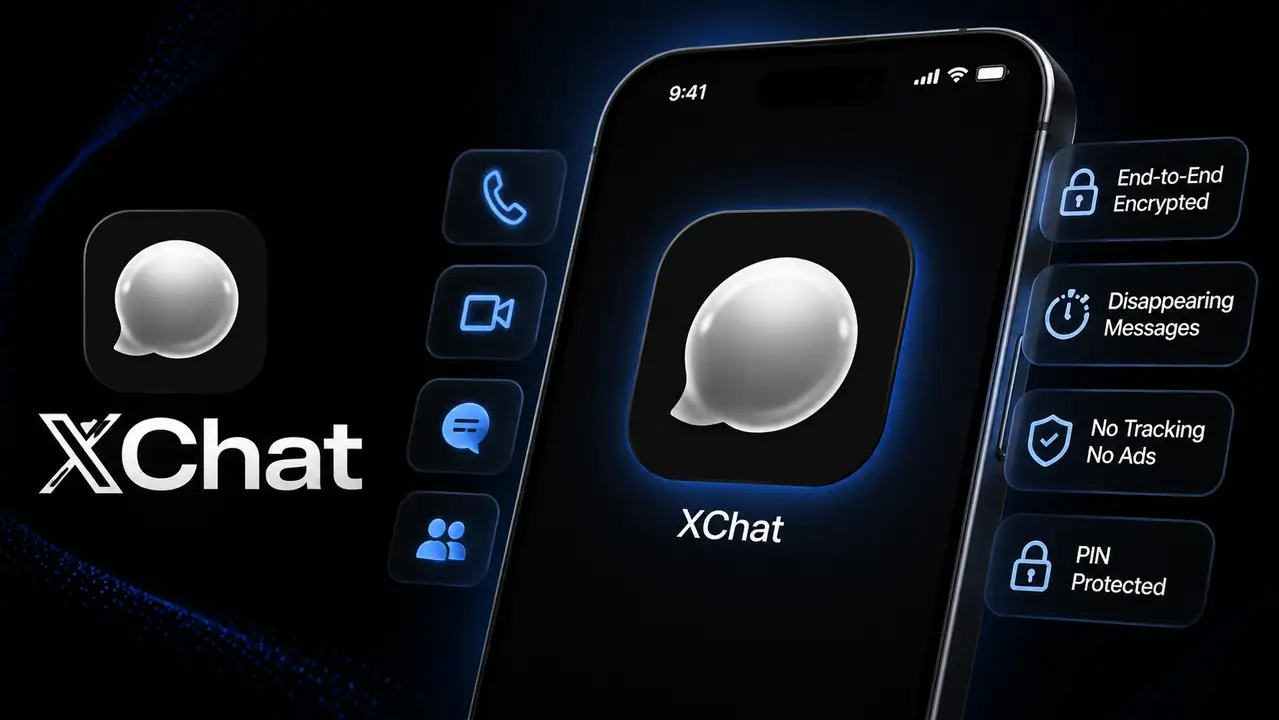
The XChat iOS app allows users to message their existing X contacts, make audio and video calls, share files, and create group chats. At launch, the company is emphasising a privacy-first pitch: end-to-end encryption, PIN protection, disappearing messages, screenshot blocking, and — notably — no ads and no tracking. It is a feature set that reads less like a social network add-on and more like a direct challenge to Signal and WhatsApp.
X is not building one app that does everything — it is building a portfolio of apps, each trying to own a specific context of your digital life.
From One App to Many: The Strategy Shift Nobody Named
When Musk acquired Twitter for $44 billion in October 2022 and rebranded it X, he was explicit about his ambitions: a WeChat-style everything app combining messaging, payments, creator tools, shopping, and AI under one roof. The reference point was deliberate — WeChat's dominance in China showed that a single app commanding daily attention across multiple verticals could become a platform in the truest sense.
The XChat launch represents a quiet but meaningful departure from that logic. Rather than deepening the X app's functionality until it becomes indispensable, the company — now owned by xAI, Musk's artificial intelligence company, which is itself held under SpaceX — is spinning out its most privacy-sensitive use cases into dedicated products. The argument, presumably, is that a standalone messaging app carries less reputational baggage than messaging conducted inside a social network known for public discourse, data controversies, and algorithmic amplification.
Whether users will agree with that reasoning is another question. X first began beta-testing XChat with a small group earlier in 2026, suggesting the company has at least some user feedback to work from. But moving from a limited beta to a general iOS launch is a different kind of test — one measured in app store ratings, retention curves, and whether people who already have Signal installed see any reason to switch.
The Security Question X Has Not Fully Answered
The company's privacy claims deserve scrutiny. X states that all XChat messages are end-to-end encrypted and PIN protected, and that the app contains no advertising or tracking. These are strong promises — but security researchers have been sceptical before.
When X first introduced encrypted messaging features, experts publicly warned that the implementation appeared weaker than established alternatives like Signal. The Register documented those concerns in detail last year, noting that the company's encryption claims had been disputed. Researchers will now need to independently audit the standalone XChat app — which may carry different technical architecture from the in-app version — before users with high privacy requirements can reasonably trust it.
The gap between a company's encryption claims and independently verified encryption implementation has, historically, been where user trust is won or lost permanently.
"A no-ads, no-tracking pitch is compelling on paper, but users evaluating a messaging app for sensitive conversations need more than a company's word. Independent cryptographic audits are the baseline, and X has not yet commissioned or published one for XChat."
— Independent Security Analyst, commenting on X's previous encrypted messaging rollout
For most casual users — people sending memes and coordinating plans, not journalists or activists in high-risk environments — the lack of an audit may not be a dealbreaker. But it is a meaningful ceiling on XChat's addressable market if it wants to compete in the segment where Signal has earned genuine trust.
XChat Inherits X's Communities — and Their Problems
One immediate growth lever is accidental. The same week XChat launched publicly, X announced it was shutting down Communities, its group-based feature, citing low usage and persistent spam problems. XChat is being positioned as the new home for those group interactions, potentially redirecting an existing — if modest — user base toward the new app at the exact moment it needs installation momentum.
It is a convenient piece of timing, though the circumstances that made it convenient are not flattering. Communities failed in part because X struggled to moderate group spaces effectively, and because the social network's general atmosphere has deterred some users from investing in community-building there. Asking those same users to now migrate their group activity to XChat — a product from the same company, requiring the same X account — may not be as straightforward as the timing suggests.
Still, even a partial migration of Communities users represents meaningful early traction. App store charts respond to install velocity, and Communities members motivated to preserve their groups have a concrete reason to download XChat this week rather than eventually.
The XChat App in a Crowded iOS Messaging Market
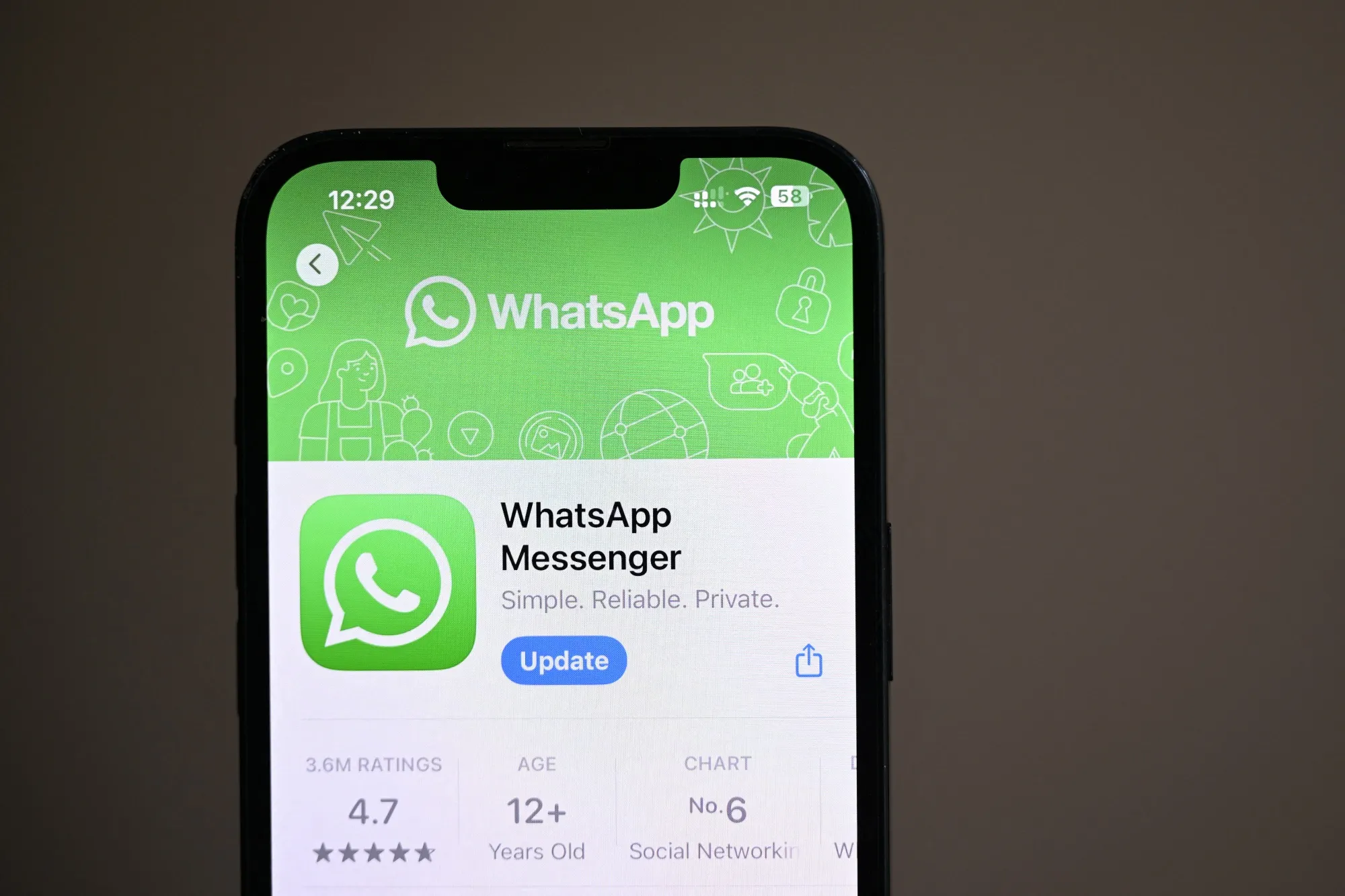
The competitive context for XChat on iOS is unforgiving. WhatsApp commands over two billion monthly users globally, with particularly dense penetration across India, Brazil, Europe, and Southeast Asia — markets where X has meaningful user bases but WhatsApp is embedded in daily infrastructure. iMessage dominates in the United States among iPhone users. Signal owns the privacy-conscious segment. Telegram has cultivated a large community of power users who value channels and large group capabilities.
XChat's differentiator, at least at launch, is its integration with the X social graph. Users do not need to share phone numbers to connect — they can message anyone they follow or are followed by on X. For people with large X audiences, that is a genuinely useful feature. For the average user, its value depends on whether their real-world contacts are active on X — a platform whose user base, while still large, has seen notable advertiser pullback and user sentiment shifts since 2022.
XChat's long-term success will hinge on one number that X has not published: how many of its daily active users already use X's in-app messaging with any regularity.
X lead designer Benji Taylor said publicly that the launch is "just the beginning of what we're building for messaging" — which signals that the current feature set is intentionally minimal. The roadmap is unspecified, but the phrasing suggests that audio spaces, AI-assisted features (given xAI's ownership), and potentially payments integration are plausible additions. Whether those additions arrive before or after user interest plateaus will define XChat's trajectory.
What a Multi-App Strategy Means for xAI's Broader Ambitions
Viewed through the lens of xAI — which owns X and is building the Grok AI assistant — the multi-app strategy makes a different kind of sense. Rather than one monolithic app that users open for everything, xAI is accumulating consumer touchpoints: X for public discourse, XChat for private communication, X Money for financial transactions (pending public launch). Each app collects distinct behavioural data. Each represents a different monetisation surface.
This is less WeChat and more a loosely federated portfolio — closer, structurally, to how Meta operates Facebook, Instagram, and WhatsApp as separate products that share infrastructure and data agreements. The irony is that Meta's strategy, which Musk has frequently criticised, may be the template his own company is now following.
For regulators watching X's data practices — including those in the European Union operating under the Digital Services Act and the Digital Markets Act — a messaging app that promises no tracking but shares an account infrastructure with a social network will prompt questions about data compartmentalisation. The XChat app has not yet addressed how, or whether, messaging data is segregated from X's broader user profiles. That clarity will matter in jurisdictions where data minimisation is a legal requirement, not a marketing promise.
For now, XChat is available on iOS globally. An Android version has not been announced. The app is free. And for the first time since the X rebrand, Musk's social network is genuinely testing whether its brand can carry users into a new product category — one where the competition has years of head start and, in some cases, decades of user trust.
Key Takeaways
XChat launched publicly on iOS on April 24, 2026, offering messaging, calls, file sharing, and group chats with X contacts.
The app claims end-to-end encryption, no ads, and no tracking — but independent security audits have not yet been conducted on the standalone product.
The launch signals a quiet pivot away from Musk's "everything app" vision toward a portfolio of specialised applications under xAI's ownership structure.
X's simultaneous shutdown of its Communities feature could drive early installs as group members seek an alternative home.
XChat faces an iOS messaging market already dominated by WhatsApp, iMessage, Signal, and Telegram, with no announced Android launch date.
EU regulators and privacy researchers are likely to scrutinise how XChat's data practices interact with X's broader user profiling infrastructure.
What to Watch Next
Independent cryptographic audit of XChat's end-to-end encryption implementation — and whether X commissions one proactively.
X Money's public launch timeline and whether it integrates directly into XChat or remains a separate product.
EU Digital Services Act compliance assessment of XChat's data segregation from X's social graph.
Android availability announcement — its absence limits XChat's reach in markets like India where Android dominates.
Grok AI integration into XChat — a logical next step given xAI's ownership, and a potential differentiator if executed well.
Monthly active user figures, if X chooses to disclose them, to assess whether XChat achieves meaningful retention beyond the launch week.
Frequently Asked Questions
Q: What is XChat and how is it different from messaging on X?
XChat is a standalone iOS app from X that lets users message their X contacts directly, without opening the main X social network app. It adds features not available in X's in-app DMs, including disappearing messages, screenshot blocking, audio and video calls, and a dedicated group chat interface. X claims the app contains no ads and no tracking, and that all messages are end-to-end encrypted.
Q: Is XChat end-to-end encrypted and is it safe to use?
X states that XChat messages are end-to-end encrypted and PIN protected. However, security researchers previously raised concerns about the robustness of X's encryption when it was introduced in the main app. An independent cryptographic audit of the standalone XChat app has not yet been published, so users with high-security requirements should wait for third-party verification before treating it as equivalent to Signal.
Q: Is XChat available on Android?
As of its April 24, 2026 public launch, XChat is available on iOS only. X has not announced an Android release date. Android's dominance in high-growth markets — particularly India, Brazil, and much of Southeast Asia — means its absence significantly limits XChat's global reach at launch.
Q: Why did X launch a separate messaging app instead of improving DMs inside X?
X has not given an explicit rationale, but the strategic logic appears to be separating private messaging from the public social network to build a distinct privacy-focused product. This mirrors how Meta operates WhatsApp separately from Facebook, and how xAI — X's parent company — is building a portfolio of consumer apps across communication, payments, and AI rather than a single super-app.
Q: Does XChat show ads?
X states explicitly that XChat contains no ads and no tracking mechanisms at launch. This is a notable departure from X's core business model, which remains advertising-dependent. Whether this commitment holds as XChat scales, or whether a premium tier is introduced, remains to be seen.
Q: How does XChat connect with other users — do you need a phone number?
XChat uses your existing X social graph, meaning you can message people you follow or who follow you on X without sharing phone numbers. This is a meaningful design difference from WhatsApp or Signal, which are phone-number dependent. It lowers the friction of connecting but also means XChat's value is tied to the health and size of a user's X network.
Q: What happened to X Communities, and is XChat replacing it?
X shut down its Communities feature in April 2026, citing low usage and high spam levels. The company is positioning XChat's group chat functionality as a destination for former Community members, which may give the app an early boost in downloads from users looking to preserve their group connections in a new environment.
Source: Techcrunch