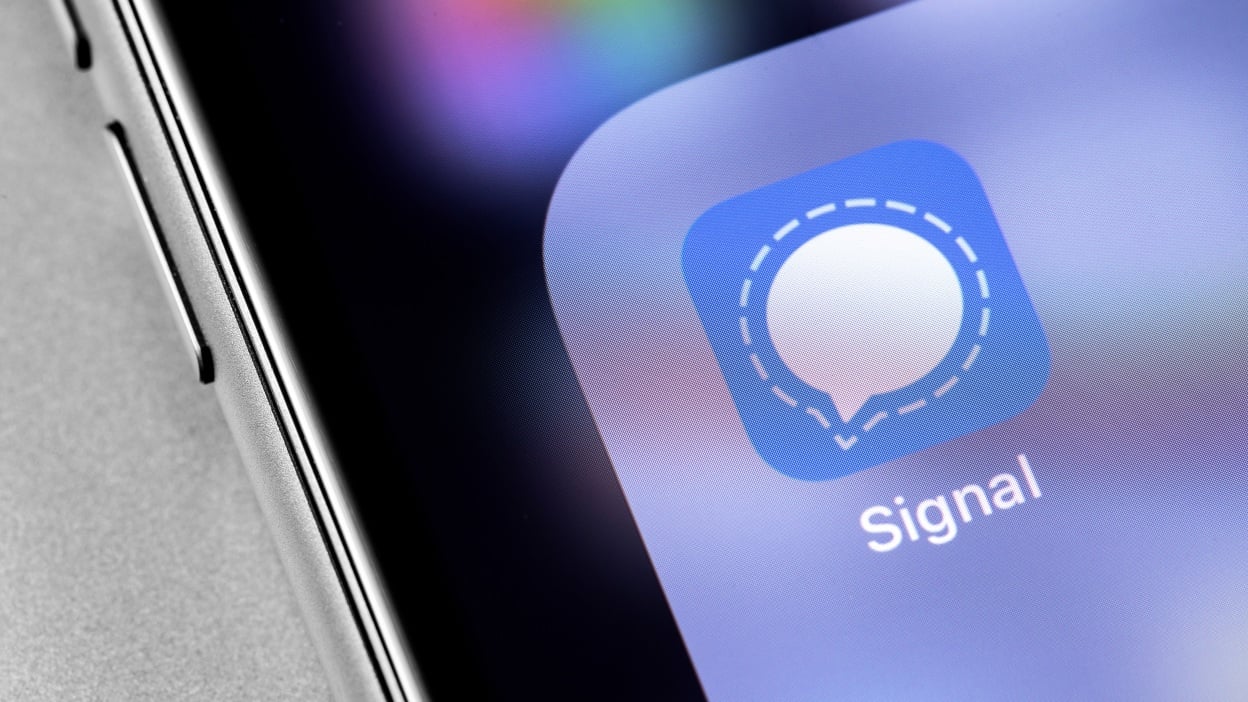
The FBI did not break Signal's encryption. It did not need to. Instead, federal investigators recovered message content from a defendant's iPhone by pulling from a database most users have never thought about: the push notification log. Apple's own infrastructure, the same system that quietly buzzes your wrist and lights up your lock screen, had been preserving copies of incoming messages long after users deleted the apps that sent them. That is not a feature. Apple confirmed this week it was a bug — and the patch, issued April 23 in iOS 18.7.8 and iOS 26.4.2, closes a flaw that had an unknown lifespan and an even murkier history of exploitation.
The vulnerability, tracked as CVE-2026-28950, was described by Apple in spare, clinical language: a logging issue in which notifications marked for deletion could be unexpectedly retained on-device. The fix involved improved data redaction. What that language obscures is the severity of what was actually happening — a confidential communications app, deleted by a user who presumably wanted their data gone, was leaving behind a forensic trail inside a system-level database that professional investigators know exactly how to access.
Encryption protects data in transit. It has never been designed to protect data that the operating system itself decides to log.
How the FBI Extracted Signal Messages From a Deleted XChat App on iOS
The specific case that surfaced this vulnerability involves a federal prosecution connected to an attack on the Prairieland ICE detention center. According to court documents published in March 2026, federal investigators were able to forensically extract copies of incoming Signal messages from a defendant's iPhone — even after Signal had been deleted from the device. The mechanism: iOS had been logging notification payloads, including message content, in a local database that persisted through app removal.
This is the counterintuitive reveal hiding inside an otherwise technical story. Users who delete a privacy-focused messaging app — Signal, or any app classified under terms like xchat, xchat app, or similar encrypted chat tools — typically assume deletion severs the data relationship. On a vulnerable iOS device, it did not. The notification infrastructure continued to hold that data in place, accessible to anyone with physical device access and the right forensic tooling.
The Electronic Frontier Foundation was direct in its read of the situation. In a statement following the disclosure, the EFF noted there is no reliable way for ordinary users to know what metadata a notification carries, whether it travels encrypted, or whether the receiving system logs its contents. That is a structural transparency problem, not merely a one-off bug.
"For most app notifications, there's no simple way to easily figure out what metadata might be gleaned from a notification, or if the notification is unencrypted or not. It's also good to reconsider whether any app should be sending you notifications to begin with."
— Electronic Frontier Foundation, April 2026
Signal moved quickly to contextualise its position. In a post on X, the company stated that no user action is required beyond installing the patch — once updated, iOS will automatically delete the inadvertently retained notification data, and future notifications will no longer be preserved after app deletion. Signal also publicly thanked Apple for responding at speed, framing the episode as a demonstration of what inter-company coordination on user privacy can look like when it works.
"We're grateful to Apple for the quick action here, and for understanding and acting on the stakes of this kind of issue. It takes an ecosystem to preserve the fundamental human right to private communication."
— Signal, Official Statement via X, April 2026
What This Reveals About the Architecture of Mobile Privacy
Push notifications on iOS flow through Apple's Apple Push Notification Service (APNs) — a centralised relay that sits between app servers and user devices. When a server sends a notification, APNs receives it and routes it to the relevant device. What happens at the device level, specifically how iOS handles the payload upon arrival and what it logs, has historically been opaque to developers and entirely invisible to users.
The flaw did not compromise Signal's encryption. It exploited a gap between what Signal secured and what iOS did with the data once it arrived.
Apple has historically resisted granting law enforcement direct access to iCloud-backed data without legal process. The company's 2016 standoff with the FBI over the San Bernardino shooter's iPhone became a landmark in the tech-government privacy debate. That history made Apple's privacy brand central to its premium hardware positioning. This vulnerability, while ultimately fixed promptly, complicates that narrative. The threat was not a backdoor; it was a logging behaviour in the notification layer that no one had apparently audited for its privacy implications.
What remains unknown — and this matters significantly — is when the flaw was introduced. Apple has not disclosed whether CVE-2026-28950 existed for months or years. It is equally unclear whether other law enforcement agencies, domestically or internationally, have leveraged the same technique in other cases. The Prairieland prosecution surfaced it. Other uses may never surface at all.
The North American Regulatory Dimension
In the United States and Canada, the policy implications of this disclosure cut across several active fault lines. The FBI's successful message recovery lands during a period of intensifying legislative pressure around both encryption access and device forensics. Congressional debates over lawful access to encrypted communications have resurfaced periodically since the Crypto Wars of the 1990s, and this case provides prosecutors and legislators with fresh ammunition: encryption did not stop investigators. The operating system's own infrastructure did the work.
For privacy advocates in Washington and Ottawa, the concern runs in the opposite direction. If a bug of this nature persisted undetected for an indeterminate period — logging message content from apps explicitly designed to minimise data retention — it raises genuine questions about the adequacy of Apple's internal privacy auditing, particularly for its notification subsystems.
The Federal Trade Commission and the Office of the Privacy Commissioner of Canada both operate frameworks that hold platform companies accountable for data minimisation commitments. Apple's privacy marketing has consistently emphasised on-device processing and minimal logging. A notification database that retained deleted message content sits awkwardly against that positioning, even if the behaviour was inadvertent. Whether regulators on either side of the border pursue formal inquiries remains an open question, but the disclosure gives them ample grounds.
For enterprise security teams managing fleets of iOS devices — a category that spans financial services, legal, healthcare, and government contractors across North America — the takeaway is operational: the notification layer is an attack surface, and its behaviour under forensic analysis has not been comprehensively characterised. The patch addresses the known issue. Systematic notification hygiene, including reviewing which apps are permitted to send notifications at all, is now a reasonable addition to any mobile device management policy.
Deleting an app has never been equivalent to deleting that app's data. This case makes that gap viscerally concrete.
What Signal Users Should Do Right Now
The remediation path is unambiguous. Users running iOS 18 on supported devices should update to iOS 18.7.8 immediately. Users on the iOS 26 beta track should update to iOS 26.4.2. The full list of affected devices covers iPhone XR and all subsequent models, plus a broad range of iPad hardware going back to the 5th-generation iPad mini — effectively the entire active iOS installed base.
Users who want additional notification-level protection regardless of operating system patches can navigate inside Signal to Profile → Notifications → Show, and select either "Name only" or "No name or message." This prevents message content from appearing in notification payloads to begin with, eliminating the input to any logging mechanism at the OS level. It is the correct setting for any user with elevated threat concerns, and it should arguably be Signal's default. The Signal support documentation walks through this configuration.
Beyond Signal, the EFF's guidance is worth taking seriously across all apps: audit which applications are authorised to send notifications, and disable notifications for apps where content sensitivity outweighs convenience. That is not paranoia. That is rational operational security in an environment where the OS-level treatment of notification data has just proven to be non-trivial.
The FBI did not need to crack encryption. It needed a bug that Apple has now confirmed existed, and a forensic tool capable of reading a notification database. The patch is the beginning of the accountability process — not the end of it. For users who rely on encrypted messaging for genuinely sensitive communications, the lesson is older than this vulnerability: the weakest point in a privacy system is rarely the cryptography. It is almost always the infrastructure surrounding it.
Key Takeaways
Apple patched CVE-2026-28950 on April 23, 2026, affecting iOS 18 and iOS 26 across all recent iPhone and iPad models.
The flaw caused iOS to retain notification content — including Signal message text — in a local database even after the app was deleted.
The FBI exploited this in a federal prosecution, extracting messages forensically from a physical device without breaking Signal's encryption.
Signal confirmed no user action beyond installing the patch is required; retained notifications will be automatically cleared post-update.
The vulnerability's introduction date is unknown, leaving open how long authorities may have had access to this forensic technique.
Users with elevated privacy needs should disable notification message previews in Signal and audit all app notification permissions.
What to Watch Next
Whether Apple discloses a timeline for when CVE-2026-28950 was introduced and how many OS versions it affected.
Potential FTC or OPC regulatory scrutiny of Apple's notification logging practices versus its stated data-minimisation commitments.
Congressional or legislative use of this case in renewed lawful-access encryption debates.
Whether other encrypted messaging apps — Telegram, WhatsApp, iMessage — face similar forensic scrutiny of their iOS notification handling.
Signal's response on whether notification content-hiding should become the app's default setting.
Frequently Asked Questions
Q: What is the iOS XChat and xchat app notification flaw that Apple just patched?
Apple patched a logging bug (CVE-2026-28950) in iOS's push notification system that caused the OS to retain incoming message content — from apps including Signal and other xchat-style encrypted messaging tools — even after those apps were deleted. The flaw affected all recent iPhones and iPads and has been fixed in iOS 18.7.8 and iOS 26.4.2.
Q: How did the FBI recover deleted Signal messages from an iPhone?
Investigators used forensic tools to access a local iOS notification database that had been retaining copies of incoming Signal messages. Because iOS was logging notification payloads at the OS level, deleting Signal from the device did not delete the cached message content from this database. Physical access to the device was required; Signal's end-to-end encryption was not broken.
Q: Does this mean Signal is no longer secure?
Signal's cryptographic protocol remains intact. The vulnerability was in Apple's iOS notification infrastructure, not in Signal's design. The flaw exposed a gap between what Signal encrypted and what the underlying OS chose to log. With the patch installed, the behaviour is corrected. Signal remains among the most rigorously audited encrypted messaging platforms available.
Q: Do I need to do anything to protect my Signal messages on iOS?
Yes: update your iPhone or iPad to iOS 18.7.8 or iOS 26.4.2 immediately. Once updated, Apple's fix will automatically delete any previously retained notification data. For additional protection, go to Signal → Profile → Notifications → Show, and select "Name only" or "No name or message" to prevent content from appearing in notification payloads at all.
Q: Which iPhone and iPad models were affected by CVE-2026-28950?
The flaw affected iPhone XR and all later models (including the full iPhone 11 through iPhone 16 lineup), plus a wide range of iPad Pro, iPad Air, iPad, and iPad mini models going back to 2019 hardware. Effectively the entire active iOS installed base was at risk prior to the patch.
Q: How long had this iOS notification logging bug existed before Apple patched it?
Apple has not disclosed when the bug was introduced. The Prairieland ICE detention center federal trial surfaced the exploitation technique in March 2026, triggering the disclosure and patch. Whether other law enforcement agencies used the same technique in prior cases is unknown.
Q: Does this affect other encrypted messaging apps like Telegram or WhatsApp on iOS?
The flaw was at the iOS OS level, meaning any app that sends push notifications with content payloads could theoretically have been subject to the same retention behaviour. Apple's patch addresses the underlying logging issue system-wide. Users of any sensitive communication app on iOS should apply the update promptly and review their per-app notification settings.
Sources : TheHackerNews