Dummy unit measurements confirm a bulkier camera plateau on the iPhone 18 Pro Max, while the iPhone Ultra's footprint dwarfs expectations. Together, they signal that Apple is done pretending thinness and performance can always coexist.
Apple has spent the better part of a decade quietly accepting a design awkwardness nobody talks about openly: the iPhone's official thickness measurements are, essentially, fiction. Apple officially lists the depth of the iPhone 17 Pro and 17 Pro Max at 8.75mm — measured from the body of the phone, not the camera system. That's also how the iPhone Air claims a wafer-thin 5.64mm. What they don't advertise is how far the camera hump punches past that number in actual use.
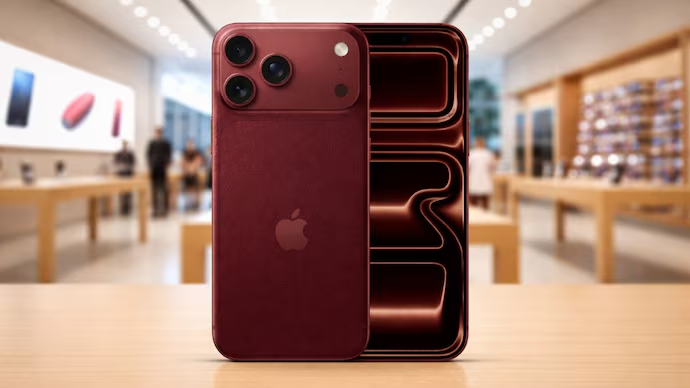
New dummy unit measurements, surfaced this week by YouTuber Vadim Yuryev of the Max Tech channel, make the gap concrete — and growing. The iPhone 17 Pro Max measures 12.92mm when you include the cameras. The iPhone 18 Pro Max pushes that to 13.77mm. That's nearly a millimeter of additional protrusion, and it matters more than the number implies.
The iPhone 18 Pro, in Apple's words and by every upstream signal, is arriving with the most consequential camera redesign in years. The bulk tells you exactly why.
What the iPhone 18 Pro's Camera Upgrade Actually Demands
The hardware story here starts with variable aperture — a feature Apple has never shipped on an iPhone. From the iPhone 14 Pro through the iPhone 17 Pro, the main camera uses a fixed ƒ/1.78 aperture, meaning the lens remains fully open at all times when capturing images. That's fine for a lot of situations, but it's an engineering compromise masquerading as a design decision. A fixed aperture means Apple handles light management almost entirely in software. A variable aperture lets the camera control how much light reaches the sensor — opening in low-light conditions to admit more light, while closing in bright scenes to avoid overexposure.
Apple supply chain analyst Ming-Chi Kuo first flagged the variable aperture move in December 2024, with a subsequent report confirming Apple was discussing components with suppliers by October 2025. Now those components are in production. Chinese optics manufacturer Sunny Optical has begun building the actuators that enable the aperture mechanism. LG Innotek — Apple's primary camera partner, the same company that built the tetraprism periscope system for the iPhone 15 Pro Max — is installing dedicated equipment at its Gumi facility in South Korea, with full camera module production expected to begin in June or July.
The system reportedly relies on precision actuators from suppliers including Sunny Optical and LG Innotek, enabling smooth mechanical aperture adjustments during shooting. Mechanism complexity requires physical space. Physical space requires a larger module. A larger module requires a deeper plateau. This isn't sloppiness from Cupertino's design team — it's the honest geometry of physics.
"Apple has never implemented variable aperture on an iPhone. The iPhone 18 Pro could mark a major step forward in smartphone imaging — bridging the gap between smartphone cameras and professional DSLR systems by offering more manual-like control."
— MacRumors, citing supply chain sources, April 2026
The deeper question is how Apple will expose variable aperture to users. For photographers who know their way around a lens iris, playing with depth of field will be genuinely useful. But for most people who don't know what an aperture is, will Apple use AI computer vision to set it automatically? That tension — between professional capability and mass-market simplicity — is one Apple has navigated before. The smart money says automatic AI-driven aperture selection ships by default, with manual control buried two taps deep in the camera UI. That's not a criticism. It's the Apple playbook, executed consistently for a decade.
The iPhone Air Gives the Pro Permission to Be What It Needs to Be
Here's what changed in the strategic calculus: the iPhone Air line now gives the Pro line room to trade sleekness for performance. That sentence, buried in a brief observation from 9to5Mac's Zac Hall, deserves more analytical weight than it's getting.
Apple's lineup bifurcation — Air for thinness advocates, Pro for camera obsessives — resolves a contradiction that's plagued the company for years. You can't simultaneously claim the world's thinnest flagship and the world's best smartphone camera when better cameras physically require more space. The Air/Pro split lets Apple stop pretending. Pro buyers who've chosen a 15 Pro or 16 Pro have already self-selected as people who want performance over pocketability. Adding a millimeter to the camera plateau isn't going to cost Apple a single Pro sale.
It's a quiet but meaningful design policy shift — and Samsung's ongoing Galaxy S25 Ultra camera engineering struggles suggest the broader industry is wrestling with the same physics. Variable aperture isn't new to Android. Samsung has shipped it. Xiaomi has shipped it. The difference is that when Apple ships a feature, it typically arrives with the supply chain, software integration, and marketing weight to make it mainstream rather than a spec-sheet footnote.
The iPhone Ultra's Scale Is Something Else Entirely
The dummy unit comparison that drew less attention but arguably deserves more: the iPhone Ultra next to an iPad mini.
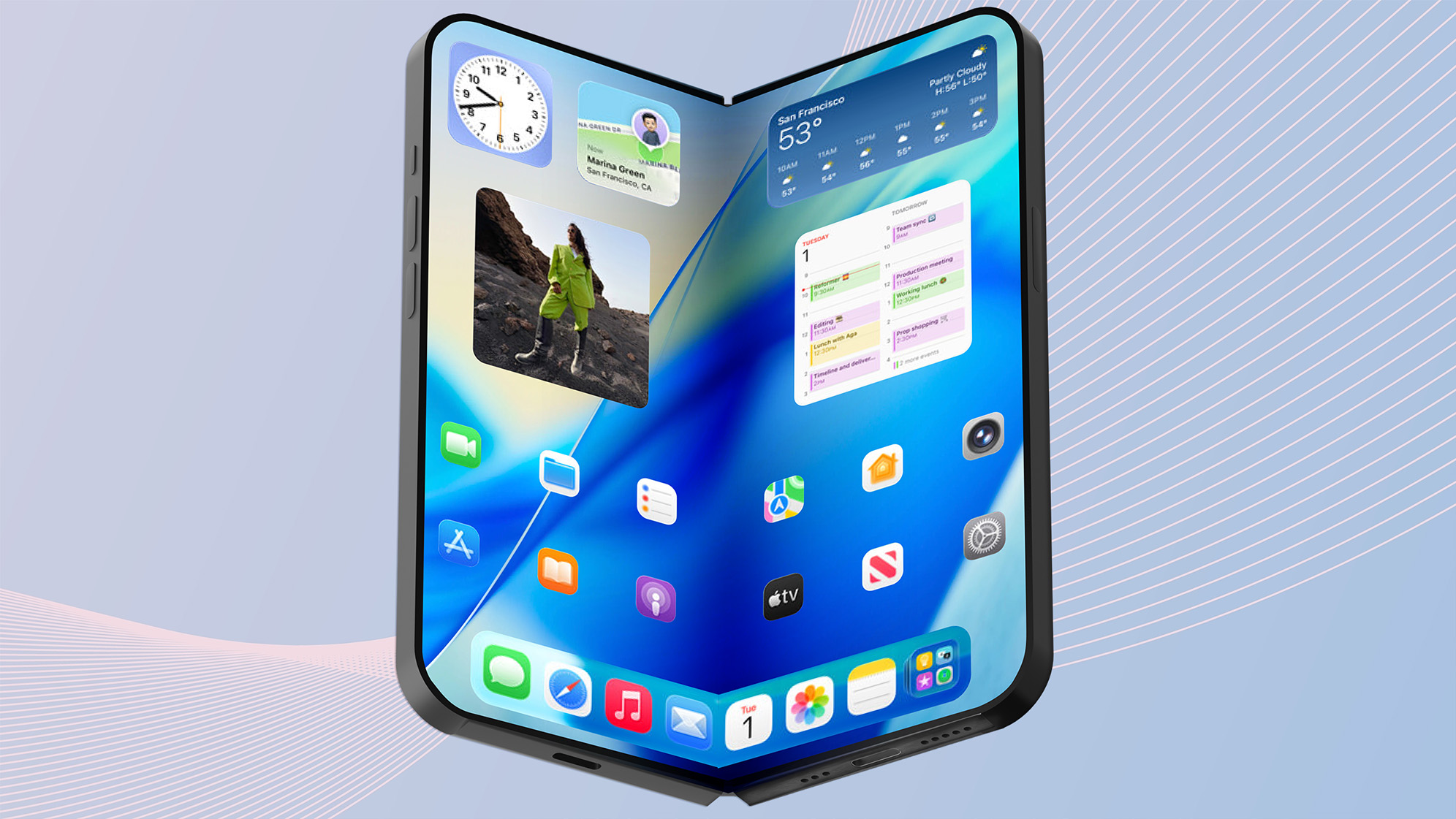
When unfolded, the iPhone Ultra's display is basically as large as an iPad mini's, thanks to super-thin bezels. The open display width nearly matches the iPhone 17 Pro Max, but the display is 56.9% taller — 71mm vs 111.5mm when comparing the display height. That's not a phone with a larger screen. That's a fundamentally different device category wearing an iPhone's brand identity.
The iPhone Ultra — the rumored branding for Apple's book-style foldable — is expected to launch in September 2026 alongside the iPhone 18 Pro and Pro Max, featuring an internal display measuring 7.7 to 7.8 inches with a 4:3 aspect ratio. Pricing is expected to start at $1,999 for 256GB, potentially reaching $2,399 for 1TB storage. At those prices, Apple isn't selling this to the mass market. It's selling it to the early adopter cohort that bought the first Apple Watch Ultra, the Vision Pro, the AirPods Max — people for whom premium is a feature in itself.
Bloomberg's Mark Gurman has called the foldable iPhone the "most significant overhaul in the iPhone's history." That's not hyperbole for traffic. The form factor shift — from a slab to a book — is more dramatic than anything Apple has shipped since the original iPhone introduced the touchscreen keyboard and eliminated physical buttons.
The global foldable market context is relevant here. Samsung has shipped seven generations of Galaxy Z Fold devices. Google's Pixel Fold entered the market in 2023. Motorola's razr line went foldable. None of them broke through to mainstream adoption. Reliable tipster Ice Universe corroborated the September 2026 iPhone Ultra launch timeline, posting an unofficial photo of the device alongside incoming Apple CEO John Ternus — with the caption "2026 iPhone autumn new product launch." The leadership transition adds a storyline: the iPhone Ultra will be the first major product announcement under Ternus, who takes over as Apple's CEO on September 1, 2026. Apple entering foldables under new leadership, with a product that took longer to build than any in recent memory, carries symbolic weight beyond the specifications.
Key Takeaways
The dummy unit data points tell a coherent story about where Apple is taking its 2026 hardware lineup — and what it's willing to sacrifice to get there.
The iPhone 18 Pro Max camera system will measure 13.77mm deep, up from 12.92mm on the 17 Pro Max — a meaningful real-world increase driven by variable aperture mechanics.
LG Innotek and Sunny Optical are already in production on the variable aperture components, making this the most supply-chain-confirmed camera upgrade in iPhone pre-release history.
The iPhone Air's existence as Apple's thinness showcase explicitly liberates the Pro line to prioritize camera performance over body depth — a strategic decoupling years in the making.
The iPhone Ultra's 7.7–7.8-inch internal display and iPad mini-comparable footprint positions it as a genuine iPad alternative in pocketable form — not just a larger iPhone.
Supply constraints are expected at launch, with Ming-Chi Kuo warning of production challenges potentially extending shortages into early 2027.
The September event is shaping up as one of the most consequential Apple launches in a decade. The iPhone 18 Pro Max camera system getting heavier signals that Apple has made a deliberate hardware bet — that optical variable aperture, mechanical actuators, and a deeper module are worth the trade-off in a lineup that now has an Air model to handle the thinness brief. Meanwhile, the iPhone Ultra dummy unit sitting next to an iPad mini says something that no spec sheet will say cleanly: Apple is about to ask consumers to reconsider what a phone is.
Both arguments — more capable Pro, radically different Ultra — depend on execution. Dummy units are plastic shells. Manufacturing ramp-ups are projections. And Apple under incoming CEO John Ternus will be making these bets in a global market where Samsung has seven foldable generations of hard-won consumer education as a head start, and where the IRDAI-style regulatory scrutiny Apple faces in markets from the EU to India means the company's premium pricing strategy faces more friction than it once did.
What the dummy units confirm is intent. Whether the iPhone 18 Pro and iPhone Ultra deliver on that intent lands in September.
For ongoing coverage of the iPhone 18 Pro, iPhone Ultra, and Apple's fall 2026 hardware lineup, follow StartupNews.fyi's Apple beat.