Experience Apple's latest creative push: four MAMI shorts filmed entirely with the powerful iPhone 17 Pro Max, redefining mobile filmmaking.
Apple's strategic pivot into professional content creation has been a carefully orchestrated symphony of hardware innovation, software refinement, and astute marketing. The latest crescendo in this ongoing performance arrives with the announcement that Apple showcases four new MAMI shorts, all meticulously crafted using the formidable iPhone 17 Pro Max. This is not merely a product demonstration; it is a profound statement about the democratization of high-quality filmmaking and a strategic maneuver with far-reaching implications for founders, investors, operators, and the global creative industry.
The Mumbai Academy of Moving Image (MAMI) film festival, a crucible of cinematic talent in one of the world's most dynamic film markets, provides an ideal stage for Apple. India's burgeoning creative economy, characterized by rapid digital adoption and an insatiable appetite for diverse storytelling, offers a potent backdrop for demonstrating the capabilities of a device designed to bridge the gap between consumer accessibility and professional-grade output. For years, Apple has championed the "Shot on iPhone" campaign, evolving from evocative still photography to cinematic narratives. With the iPhone 17 Pro Max, this narrative enters a new, more authoritative chapter.
This initiative represents more than just a marketing stunt. It underscores Apple's sustained commitment to expanding its ecosystem's utility beyond mere consumption, firmly positioning its flagship smartphone as a viable, even revolutionary, tool for production. The implications ripple across the entire value chain, from hardware manufacturing to content distribution, challenging traditional models and opening new frontiers for innovation.
The iPhone 17 Pro Max: A Technical Leap for Filmmakers
To understand the significance of these MAMI shorts, one must appreciate the technical advancements packed into the iPhone 17 Pro Max. While specific specifications for a future device are speculative, industry trajectories suggest a device that would push mobile cinematography into unprecedented territory. Imagine a primary camera system featuring a 1-inch type sensor, a significant leap from previous generations, capable of capturing vastly more light and delivering shallower depth of field. This would be paired with advanced computational photography engines driven by an A-series chip fabricated on a 2nm process, offering unparalleled real-time image processing.
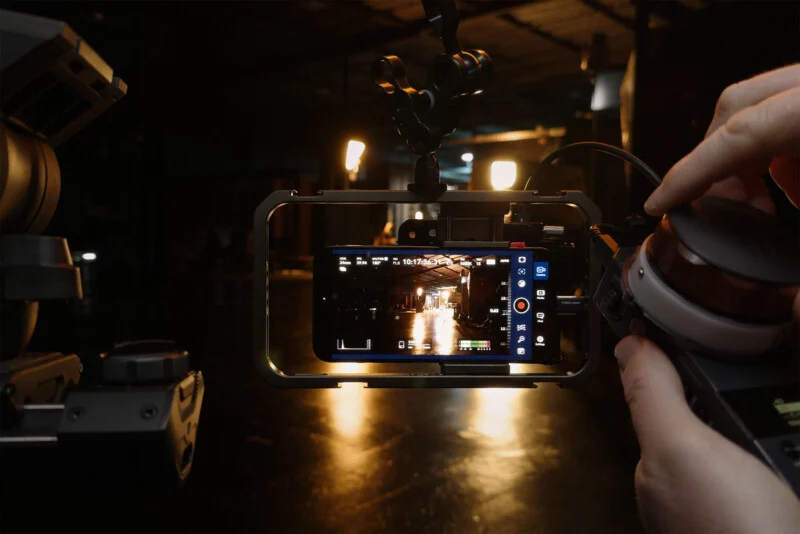
The device would likely support 14-bit Log video recording, offering a dynamic range exceeding 16 stops, a capability previously exclusive to dedicated cinema cameras. This provides immense flexibility in post-production for color grading and visual effects. Furthermore, enhancements to ProRes 4444 XQ recording, potentially at 8K resolution and 60 frames per second, would mean uncompromised fidelity. Improved thermal management, perhaps through advanced vapor chamber cooling and intelligent power distribution, would allow for sustained high-bitrate recording without throttling, a crucial factor for professional shoots. Direct external SSD recording via a Thunderbolt 5 port would also streamline workflows, enabling filmmakers to bypass internal storage limitations and manage large files efficiently.
These features collectively transform the iPhone from a convenient video recorder into a legitimate, high-performance filmmaking instrument. The MAMI shorts serve as tangible proof of concept, demonstrating how these theoretical advancements translate into compelling visual storytelling under real-world production conditions, often with significantly reduced crew sizes and equipment overhead.
Founders and Operators: Democratizing Production and Unleashing Agility
For founders of production houses, creative agencies, and digital content studios, the iPhone 17 Pro Max represents a seismic shift in operational paradigms. The capital expenditure typically associated with acquiring high-end cinema cameras, lenses, and associated rigging can easily run into hundreds of thousands of dollars. With the iPhone 17 Pro Max, a significant portion of this barrier to entry is obliterated. A startup can now equip multiple crews with professional-grade recording capabilities at a fraction of the cost, redirecting capital towards talent, marketing, or post-production.
This democratization extends beyond mere cost. It fosters unparalleled agility. Smaller form factors mean smaller crews, quicker setups, and the ability to shoot in locations previously deemed impractical or too intrusive for traditional camera setups. A founder can pivot rapidly, capturing spontaneous moments for documentaries, producing high-quality social media content with cinematic flair, or even shooting entire short-form narratives on tight deadlines. The MAMI shorts, by definition, embrace brevity and focused storytelling, perfectly aligning with the mobile-first, rapid-production ethos that the iPhone enables. This agility is a competitive advantage in a content-saturated market, allowing for faster iteration and a more responsive approach to emerging trends.
The Investor's Perspective: Ecosystem Reinforcement and Market Disruption
From an investor's vantage point, Apple's continued push into professional content creation with the iPhone 17 Pro Max is a shrewd strategic play. It deepens the stickiness of the Apple ecosystem. Consumers who aspire to professional-level content creation are incentivized to invest in Apple's premium devices, driving upgrade cycles and reinforcing brand loyalty. This extends beyond the device itself, stimulating growth in the ancillary market for iPhone-specific filmmaking accessories, from external lenses and gimbals to microphones and mobile editing software subscriptions.
Furthermore, this initiative positions Apple to capture a larger share of the burgeoning creative economy, particularly in developing markets like India, Southeast Asia, and parts of Africa, where smartphone penetration is high, and local content creation is exploding. Investors will see the potential for new revenue streams not only from hardware sales but also from services. Professional applications like DaVinci Resolve or Final Cut Pro for iPad, which can leverage iPhone footage, become more appealing. iCloud storage for large video files becomes a necessity. This move effectively expands Apple's total addressable market within the content creation sphere, potentially disrupting established camera manufacturers and even low-budget independent film equipment providers.
The User and Analyst: Accessibility, Aspiration, and Strategic Differentiation
For the aspiring filmmaker or content creator, the user, the sight of professional-grade shorts shot on an iPhone 17 Pro Max is incredibly inspiring. It demystifies filmmaking, making it feel attainable. The device in their pocket, or one they realistically aspire to own, is now validated as a tool capable of producing work showcased at an international film festival. This accessibility fosters a vibrant community of learners and experimenters, pushing creative boundaries without the intimidating overheads. Online tutorials, workshops, and courses focusing on iPhone filmmaking will see renewed interest, further solidifying the platform's role in creative education.
An analyst examining Apple's strategy will recognize several key drivers. Firstly, it reinforces the "Pro" designation, elevating the brand's perception beyond consumer electronics into a professional tools segment. This differentiation is crucial in the fiercely competitive premium smartphone market. Secondly, it strengthens Apple's narrative as an innovation leader, not just in chip design or display technology, but in practical, application-specific advancements. Thirdly, it strategically positions Apple for future technological shifts, particularly in augmented reality (AR) and virtual reality (VR) content creation. Features like spatial video, already present in current iPhones, hint at a future where mobile devices are integral to creating immersive experiences.
While the iPhone 17 Pro Max may not entirely replace a RED or ARRI camera for a multi-million-dollar feature film requiring specific optical characteristics or extreme sensor sizes, it carves out a significant and growing niche. It is a formidable tool for documentaries, short films, music videos, commercials, corporate content, and an increasing array of cinematic projects where mobility, cost-effectiveness, and rapid turnaround are paramount. The MAMI shorts demonstrate that the creative vision, not the camera budget, is now the primary determinant of cinematic quality.
Challenges and the Path Forward
Despite these monumental strides, challenges persist. Battery life for extended, high-bitrate shoots remains a consideration, though external power solutions are readily available. The inherent physics of smaller sensors still mean certain optical effects, like extremely shallow depth of field with specific bokeh characteristics, might require optical adapters or remain the domain of larger-sensor cameras. Furthermore, the reliance on an ecosystem means that professional users are often deeply integrated into Apple's software and hardware stack, a double-edged sword that offers seamless integration but also potential lock-in.
However, the trajectory is clear. Apple is not just selling phones; it is selling an integrated creative platform. The success of the MAMI shorts is a testament to the fact that technological evolution is not just about raw power, but about empowering human creativity. As Apple continues to innovate, we can expect mobile filmmaking to evolve rapidly, blurring the lines between amateur and professional, and ushering in an era where the stories themselves, rather than the tools used to tell them, command center stage.
Key Takeaways
The iPhone 17 Pro Max significantly lowers the barrier to entry for professional-grade filmmaking, democratizing access to high-quality production tools globally.
Apple's MAMI collaboration reinforces its strategic positioning in the professional content creation market, driving ecosystem stickiness and accessory sales.
For founders and operators, the device offers unparalleled agility, enabling faster production cycles and reduced capital expenditure for creative projects.
Investors see potential for new revenue streams through hardware upgrades, professional services, and expansion into burgeoning creative economies in emerging markets.
Technological advancements in sensor size, Log video, and computational photography in the iPhone 17 Pro Max are pushing mobile cinematography capabilities to unprecedented levels.
Frequently asked questions
What are the new MAMI shorts showcased by Apple?
Apple has announced four new MAMI shorts, all of which were meticulously filmed using the iPhone 17 Pro Max. This initiative highlights the device's capabilities in professional-grade content creation.
Which iPhone model was used to film the MAMI shorts?
All four new MAMI shorts were shot exclusively on the iPhone 17 Pro Max, demonstrating its advanced camera technology and professional features.
Why is Apple showcasing shorts filmed on an iPhone?
Apple is showcasing these shorts to emphasize the iPhone 17 Pro Max's prowess in professional content creation, illustrating its strategic pivot into high-end mobile filmmaking.
How do these shorts demonstrate iPhone 17 Pro Max capabilities?
These shorts serve as a real-world demonstration of the iPhone 17 Pro Max's advanced camera system, showcasing its ability to produce professional-quality video content suitable for film festivals.
Is the iPhone 17 Pro Max suitable for professional filmmakers?
Yes, by showcasing these MAMI shorts, Apple strongly suggests that the iPhone 17 Pro Max is a viable and powerful tool for professional filmmakers and content creators.
Where can I watch the new Apple MAMI shorts?
The article preview doesn't specify exact viewing platforms, but typically such shorts are released on Apple's official channels, YouTube, or showcased at relevant film festival events.