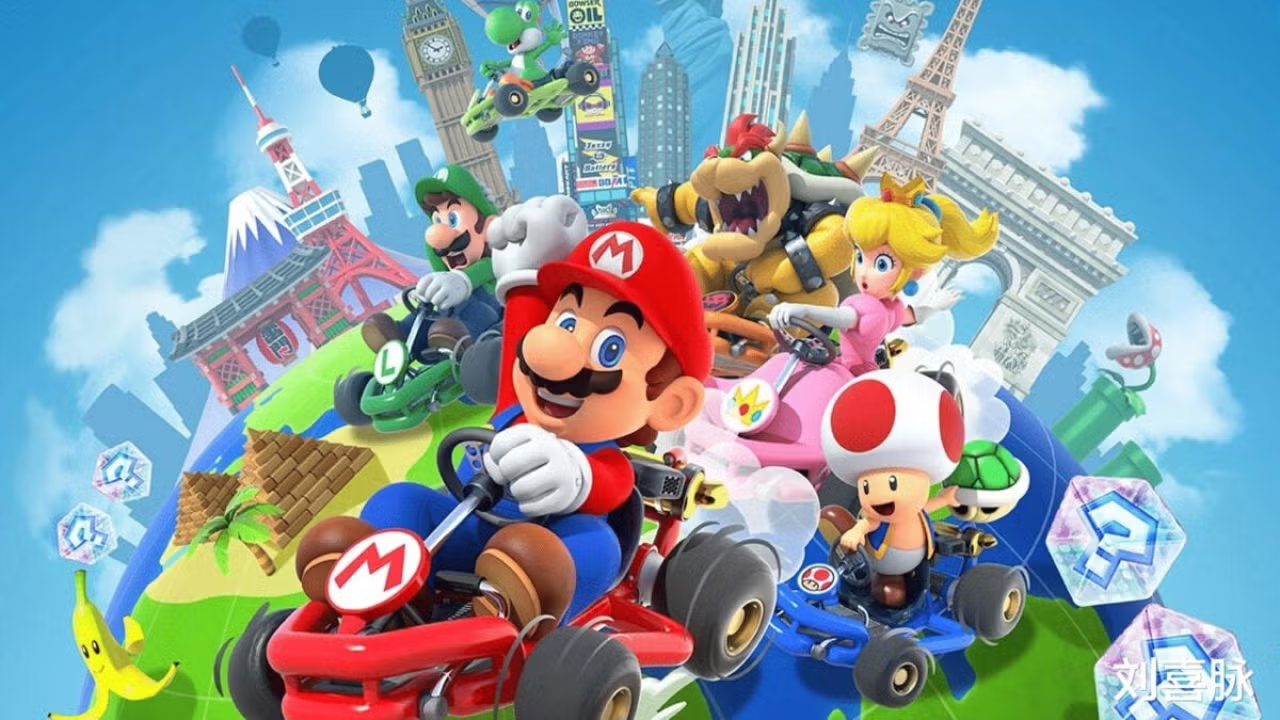
Gaming culture meets economic policy
Mamdani’s use of Mario Kart reflects a broader communications shift in progressive politics — translating structural economic arguments into culturally resonant metaphors.
In his framing:
• The racetrack represents the economy
• Power-ups mirror inherited advantages
• Blue shells symbolize corrective interventions
• The starting grid highlights unequal opportunity
By using gaming language, Mamdani aimed to connect policy mechanics to everyday experience, particularly among younger voters who grew up immersed in digital culture.
Why the metaphor matters
Wealth tax debates often hinge on abstract fiscal concepts: marginal rates, capital gains structures, unrealized assets and intergenerational transfers.
Those frameworks can feel distant to voters.
By contrast, a Mario Kart race offers an intuitive visualization of competitive imbalance.
Economic inequality, Mamdani suggests, is not simply about individual effort — it is about structural head starts.
The super-rich tax proposal he supports would target top-tier earners and high net worth individuals, aiming to generate revenue for public services and reduce concentration of wealth.
A digital-native political strategy
The move underscores how political messaging is adapting to online platforms.
Short-form video clips explaining policy through gaming references are optimized for:
• TikTok
• Instagram Reels
• X (formerly Twitter)
• YouTube Shorts
Politicians increasingly frame arguments in ways that can circulate virally rather than relying solely on traditional press conferences.
For Gen Z and millennial audiences, gaming metaphors can feel more accessible than conventional policy discourse.
Critics and supporters
Supporters argue that simplifying complex policy through pop culture fosters engagement and civic literacy.
Critics contend that serious fiscal policy deserves more rigorous framing and worry that analogies can oversimplify nuanced trade-offs.
However, the use of cultural touchpoints does not replace legislative detail — it supplements it.
In the social media era, attention is scarce. Messaging that bridges entertainment and policy often travels further.
Broader implications for political communication
Mamdani’s Mario Kart analogy highlights a larger transformation: politics is increasingly platform-native.
Campaign strategies now consider meme potential, shareability and cultural fluency as core assets.
In a fragmented media environment, analogies that resonate across digital communities can influence narrative framing more effectively than lengthy policy briefs.
Whether the super-rich tax proposal advances legislatively remains a separate question.
But the communication tactic signals something clear: economic debates are increasingly being fought not just in committee rooms — but in comment sections.
In the race to shape public opinion, the starting grid may matter as much as the policy itself.