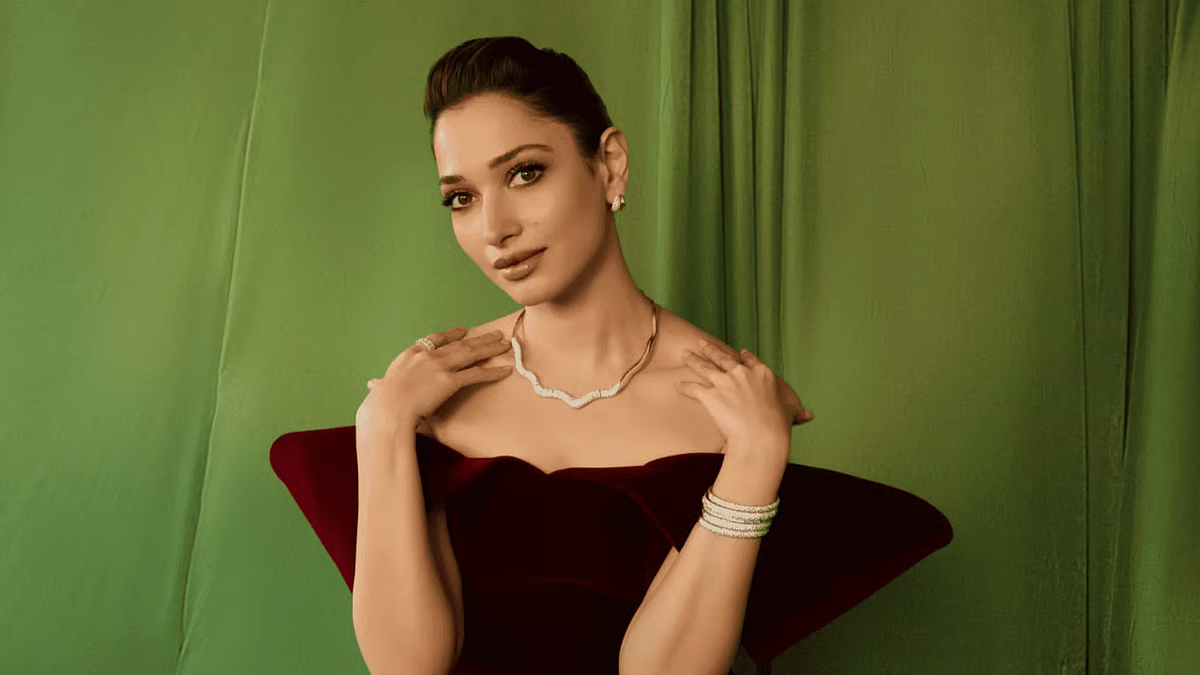
Rather than lending her name to a licensing deal, Bhatia reportedly aims to create a high-end jewellery house rooted in Indian design identity but built to compete globally.
A strategic bet on India’s rising affluent class
India’s premium and luxury segments are expanding, driven by:
• Rising disposable incomes in metro cities
• Growing aspirational spending among millennials and Gen Z
• Increased exposure to global luxury brands
• Expanding bridal and occasion-based jewellery markets
While global brands like Cartier and Bulgari dominate the ultra-premium tier, Indian jewellery houses have historically focused either on traditional bridal gold or mass-market categories.
Bhatia’s ambition appears to target a gap: contemporary luxury jewellery that blends craftsmanship, brand storytelling and global positioning.
Celebrity entrepreneurship evolves
Celebrity-led brands in India have historically concentrated in beauty, apparel and fitness.
Jewellery, however, offers:
• Higher gross margins
• Emotional and cultural resonance
• Strong gifting and wedding-driven demand
• Potential for global export positioning
If executed effectively, a homegrown luxury brand could benefit from both domestic demand and diaspora markets seeking culturally rooted but globally styled pieces.
Unlike fast-fashion ventures, luxury jewellery requires:
• Strong supply chain sourcing
• Design differentiation
• Brand heritage storytelling
• Retail experience curation
Building credibility in this segment takes time — especially when competing against century-old European maisons.
Competing with legacy luxury
Cartier’s brand power is anchored in heritage, craftsmanship and symbolism. For an Indian brand to position itself as a peer rather than an alternative, it must cultivate similar pillars:
• Distinctive design language
• Premium retail environments
• Controlled distribution
• Strong brand narrative
The opportunity lies in India’s shifting luxury narrative. Increasingly, affluent consumers are open to supporting Indian-origin brands that deliver quality on par with global players.
The success of premium Indian labels in fashion and beauty suggests that luxury localisation is possible.
Retail market context
India’s jewellery market is one of the largest globally, but much of it remains fragmented and unorganised. Organised players are consolidating share, and premiumisation is accelerating.
Urban consumers are moving beyond purely gold-value purchases toward design-driven collections.
For venture investors and retail strategists, luxury jewellery offers resilience:
• Lower seasonality compared to fashion
• Strong wedding-linked cycles
• Higher perceived value retention
If Bhatia’s brand captures even a small slice of India’s premium segment, the addressable market is substantial.
The broader signal
The ambition to build “India’s answer to Cartier” reflects more than brand aspiration. It reflects confidence in India’s evolving consumer maturity.
As global luxury brands expand aggressively into India, the next chapter may include credible domestic challengers.
Celebrity entrepreneurship in 2026 is less about endorsements and more about ownership — particularly in high-margin, culturally anchored categories.
Whether Tamannaah Bhatia’s venture can translate ambition into enduring luxury equity remains to be seen.
But the attempt itself signals that India’s luxury story is entering a more assertive phase — one where global icons are no longer the only benchmarks.