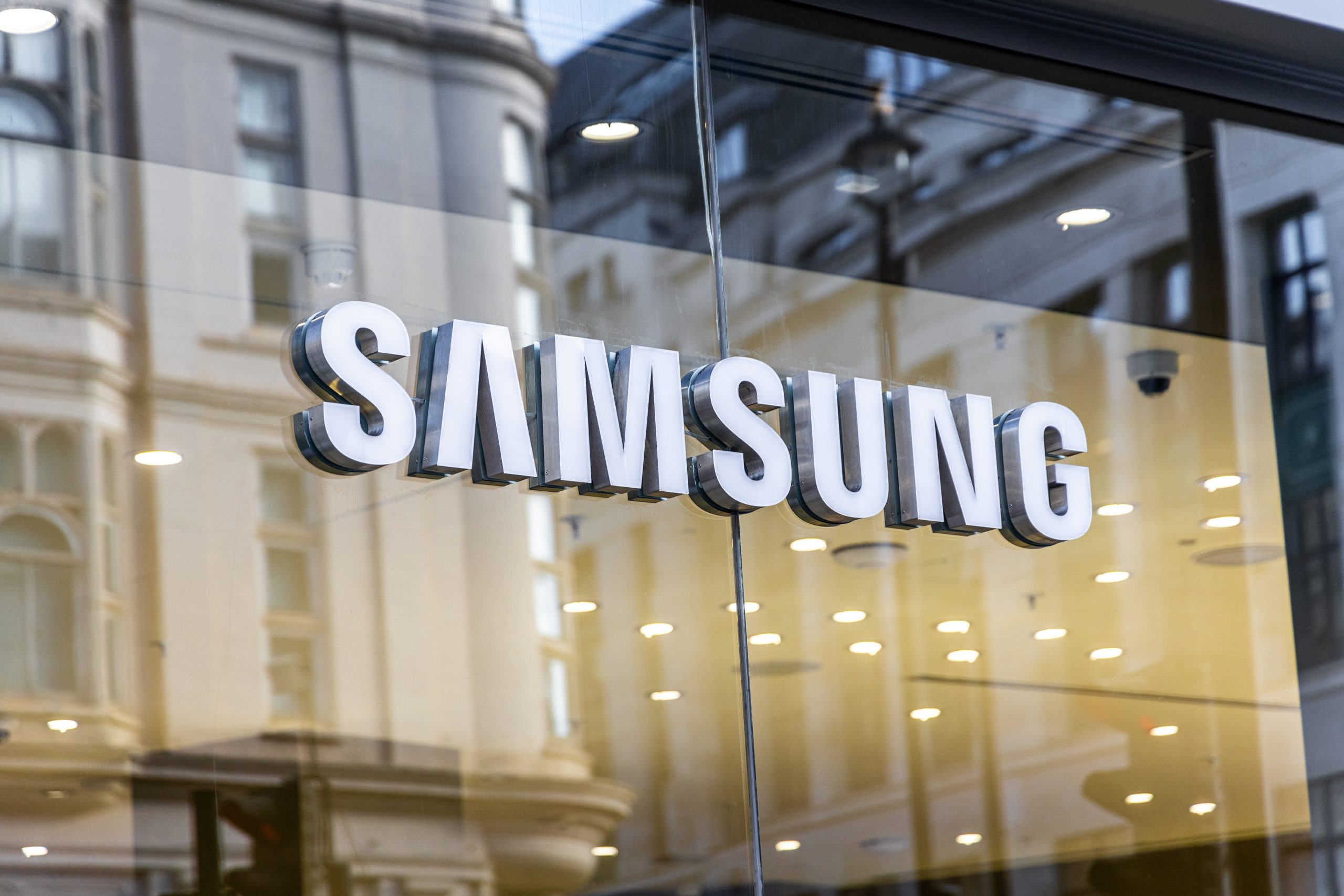
The recent surge in Samsung Electronics' valuation, pushing it past the $1 trillion mark as its shares climb over 10 percent, signifies more than just a market rally. It marks a profound inflection point for a company long seen as the bellwether of the global hardware industry. This revaluation is not merely a testament to a healthy balance sheet; it is a direct consequence of a strategic pivot and a repositioning amidst the seismic shifts brought about by the generative AI revolution.
For decades, Samsung operated as a colossus built on the bedrock of memory chips, consumer electronics, and displays. Its trajectory was intimately tied to the cyclical nature of semiconductor demand and the ebb and flow of global consumer spending. Now, the world's largest memory chipmaker finds itself at the epicenter of a new technological arms race, with its future inextricably linked to the burgeoning demand for AI infrastructure.
The Goliath Before the AI Storm
Before the current AI-driven euphoria, Samsung's narrative was one of formidable scale, unparalleled manufacturing prowess, and relentless competition. The company consistently dominated the DRAM and NAND flash memory markets, supplying critical components to virtually every tech giant globally. Its smartphone division, particularly with the Galaxy series, commanded significant market share, and its display technologies set industry benchmarks.
Yet, this dominance came with inherent vulnerabilities. The semiconductor market is notoriously cyclical, prone to boom and bust periods driven by inventory adjustments and capital expenditure cycles. Samsung's profits often mirrored these fluctuations. The 2018-2019 downturn, for instance, saw significant pressure on its memory business, highlighting its reliance on a volatile market. Furthermore, its foundry business, while robust, consistently trailed TSMC in market share and advanced node leadership.
The company also faced intense geopolitical pressures. Caught between US-China tech rivalry, Samsung had to navigate complex supply chain dynamics and export controls. While its vertically integrated structure offered some resilience, it also meant exposure to a multitude of market segments, each with its own set of challenges. Samsung was a manufacturing powerhouse, a titan of hardware, but its valuation often reflected the inherent cyclicality and capital intensity of its diverse operations.
The Undercurrents of Change: From Cycles to Catalyst
The first tremors of change began to register in late 2022 and accelerated through 2023. The advent of generative AI models, exemplified by OpenAI's ChatGPT, ignited an unprecedented demand for computational power. This was not merely about more processing; it was about specialized processing capable of handling the massive datasets and complex neural networks that underpin AI.
Nvidia, the undisputed leader in AI GPUs, suddenly found itself at the forefront of this revolution. But Nvidia's H100 and A100 GPUs required a specific type of memory to unlock their full potential: High Bandwidth Memory (HBM). Traditional DRAM could not keep pace with the massive parallel processing demands of AI accelerators. HBM, with its stacked architecture and wide data pathways, became the new bottleneck and, subsequently, the new battleground for memory manufacturers.
This shift began to fundamentally alter investor perception. Companies supplying the foundational elements for AI infrastructure were no longer seen as mere component makers but as critical enablers of the next technological frontier. Samsung, with its deep expertise in memory and semiconductor manufacturing, was uniquely positioned to capitalize, despite initial competitive challenges.
The HBM Imperative: Samsung's Strategic Pivot
While SK Hynix initially gained a lead in HBM3 production, Samsung quickly mobilized its formidable R&D and manufacturing capabilities. The company poured resources into accelerating its HBM roadmap, focusing on HBM3E and future generations like HBM4. This was not a minor adjustment; it was a strategic imperative to reclaim leadership in a segment that promised to redefine memory's role in the semiconductor ecosystem.
Samsung's efforts bore fruit with significant advancements in its HBM3E technology, offering higher bandwidth and capacity crucial for next-generation AI accelerators. The company announced strategic collaborations with key AI chip developers, including Nvidia, solidifying its position as a critical supplier. This was complemented by aggressive expansion in its foundry services, particularly in advanced process nodes like Gate-All-Around (GAA) architecture, essential for manufacturing the complex logic chips that power AI.
The investment in advanced packaging technologies, critical for integrating HBM with logic chips, also underscored Samsung's integrated approach. Its ability to offer a comprehensive solution, from memory to foundry to packaging, began to resonate with hyperscalers and AI innovators looking for reliable, high-performance partners. This multi-pronged strategy transformed Samsung from a cyclical memory provider into an indispensable partner in the AI supply chain, directly contributing to the upward re-rating of its shares.
A Trillion-Dollar Trajectory: AI's New Cornerstone
Today, Samsung Electronics stands as a $1 trillion-plus valuation company, its market capitalization reflecting a newfound investor confidence rooted in its AI capabilities. The "after" picture shows a company less beholden to the vagaries of the broader consumer electronics market and more aligned with the explosive growth of AI. Its memory division, once a source of cyclical volatility, is now viewed through the lens of HBM leadership and the sustained demand for high-performance memory.
Beyond HBM, Samsung's AI strategy is multi-faceted. Its foundry business, with ongoing investments in 3nm and 2nm GAA processes, aims to challenge TSMC more directly for advanced AI chip production. The company is also integrating AI into its consumer devices, exemplified by the on-device AI capabilities of the Galaxy S24 series, showcasing its vision for ubiquitous, accessible AI. Furthermore, its ventures into robotics and automotive solutions leverage its semiconductor and display expertise to create new AI-driven growth avenues.
The world now looks to Samsung not just for its latest smartphone, but for the foundational components that power the AI revolution. Its vertically integrated model, once seen as complex, now appears as a strategic advantage, allowing for tighter integration and optimization across the AI hardware stack. The company is no longer just a manufacturing giant; it is an AI enabler, a crucial link in the global AI infrastructure.
Navigating Geopolitical Headwinds: Beyond the Chip Stack
Despite the robust performance of its AI-centric divisions, Samsung, as a diversified global conglomerate, must contend with a complex geopolitical landscape that extends beyond just memory and foundry. This is particularly evident when considering the challenges faced by Korean battery firms in major markets like the United States.
Samsung SDI, a key subsidiary focusing on electric vehicle (EV) batteries, energy storage systems, and materials, operates in an environment increasingly shaped by protectionist policies. The US Inflation Reduction Act (IRA), for instance, offers substantial incentives for EV and battery manufacturing within North America, imposing strict requirements on local content and sourcing from specific countries. This policy, designed to onshore manufacturing and reduce reliance on foreign supply chains, presents both opportunities and significant hurdles for South Korean battery manufacturers.
Korean battery firms face US pressure to establish extensive manufacturing footprints and complex supply chains within the country to qualify for subsidies. While Samsung SDI has announced major joint ventures with automotive giants like Stellantis and General Motors to build battery plants in the US, these investments require immense capital, strategic planning, and navigating a rapidly evolving regulatory framework. This illustrates a crucial dual reality for Samsung: while one part of the empire reaps the rewards of global AI demand, another grapples with regionalized manufacturing mandates and geopolitical competition in critical emerging sectors like EVs and renewable energy. The global tech leader must walk a tightrope, balancing global ambition with localized political and economic realities.
Dr. Min-Hyuk Kim, Professor of Semiconductor Engineering at Seoul National University"Samsung's pivot to HBM and advanced foundry services is more than just an engineering feat; it's a profound strategic recalibration. Their integrated approach, spanning memory, logic, and packaging, positions them as a uniquely powerful force in the AI era. However, the diversification of their global business, particularly in areas like EV batteries, means they must simultaneously navigate both the boundless opportunities of AI and the increasingly localized, protectionist realities of global manufacturing. It's a testament to their resilience and adaptability."
The Road Ahead: Innovation, Integration, and Resilience
Samsung's journey past the $1 trillion valuation is a compelling narrative of adaptation, strategic foresight, and unwavering execution. It underscores the critical role of hardware innovation in powering the software-driven AI revolution. The company's future trajectory hinges on its ability to maintain its lead in HBM, aggressively pursue advanced foundry technologies, and continue integrating AI across its vast product portfolio.
Challenges remain formidable: intensifying competition from SK Hynix and Micron in HBM, TSMC in foundry, and emerging players in AI accelerators. Geopolitical tensions, particularly concerning access to advanced manufacturing equipment and critical materials, will continue to demand careful navigation. The immense capital expenditure required to stay at the cutting edge of semiconductor technology also presents a constant pressure. Yet, Samsung's history suggests a capacity for resilience and innovation that few companies can match.
KEY TAKEWAYS
Samsung's ascent past $1 trillion valuation is primarily driven by its strategic pivot and leadership in High Bandwidth Memory (HBM) for AI.
The company's integrated approach, spanning memory, advanced foundry, and packaging, makes it a critical enabler of the global AI infrastructure.
Samsung's valuation reflects a shift from a cyclical hardware giant to a foundational AI technology provider.
Beyond AI chips, Samsung faces complex geopolitical and protectionist challenges, particularly for its battery subsidiary Samsung SDI, in key markets like the US.
Sustained success will depend on continued innovation in HBM and advanced logic, strategic partnerships, and adept navigation of global supply chain politics.
Frequently asked questions
How has AI influenced Samsung's recent valuation surge?
AI's growing significance has directly driven investor confidence, leading to a substantial increase in Samsung's share price and pushing its market cap past the $1 trillion threshold due to strategic investments and future potential.
What does Samsung's $1 trillion valuation signify for the global tech industry?
It reinforces Samsung's position as a dominant force and a bellwether for the global hardware industry, indicating a shift towards AI-centric growth models and innovation.
Why are Korean battery firms facing challenges in the US market?
Korean battery firms are navigating complex geopolitical and economic factors, including trade policies, supply chain diversification, and increasing competition from both domestic and international players in the US market.
What is Samsung's strategic pivot mentioned in the article preview?
The strategic pivot refers to Samsung's renewed focus on advanced AI technologies and high-value components, moving beyond traditional hardware sales to capture new market opportunities and solidify its leadership.
How does Samsung's performance impact South Korea's economy?
As a major conglomerate, Samsung's strong performance has a significant positive ripple effect on South Korea's overall economy, influencing GDP, exports, and investor sentiment across various sectors.
Are there any specific US policies affecting Korean electronics manufacturers?
Yes, US trade policies, tariffs, and incentives for domestic manufacturing can impact Korean electronics and battery firms, necessitating strategic adjustments to maintain market access and competitiveness.
![Apple reports Q2 2026 earnings: $111.2 billion in revenue, up 17% [Charts]](https://startupnews-media-2026.s3.us-east-1.amazonaws.com/startupnews-in/uploads/2026/05/manual-1777704093949-pjwq8qf0b.jpeg?X-Amz-Algorithm=AWS4-HMAC-SHA256&X-Amz-Content-Sha256=UNSIGNED-PAYLOAD&X-Amz-Credential=AKIAZQ3DRHCSCL44VIMT%2F20260506%2Fus-east-1%2Fs3%2Faws4_request&X-Amz-Date=20260506T070605Z&X-Amz-Expires=604800&X-Amz-Signature=b3c91ad1084882949e83ea19d069f90a00ea701bd360fa058bf2edc6837b9e8a&X-Amz-SignedHeaders=host&x-amz-checksum-mode=ENABLED&x-id=GetObject)