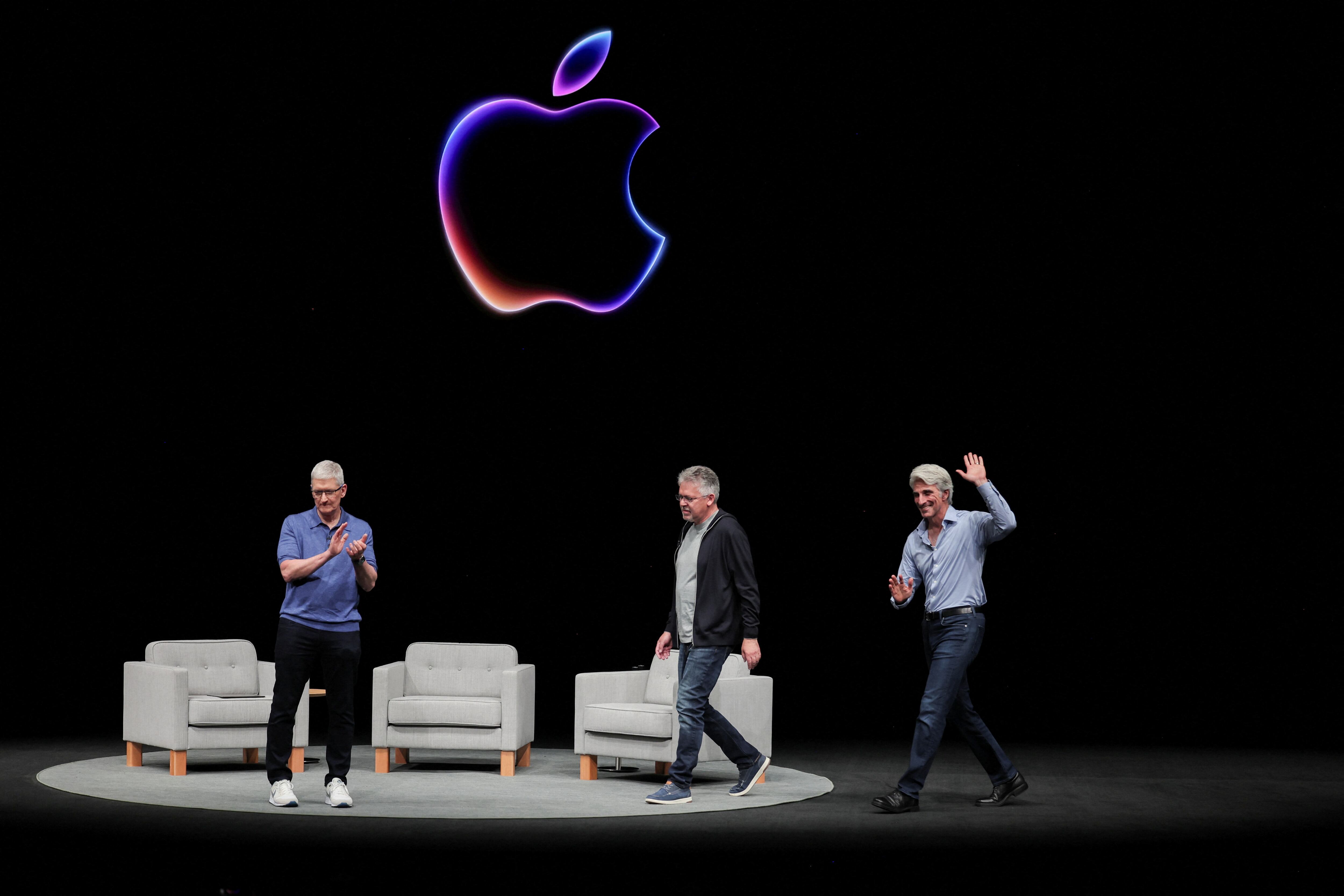
While many AI competitors emphasize massive cloud infrastructure, Apple’s long-standing emphasis on tightly integrated hardware and software positions it differently.
From Cloud AI to Edge Intelligence
Most generative AI systems today rely heavily on cloud-based processing. Queries are sent to remote data centers, processed on powerful GPUs and returned to users in seconds.
But cloud reliance introduces trade-offs: data transmission risks, recurring infrastructure costs and latency.
Local AI, powered by increasingly capable mobile chips, offers an alternative. By running inference directly on-device, companies can reduce dependence on remote servers while strengthening privacy guarantees.
Apple’s custom silicon strategy — including neural processing units embedded within its chips — aligns naturally with this trend.
Hardware as the AI Moat
Apple generates the majority of its revenue from hardware sales. If AI functionality becomes deeply tied to device capability, hardware differentiation could intensify.
Consumers may upgrade devices not just for camera improvements or battery life, but for enhanced AI performance. More powerful neural engines, larger memory bandwidth and optimized model compression could become selling points.
In this framework, AI becomes a hardware accelerator.
Instead of monetizing AI primarily through subscriptions or cloud APIs, Apple could drive revenue through premium devices optimized for local intelligence.
Privacy as Competitive Leverage
Apple has long marketed privacy as a core brand pillar. On-device AI strengthens that narrative.
Processing personal data locally reduces exposure to centralized data collection concerns. As governments debate AI regulation and data sovereignty, local processing could provide regulatory insulation.
For enterprise customers, particularly in regulated industries, on-device AI may also reduce compliance friction.
The combination of privacy and performance offers Apple a differentiated positioning against cloud-first AI rivals.
Ecosystem Implications
Local AI also reinforces Apple’s ecosystem model.
AI features integrated across iPhone, iPad, Mac and wearable devices could create a cohesive experience that is difficult to replicate outside the ecosystem. Seamless device-to-device intelligence may deepen lock-in effects.
Developers, meanwhile, may optimize applications around Apple’s neural frameworks, further entrenching platform dependence.
The shift would extend Apple’s control from hardware design to AI infrastructure at the edge.
Limits and Trade-Offs
Local AI is not a universal solution. Training large models still requires centralized compute, and certain complex workloads may exceed on-device capacity.
Hybrid approaches — combining local inference with cloud augmentation — are likely to dominate.
However, if consumer preference leans toward privacy-preserving AI interactions, Apple’s edge-centric model could gain traction.
A Structural Opportunity
The demand for local AI is more than a technical preference.
It reflects broader anxieties around data control, energy efficiency and centralized power.
For Apple, embracing on-device intelligence could reinforce its premium hardware narrative while insulating it from the escalating costs of large-scale cloud AI competition.
If AI becomes an embedded feature of personal devices rather than a remote service, Apple’s vertically integrated model may prove particularly resilient.
In that scenario, the next chapter of AI monetization would not be written in data centers alone.
It would be written in silicon — inside the devices people carry every day.