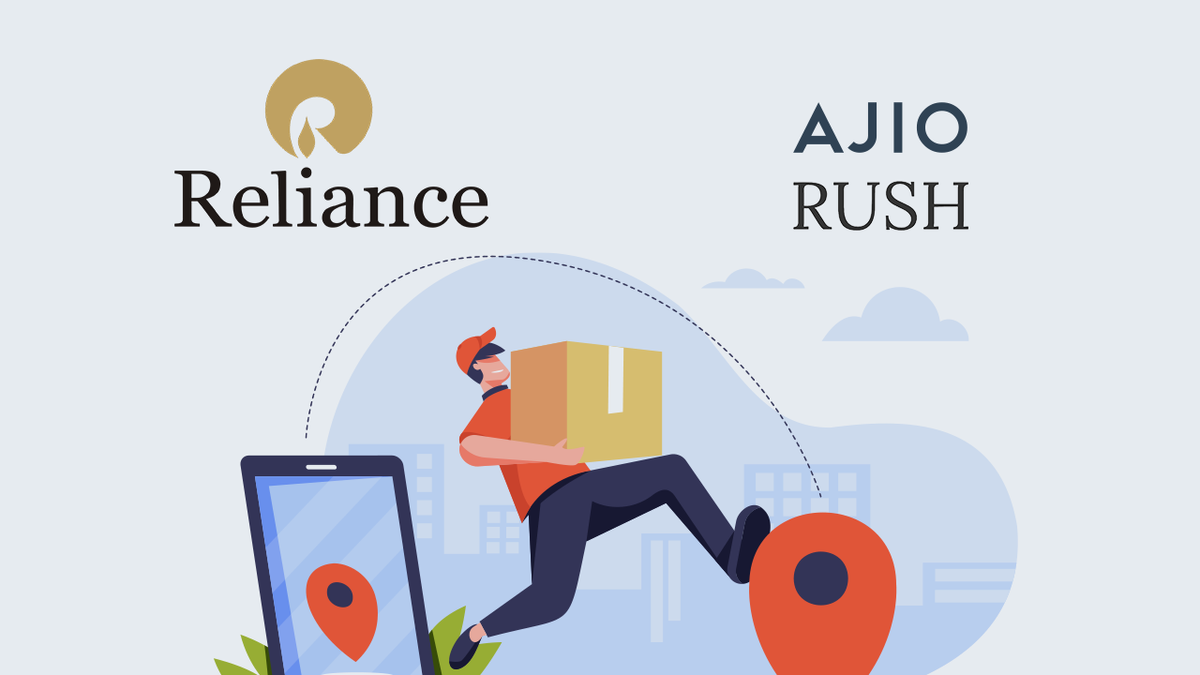
Reliance Retail has extended the reach of Ajio Rush to over 600 cities, accelerating its bet on rapid-delivery fashion in an increasingly competitive ecommerce landscape.
Ajio Rush, the expedited delivery arm of Ajio, aims to bring same-day or near-instant fashion fulfillment to urban and semi-urban consumers. The expansion reflects how traditional ecommerce timelines are being compressed by rising customer expectations shaped by quick commerce models.
While grocery and essentials led India’s 10–30 minute delivery revolution, fashion is now becoming part of that speed-driven ecosystem.
A Strategic Push Beyond Metros
Initially concentrated in major metros, Ajio Rush’s rollout into 600+ cities suggests Reliance is targeting India’s tier-2 and tier-3 growth markets. These regions have seen rapid digital adoption, improved logistics networks, and rising disposable incomes.
By expanding aggressively, Reliance Retail is leveraging its physical store network, warehousing footprint, and integrated supply chain to enable faster last-mile delivery at scale.
This hybrid online-offline advantage differentiates it from pure-play digital competitors that rely solely on centralized warehouses.
Rising Competition in Fashion Fulfillment
India’s fashion ecommerce space is crowded, with established players competing on assortment depth, pricing, and delivery speed. Rapid fulfillment has emerged as a key differentiator, particularly during festive seasons and high-demand sales windows.
Consumers increasingly expect not only broad catalog access but immediate gratification. The expansion of Ajio Rush suggests Reliance believes speed will drive conversion and repeat purchases.
Fast delivery also reduces cart abandonment rates — a persistent challenge in online retail.
Logistics as a Competitive Moat
Scaling rapid delivery to 600 cities requires robust inventory placement, predictive demand modeling, and efficient transportation infrastructure. Reliance Retail’s extensive retail network across India offers a structural advantage in distributing inventory closer to end customers.
Micro-fulfillment strategies, regional warehouses, and localized stock pools likely underpin the expanded rollout.
Such investments reflect a broader industry shift where logistics capability becomes as important as product assortment.
Implications for the Retail Ecosystem
For India’s broader retail ecosystem, Ajio Rush’s expansion signals continued convergence between ecommerce and quick commerce models.
Retailers are no longer competing solely on price or brand partnerships. Instead, fulfillment speed and reliability are central to market positioning.
As infrastructure improves, delivery timelines that once defined urban exclusivity are extending into smaller cities.
This democratization of fast commerce may further accelerate digital consumption in emerging markets.
The Bigger Picture
Reliance Retail’s expansion of Ajio Rush highlights its long-term ambition to dominate multiple segments of India’s digital commerce landscape.
From grocery to electronics and now fashion, the company continues to invest in infrastructure that shortens the distance between order and doorstep.
In India’s evolving retail environment, speed is no longer a premium feature — it is becoming baseline expectation.
By scaling Ajio Rush to 600+ cities, Reliance is betting that the future of fashion ecommerce will move as quickly as the trends it sells.