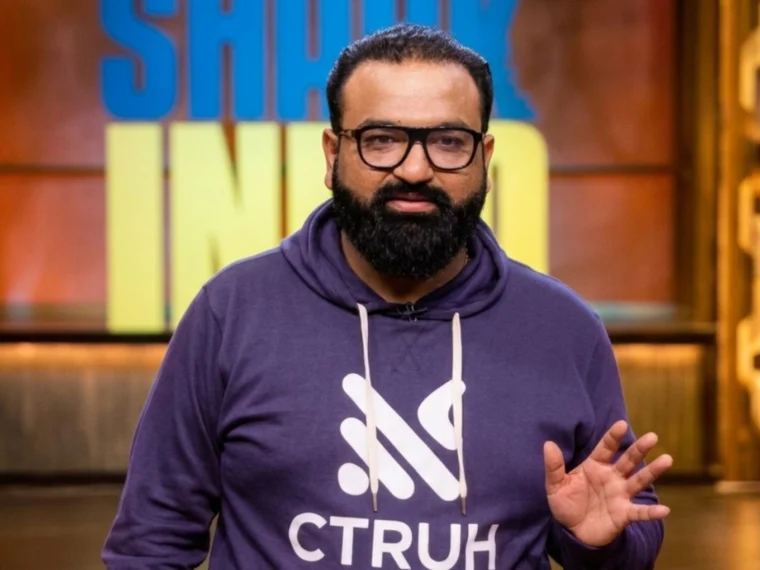
Pine Labs is acquiring Shopflo, the Bengaluru-based D2C checkout optimisation platform, in an all-cash deal worth ₹88 crore — approximately $9.3 million. The transaction was approved by Pine Labs' board on April 25, 2026 and is expected to close within three months, requiring no regulatory approvals. World Gold Council
This is Pine Labs' first acquisition since its stock market listing in November 2025. World Gold Council That timing isn't incidental. A newly public company spending public market capital on its first acquisition is a signal about where management thinks the next growth lever is — and what it believes it can't build fast enough organically.
Shopflo was founded in December 2021 by Priy Ranjan, Ankit Bansal, and Ishan Rakshit. The startup has raised $3.7 million total — $2.6 million in a seed round led by Tiger Global and TQ Ventures in 2022, the remainder from Better Capital. By the time of acquisition, Shopflo served over 1,000 online brands and had processed transactions for 60 million consumers. Revenue reached ₹14.7 crore in FY25, up 61% from ₹9.15 crore the year before. World Gold Council
That revenue figure needs unpacking. ₹14.7 crore is about $1.75 million annually. Pine Labs paid ₹88 crore — roughly 6x FY25 revenue — for a business still posting losses. Shopflo reported a net loss of ₹3 crore in FY25. World Gold Council Pine Labs isn't buying the financials. It's buying the merchant relationships, the checkout infrastructure, and the conversion data those 60 million consumer transactions represent.
The Pine Labs strategic logic — and why it's overdue
Here's the uncomfortable truth about Pine Labs pre-Shopflo: for a company that processes an enormous volume of India's offline payments, it was underweight online.
As of FY25, 70% of Pine Labs' revenues still came from PoS and software services. Its Issuing and Acquiring Business — which includes API banking, prepaid cards, loyalty programmes, and gift cards — contributed 30%. Inc42 Media For a company that publicly describes itself as a "fully diverse fintech platform operating across all offline and online channels," that split is a gap between the narrative and the numbers.
Pine Labs' online payments revenue grew around 50% year-on-year in Q3 FY26, reaching ₹744 crore from ₹601 crore a year earlier. World Gold Council The business is growing. But growth from a small base on a revenue line that represents a minority of your total isn't the same as owning a segment. Shopflo is Pine Labs buying a position in the online merchant layer rather than hoping to grow into it.
"With the acquisition of Shopflo, we are taking a decisive step toward building a truly full-stack payments and commerce platform. This strengthens our ability to serve merchants end-to-end, from in-store payments to online checkout and beyond."
— Amrish Rau, CEO, Pine Labs
Rau is a precise communicator — he chose "full-stack" deliberately. The Indian fintech infrastructure layer is bifurcated between offline payments (where Pine Labs is dominant, with PoS terminals across hundreds of thousands of merchant locations) and online payments (where Razorpay, Cashfree, and PayU compete fiercely for D2C checkout share). There's no clear winner in the integrated play. Pine Labs wants to be that winner, and Shopflo is the faster path there than building checkout infrastructure from scratch.
What Shopflo actually built — and why it's harder to replicate than it looks
15–20% — the conversion rate improvement Shopflo merchants report after switching to the platform. That's not a marketing claim. That's the number that kept 1,000 brands paying for the product through three years of a tough fundraising environment.
Shopflo helps D2C and ecommerce companies improve checkout conversions and reduce fraudulent cash-on-delivery orders. It offers identity verification, analytics, payments, discount management, and integrations with other ecommerce systems. Clients include Dot & Key, Nestasia, and The Sleep Company. World Gold Council
Checkout optimisation is one of those product categories that looks deceptively simple from the outside. The core insight is that the gap between "add to cart" and "completed purchase" is where most ecommerce revenue dies. In India specifically, that gap is complicated by cash-on-delivery expectations, OTP friction, UPI authentication layers, and a consumer base that has low tolerance for checkout complexity. Shopflo spent three years building against those specific friction points. Its identity verification product — which reduces fraud-driven COD orders — is the kind of thing you build by losing money on bad transactions and iterating. The resulting model isn't easily replicated by a payments company that didn't go through that pain.
Who wins, who loses — and what Tiger Global's exit says
Pine Labs wins the most obviously. The company has been EBITDA positive for five years, with adjusted EBITDA rising to ₹355 crore in FY25 from ₹155 crore in FY24. Elyzian An $9.3 million all-cash acquisition is an amount Pine Labs can absorb without material balance sheet impact. The optionality it buys — a credible online merchant product to cross-sell across its existing PoS merchant base — is worth substantially more than the acquisition cost if the integration works.
Shopflo's founders win a liquidity event and a distribution network that would have taken years to build independently. Priy Ranjan framed it clearly: "Joining forces with Pine Labs allows us to take our capabilities to a much larger merchant base." Tonglinjewel For a team that built a real product on $3.7 million and grew revenue 61% in a year, this outcome is defensible.
Tiger Global is where the story gets interesting. The fund made its maiden seed investment in India through Shopflo in 2022 — a signal of intent about early-stage conviction in Indian consumer internet. The exit value on a $2.6 million seed investment in a company acquired for $9.3 million isn't terrible on an absolute return basis, but it's not the fund-maker outcome Tiger Global seeds are supposed to produce. The Shopflo bet reflected a larger thesis about India's D2C checkout moment. That moment arrived, just not at the scale Tiger Global's model requires.
Globally, the comparable dynamic is Stripe's acquisition of Recur Club, Checkout.com's expansion into Southeast Asia, and Adyen's push into SMB merchants — all variations of the same strategic question: does the payments infrastructure layer own the checkout experience, or does a specialist own it and license upward? Pine Labs is answering that question the way Stripe answered it in the US: by buying the specialist.
Skeptic's corner
₹14.7 crore in FY25 revenue for a platform claiming 60 million consumer transactions and 1,000 brand clients is a monetisation problem disguised as a traction story. Either the platform is underpriced relative to its value, or the merchants aren't sticky enough to support premium pricing. Pine Labs gets the technology and the merchant relationships — but if Shopflo couldn't convert strong transaction volume into revenue at scale, integrating it into a larger platform doesn't automatically solve that. The conversion rate improvements claimed (15–20%) are merchant-level metrics. The revenue-per-merchant metric is the one to watch after integration.
What to watch next
Whether Shopflo retains its independence post-acquisition or gets absorbed into Pine Labs' existing product stack — structurally, Shopflo is expected to continue operating as an independent entity initially, World Gold Council but that rarely survives more than 18 months of integration pressure.
Pine Labs' Q4 FY26 results, which are due shortly. The acquisition announcement immediately before the earnings disclosure is timing that investor relations professionals don't do accidentally — watch for whether online payments revenue acceleration in Q4 provides the narrative context Pine Labs needs for the Shopflo investment to read as momentum rather than catch-up.
How Razorpay and Cashfree respond to a Pine Labs with checkout optimisation capabilities. Both companies have been building toward full-stack merchant platforms. A Pine Labs that now competes on online checkout — with the offline PoS distribution network behind it — is a structurally different competitive threat than the Pine Labs of six months ago.
Pine Labs just made a $9.3 million bet that the merchant relationship of the future is won or lost at checkout — not at the PoS terminal. For a company built on hardware placed at physical payment counters across India and Southeast Asia, that's a meaningful pivot in where it thinks commerce is headed. Whether Shopflo's checkout infrastructure is the right asset to make that bet with depends entirely on what Pine Labs does with the 1,000 merchant relationships it just inherited. Integrations are where acquisitions go to die. This one has the strategic logic to survive. Execution is the only question left.