The week that Snabbit, ecomm-adjacent home-services startup, began circling a $400 million valuation in a new funding round, India's Union Ministry of Labour was still digesting the fallout from 200,000 gig workers who went on strike on New Year's Eve, demanding an end to algorithmic control over their livelihoods. Nobody in the venture community seems to have mentioned the timing.
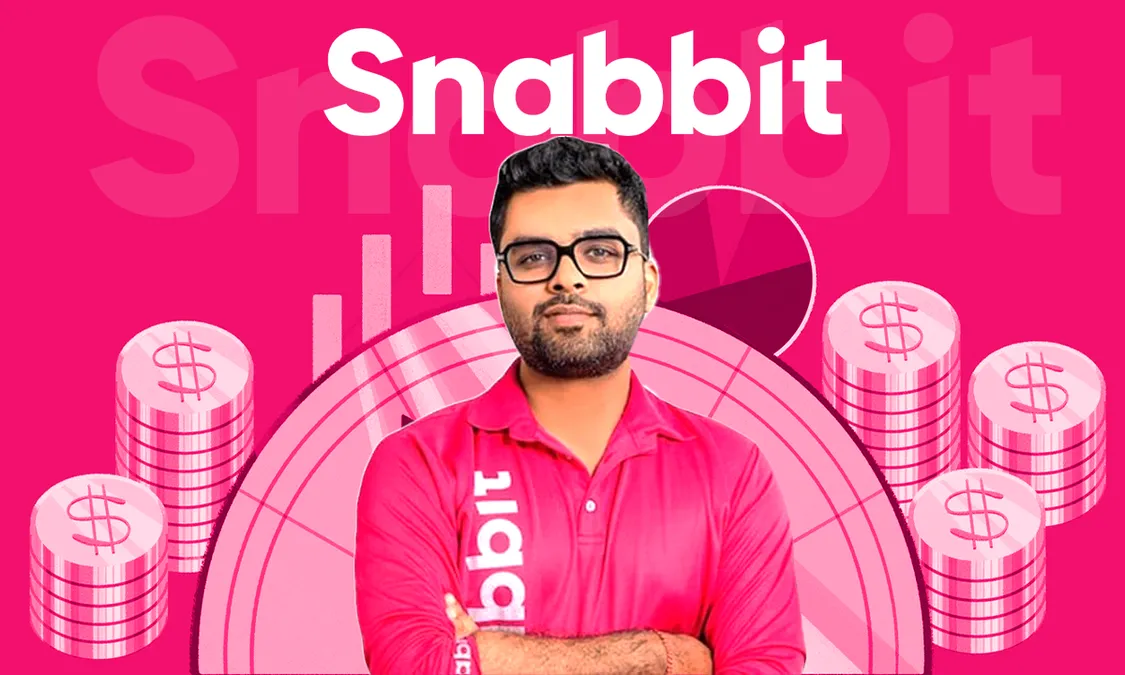
Snabbit, founded in Bengaluru in 2024 by Aayush Agarwal, is in advanced talks to raise approximately $50–55 million in a round led by Susquehanna Venture Capital, with participation from Mirae Asset, FJ Labs, and existing backers Lightspeed Venture Partners and Bertelsmann India Investments. The deal, reported by TechCrunch on April 25, would value the company at roughly $400 million — more than double the $180 million valuation at which it raised $30 million just six months ago in October 2025. Bloomberg had earlier pegged the target at $450 million; whichever number closes, the velocity is striking.
In eighteen months of operations, Snabbit has gone from zero to one million jobs completed in March 2026 alone. Its platform now connects urban households with on-demand domestic workers — cleaning, dishwashing, laundry — via a managed network of approximately 5,000 professionals, all women. The service costs less than 99 rupees (roughly $1.20) an hour at promotional rates. Similar services run £22 an hour in the United States.
That spread is the entire thesis. And it's also where the questions start.
The Snabbit, Ecomm, and Funding Vortex: What Quick Commerce Built, and What It Didn't Finish
To understand why Snabbit is raising at a $400 million valuation on two years of existence, you need to understand what India's quick commerce boom actually manufactured — and it wasn't just convenience. It manufactured a consumer psychology.
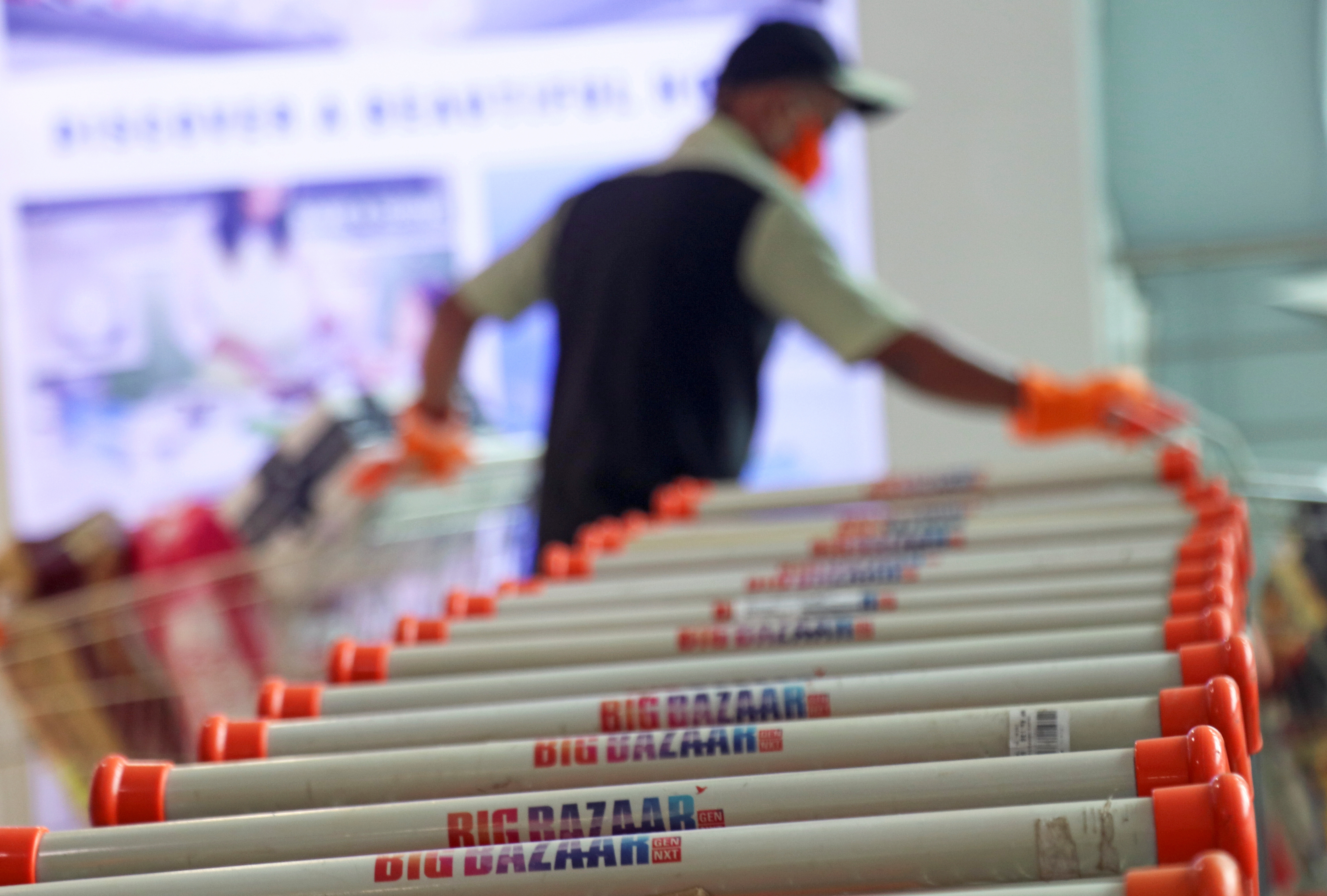
Zepto, Blinkit, and Swiggy Instamart collectively built a $11.5 billion sector in five years by convincing India's urban middle class that ten-minute delivery was a baseline expectation, not a premium. The model ran on dense dark-store networks, algorithmic dispatch, and an enormous supply of gig workers willing — or compelled — to work at rates with no global parallel. When the Indian government, under Labour Minister Mansukh Mandaviya, forced those platforms to drop their ten-minute delivery branding in January 2026 following nationwide worker strikes, it didn't kill the consumer appetite for instant services. It just redirected it.
Snabbit stepped directly into that redirected demand. The same smartphone-native, convenience-habituated urban professional who orders groceries in eight minutes is now, apparently, willing to book a dishwasher in the same gesture. Agarwal has framed this explicitly: his customers are young professionals who grew up on Zomato and Blinkit, and booking house help is the next logical step in the on-demand stack.
The growth data supports this framing:
Metric | Value |
|---|---|
Monthly jobs, October 2025 | 300,000+ |
Monthly jobs, March 2026 | 1,000,000+ |
Workers on platform | ~5,000 (all women) |
Total pre-round funding | $55 million |
Valuation, April 2024 | Seed-stage |
Valuation, October 2025 | $180 million |
Target valuation, April 2026 | $400–450 million |
Month-on-month order growth of that magnitude, sustained across six months, is not a normal consumer startup curve. It's quick-commerce-grade acceleration in a category that has never before seen it.
The Historical Context: India Has Tried This Before
The honest version of this story requires acknowledging that India attempted to build this market at least twice before, at smaller scale and with different architectures, and did not fully succeed.
Urban Company — now the sector's most established player, having reported over one million monthly bookings from its InstaHelp vertical in March 2026 — spent years educating consumers about professional home services before gaining that kind of volume. It took the company from 2014 to 2022 to establish the supply chain, credentialing, and pricing trust the market needed. Snabbit is compressing that timeline by an order of magnitude, partly by narrowing scope (recurring domestic tasks rather than skilled trades), partly by riding the behavioral infrastructure that quick commerce built, and partly because capital is cheaper in a market where investors are pattern-matching against Zepto's trajectory.
A startup called Pync — a Snabbit competitor — shut down entirely in January 2026. Its founders then joined Snabbit. That kind of consolidation this early in a category lifecycle is unusual and worth noting. It suggests the market is bifurcating faster than expected: into companies with enough capital to build worker supply density and companies that cannot.
Pronto, Snabbit's most direct rival, is simultaneously finalizing its own round at a $200 million valuation, led by tech investor Lachy Groom. Two companies in the same infant category raising simultaneously at a combined $600 million in implied value is either a sign of extraordinary market depth or extraordinary investor enthusiasm. Probably both. The distinction matters when the category matures.
"The question with any marketplace that depends on a supply side of informal women workers is not whether you can grow fast — you clearly can, because the latent supply exists and is large. The question is whether the unit economics survive the moment the labour market formalises. India's new labour codes are coming for this sector."
A Partner at a Bengaluru-based Venture Fund with.
The expert framing above deserves unpacking. India's newly implemented Social Security Code requires platform aggregators to contribute 1–2% of annual revenue to a government-managed social security fund for gig workers. The implementation details remain contested and partially unclear, but the direction of travel is not. For a company doing one million jobs a month, a formal social security contribution per worker, mandatory insurance, and the overhead of compliance represent a structural cost increase that doesn't yet appear in the unit economics investors are currently pricing.
Snabbit has moved proactively on one dimension of this: in March 2026, it rolled out "Kavach," an in-app safety system for its women workers. The product includes an SOS button that alerts area supervisors in emergencies — a direct response to a genuine and documented risk. Workers in this model spend hours inside private homes. Unlike delivery riders whose exposure is transactional, domestic workers face extended, intimate access situations that traditional gig safety frameworks weren't designed for.
That Snabbit built this is notable. That it shouldn't have taken regulatory pressure to prompt it is the other side of the observation.
Who Wins, Who Loses, and Who's Watching
The winner in the near term is clear: Agarwal and his team are executing a textbook quick-raise-while-momentum-is-visible strategy, and the syndicate assembling around them is credible. Susquehanna Venture Capital isn't a brand-name VC that funds narratives; it's a quantitative-leaning firm that prices on data. Its willingness to lead at $400 million implies they've seen cohort retention and order frequency metrics that justify the multiple. Mirae Asset, the South Korean asset management giant with a significant India venture footprint, brings patient capital and cross-market credibility. FJ Labs, Jose Marin and Fabrice Grinda's marketplace-specialist fund, has a track record of correctly calling marketplace category formation early — their presence is a signal that the unit economics at the transaction level are defensible.
The question mark is what happens at the edges of growth. Snabbit currently operates in Bengaluru and is expanding to other major Indian metros. Every new city requires building worker supply density from scratch — a fundamentally geographic, non-digital problem. Pronto will compete for the same worker supply in the same cities at roughly the same time. Urban Company, with its longer-established brand, will not concede its position quietly. The per-order economics that look attractive at Bengaluru density may look very different in Lucknow or Kochi.
The international angle is underappreciated. Mirae Asset's participation is worth watching not just as capital but as a bridge. South Korean investors with India exposure have historically been early indicators of whether Indian consumer models are considered export-worthy — to Southeast Asia, the Middle East, or markets like Indonesia and the Philippines where a similar demographic profile (young, urban, digital-native, growing middle class) meets a comparable supply-side labour dynamic. If Snabbit's model is considered transportable, the $400 million valuation is a foundation, not a ceiling.
Skeptic's Corner
The entire Snabbit thesis rests on a labour arbitrage that India's own government is actively trying to close. The price point — under 99 rupees an hour — only works because the workers are informal, without benefits, and operating in a regulatory grey zone that four new labour codes are expressly designed to address. Zepto thought its model was structurally durable too, until 200,000 workers went on strike over New Year's Eve and the Ministry of Labour called executives into closed-door meetings within weeks. Snabbit is faster-growing, more intimate in its service design, and more exposed to the specific category of worker safety risk that Indian regulators and civil society are now most focused on. That the company is raising at a $400 million valuation before any of these structural costs hit the P&L is either smart timing or a clock that investors are choosing not to read.
Key Takeaways
1. The quick commerce infrastructure built India's next consumer category. Blinkit, Zepto, and Swiggy Instamart spent five years creating the behavioral habit. Snabbit is harvesting it. This is a recurring pattern in Indian consumer internet — each wave of platform investment creates demand infrastructure for the next.
2. The syndicate composition is a data point, not just a name drop. Susquehanna leading means quantitative validation. Mirae Asset signals potential Southeast Asian optionality. FJ Labs means the marketplace mechanics are defensible at the unit level.
3. India's labour regulation trajectory is the single largest unpriced risk. The Social Security Code is implemented. The four labour codes are live. Each percentage point of revenue that goes to the social security fund is a percentage point that narrows the unit economics spread that makes this sector work.
4. The consolidation signal matters. Pync shutting down and its founders joining Snabbit within six months of the category going mainstream is fast. Watch for more.
5. Worker safety is a regulatory and reputational variable, not a PR footnote. Kavach is a product decision that will matter. The question of who vets customers — not just workers — remains open.
What to watch in the next 90 days:
Whether the round closes at $400 million, $450 million, or higher — the delta tells you how competitive the cap table fight became Pronto's close and whether Lachy Groom brings additional co-investors who clarify that fund's expansion thesis.
Urban Company's response: the established player has distribution, brand, and a public-company governance posture that will force it to respond formally.
Any Ministry of Labour inquiry into domestic worker platforms specifically — the gig worker strikes in January targeted delivery workers, but the next wave of scrutiny is likely to address in-home services.
Snabbit's city expansion sequence — the second city is always the harder proof point.
The funding story here is real and the growth is real. But Snabbit, ecomm-adjacent as it is in consumer behavior, is not an ecommerce company in any structural sense. It is a managed labour marketplace operating inside a regulatory moment that could reprice its entire cost structure inside two years. The investors who understand that — and are betting on Agarwal's ability to navigate it — are making a more interesting wager than the headline valuation number suggests.
StartupNews.fyi covers early and growth-stage technology ventures with an emphasis on market structure, not just market size. We have no financial relationships with any companies, funds, or individuals mentioned in this article.