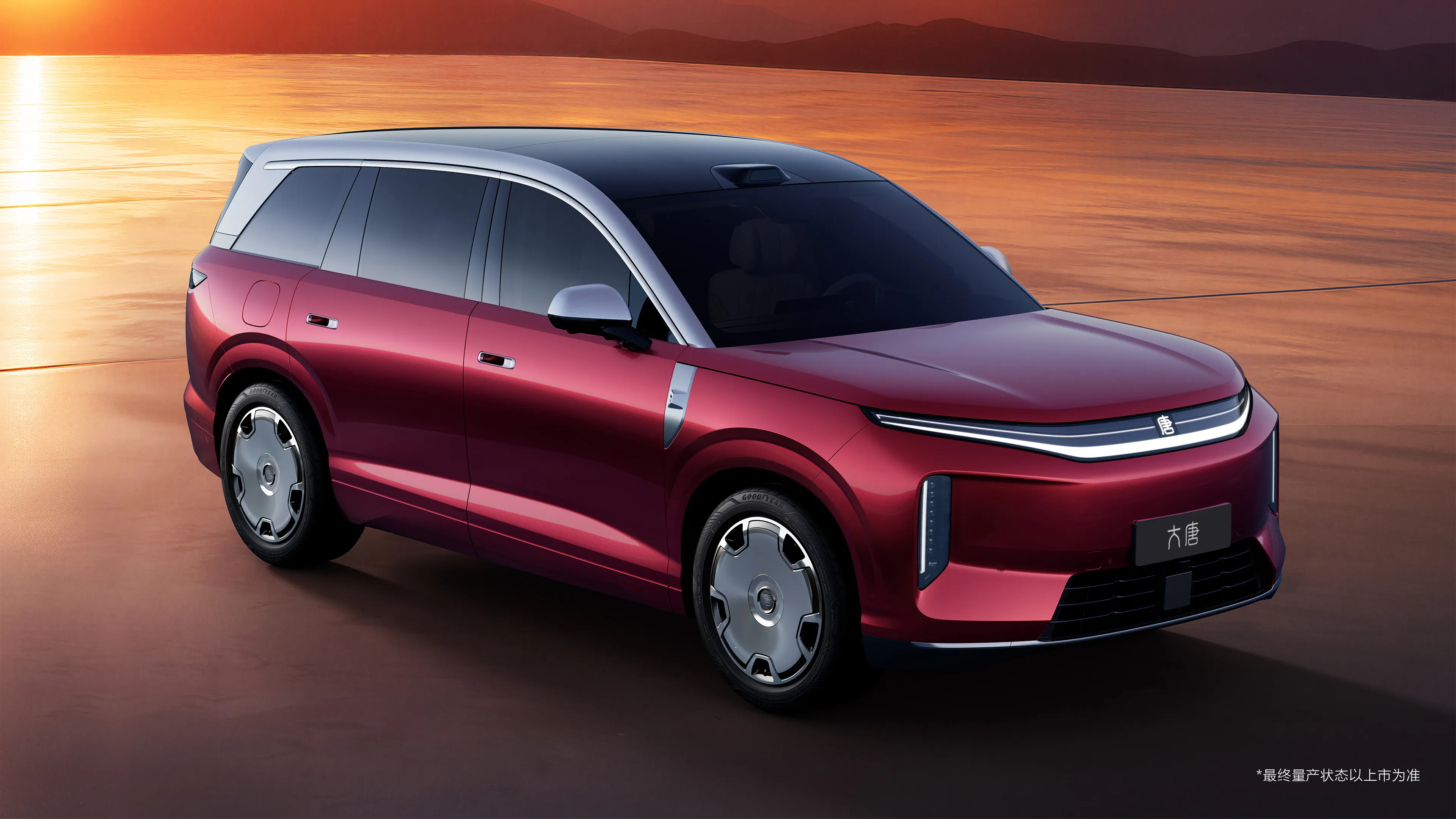
A flagship electric SUV, 100,000+ orders in two weeks, and a starting price under $40,000. These are not disparate data points, but a singular, seismic event emanating from China. BYD, the Shenzhen-based automotive giant, has not just launched a new vehicle; it has fundamentally redefined the global benchmark for electric vehicle value and capabilities, sending shockwaves across the industry from Detroit to Stuttgart to Tokyo.
This achievement is far more than a marketing triumph. It signals the mature arrival of a new, highly integrated manufacturing paradigm that directly challenges the established order of automotive production and pricing. For founders and operators navigating the treacherous waters of innovation and market disruption, BYD's latest move is a case study in aggressive, vertically integrated scaling that threatens to rewrite the rules of the game.
The immediate implication is stark: the "premium EV tax" is rapidly dissolving. For years, advanced electric vehicles carried a significant price premium over their internal combustion engine (ICE) counterparts, justified by nascent technology, R&D costs, and economies of scale yet to be realized. BYD has now demonstrably shattered that ceiling, delivering a compelling, tech-laden SUV at a price point that makes it accessible to a far broader swathe of consumers globally. This isn't merely competing on price; it's competing on value, offering a sophisticated package that includes cutting-edge battery technology, advanced driver-assistance systems, and a refined user experience, all at a price point previously unimaginable for a vehicle of this caliber.
BYD's ascent is no overnight phenomenon. For decades, the company has diligently built its empire, initially as a battery manufacturer, then expanding into automotive production. This deep-rooted expertise in battery chemistry and manufacturing, particularly with its proprietary Blade Battery technology, forms the bedrock of its competitive advantage. The Blade Battery, a lithium iron phosphate (LFP) cell, offers superior safety, extended lifespan, and a more compact structure, all while being significantly more cost-effective to produce than traditional nickel-manganese-cobalt (NMC) batteries.
Beyond batteries, BYD's strategic brilliance lies in its unparalleled vertical integration. The company designs and manufactures its own electric motors, power electronics, and even its own automotive-grade semiconductors. This comprehensive control over its supply chain insulates BYD from the volatility and bottlenecks that have plagued competitors, particularly during recent global crises. It also allows for rapid iteration and cost optimization at every stage of production, translating directly into the aggressive pricing seen with its new flagship SUV.
Moreover, BYD leverages an enormous domestic market, allowing it to achieve economies of scale that few global competitors can match. With millions of vehicles sold annually in China, the company can amortize its R&D and manufacturing investments over a vast production volume, further driving down per-unit costs. This scale, combined with its in-house technological prowess, creates a formidable virtuous cycle of innovation and affordability.
Global Market Repercussions
The implications of BYD's aggressive pricing strategy extend far beyond the Chinese mainland. While the new flagship SUV's initial sales surge is domestic, BYD's relentless global expansion means this value proposition will soon cascade into international markets. European automakers, in particular, face an existential threat. Brands like Volkswagen, Mercedes-Benz, and BMW, which have invested heavily in transitioning to electric, now find their carefully constructed premium pricing models under direct assault. How can they justify significantly higher prices for comparable or, in some cases, less advanced EV technology?
In Southeast Asia, Latin America, and Australia, where BYD has already established a significant foothold with models like the Atto 3 (Yuan Plus) and Dolphin, the new flagship SUV will likely further cement its market leadership. These regions are particularly sensitive to price, and BYD's ability to offer compelling, modern EVs at accessible price points will accelerate the transition away from ICE vehicles and potentially displace legacy brands that have historically dominated these markets.
Even in North America, where BYD's passenger vehicles have yet to make a significant entry due to tariffs and geopolitical complexities, the ripple effect is undeniable. Tesla, while still a dominant force, faces increasing pressure from a competitor that has now surpassed it in global battery electric vehicle sales volume in Q4 2023. Tesla's recent price cuts, while partly a response to market demand, also reflect the growing competitive intensity from Chinese manufacturers, with BYD at the forefront.
"BYD is not just building cars; they are building a new template for automotive manufacturing. Their vertical integration and mastery of the entire EV value chain, from raw materials to software, allows them to dictate terms on cost and speed of innovation. This sub-$40,000 flagship SUV isn't merely a product launch; it's a declaration that the era of inflated EV pricing is over. Legacy automakers must adapt or risk being marginalized in the accelerating shift to electric mobility."Dr. Evelyn Reed, Principal Analyst, Global Automotive Intelligence
The Technology and Design Edge
BYD's success is not solely predicated on cost; it is increasingly backed by a rapidly maturing technology and design language. The days of Chinese cars being perceived as budget-friendly but aesthetically bland are over. BYD's "Dragon Face" design philosophy, led by former Audi design director Wolfgang Egger, has injected a distinctive, modern aesthetic across its lineup. The new flagship SUV, like its siblings the Seal and Han, boasts sleek lines, sophisticated interiors, and an undeniable premium feel.
Inside the cabin, BYD vehicles are packed with features that resonate with modern consumers. Large rotating infotainment screens, comprehensive connectivity options, and increasingly sophisticated advanced driver-assistance systems (ADAS) are standard. While BYD's ADAS capabilities may not yet rival the most advanced offerings from Tesla or Waymo in autonomous driving, they are rapidly closing the gap, providing a safe and comfortable driving experience that meets or exceeds expectations for its price point.
The synergy between hardware and software is also a crucial differentiator. BYD's in-house semiconductor division, FinDreams Technology, not only supplies crucial chips for its vehicles but also fosters a tighter integration between the car's various electronic systems. This allows for more optimized performance, faster software updates, and a more cohesive user experience, something many legacy automakers struggle with due to their reliance on fragmented external suppliers.
The Road Ahead: Challenges and Opportunities
Despite its formidable position, BYD is not without challenges. Expanding into diverse global markets requires more than just compelling products; it demands robust service networks, strong brand building, and a deep understanding of local consumer preferences. While BYD has made significant strides, particularly in regions like Thailand and Brazil, establishing a premium brand perception in historically brand-loyal markets like Europe and Australia will require sustained effort and investment.
Geopolitical headwinds also loom large. The specter of protectionist policies and trade barriers, particularly from Western nations concerned about the competitiveness of their domestic industries, could complicate BYD's global expansion. However, BYD's strategy of establishing local manufacturing plants, as seen in Brazil and planned for Hungary, could help mitigate some of these risks by creating local jobs and fostering economic partnerships.
Ultimately, BYD's new flagship electric SUV, with its astounding order book and disruptive price, is more than just a new model in a crowded market. It is a powerful symbol of a shifting global automotive landscape. For founders and operators, it underscores the critical importance of vertical integration, aggressive scaling, and a relentless focus on delivering unparalleled value. The battle for the future of mobility is being fought not just on innovation, but increasingly on the ability to democratize advanced technology at accessible price points. BYD is clearly winning that battle, setting a new, formidable standard for everyone else to chase.
KEY TAKEAWAYS
Disruptive Value Proposition: BYD's sub-$40K flagship EV redefines the price-performance benchmark, challenging the "premium EV tax" and forcing competitors to re-evaluate their pricing strategies.
Vertical Integration as Core Advantage: The company's control over its entire supply chain, from batteries (Blade Battery) to semiconductors, is key to its cost efficiency, speed of innovation, and resilience.
Global Scale and Market Penetration: Leveraging its vast domestic market, BYD achieves economies of scale that enable aggressive pricing and rapid expansion into international markets, particularly in Europe, Southeast Asia, and Latin America.
Maturity of Chinese EV Ecosystem: This launch signifies the sophistication of China's EV industry, combining advanced technology, compelling design, and efficient manufacturing to compete globally.
Pressure on Legacy Automakers: Established players face intensified pressure to innovate faster, optimize costs, and adapt their business models to compete with BYD's integrated, value-driven approach.
Frequently asked questions
What is BYD's new flagship electric SUV?
BYD's new flagship electric SUV is a groundbreaking vehicle that has secured over 100,000 orders in just two weeks, redefining value and capabilities in the global electric vehicle market.
How many orders did BYD's new SUV receive?
BYD's flagship electric SUV received over 100,000 orders within its first two weeks on the market.
What is the starting price of BYD's flagship electric SUV?
The starting price for BYD's flagship electric SUV is under $40,000, making it highly competitive.
Where is BYD based?
BYD is a Shenzhen-based automotive giant from China.
How is BYD impacting the EV market?
BYD is fundamentally redefining the global benchmark for electric vehicle value and capabilities, sending shockwaves across the industry.
Why is BYD's new SUV considered a seismic event?
It's considered a seismic event due to its combination of a flagship model, massive order numbers, and an aggressive price point, all emanating from China.