The electric vehicle landscape is a battleground of innovation, with manufacturers constantly striving for breakthroughs in range, charging speed, and affordability. At the heart of this contest lies the battery, the single most expensive component of an EV. For years, Tesla has been lauded for its battery technology, pushing boundaries and setting industry standards. Yet, a significant internal initiative, the development and deployment of Tesla’s 4680 battery cells, appears to be encountering substantial hurdles, leading to performance discrepancies and, for some early adopters, a degree of frustration.
These larger, cylindrical cells, heralded by Tesla as a revolutionary step forward, promised not just greater energy density and power, but also a radical reduction in manufacturing cost and complexity. The vision was compelling: a battery that would unlock cheaper EVs, expand manufacturing capacity, and cement Tesla’s lead. However, the reality of scaling this ambitious technology has proven far more challenging than anticipated, resulting in vehicles equipped with these cells sometimes underperforming established models using older battery technology.
The Audacious Vision of Battery Day
Tesla's "Battery Day" in September 2020 was not merely a product launch; it was a grand strategic unveiling. Elon Musk and his team laid out a detailed blueprint for the future of electric vehicle manufacturing, centered around a paradigm shift in battery technology. The star of the show was the 4680 cell, named for its dimensions: 46 millimeters in diameter and 80 millimeters in height. This was a significant departure from the smaller 2170 and 1865 cells Tesla had been using.
At its core, the 4680 cell represented a fundamental rethinking, designed to achieve multiple, interconnected goals. Tesla claimed these new cells would offer a 5-fold increase in energy capacity, a 6-fold increase in power, and a 16% boost in vehicle range. Crucially, they were also projected to slash battery manufacturing costs by 50%, a figure that would transform the economics of EV production. This cost reduction was not just about the cell itself, but also about integrating it into a "structural battery pack," where the battery effectively becomes a part of the vehicle's chassis, simplifying manufacturing and reducing overall vehicle weight.
The design itself, a larger cylindrical cell, was intended to improve volumetric energy density. By making cells larger, fewer cells are needed per pack, reducing the complexity of wiring and cooling systems. The promise was clear: more range, more power, lower cost, and a more efficient manufacturing process, all contributing to a faster transition to sustainable energy.
Engineering Dreams Meet Manufacturing Reality
Achieving these ambitious goals hinged on several groundbreaking technologies, each presenting its own set of engineering and manufacturing challenges. The most talked-about innovations were the "tabless" design and the "dry electrode" manufacturing process.
The "tabless" design aimed to solve a fundamental problem in traditional cylindrical batteries. In conventional cells, current flows from the entire surface of the electrode to a small tab at the end. This long current path generates resistance and heat, limiting power output and requiring extensive cooling. Tesla's tabless design connects the entire electrode surface to the terminal, creating a much shorter and more efficient current path. Think of it like a highway with many exits versus a single bottlenecked ramp: the tabless design allows electrons to flow more freely, reducing internal resistance and heat, thereby improving charging speed and power delivery.
Perhaps the most significant, and simultaneously most challenging, innovation was the "dry electrode" process. Traditional battery electrodes are made by mixing active materials with solvents to create a slurry, which is then spread onto metal foil, dried, and compressed. This drying process is energy-intensive and time-consuming. Tesla's dry electrode process, acquired through its purchase of Maxwell Technologies, eliminates the need for solvents. Instead, the active materials are bonded directly to the current collector in a dry state, similar to how a printer applies toner to paper. This process, if perfected, could dramatically reduce the energy footprint and capital expenditure required for battery production, offering environmental benefits and substantial cost savings.
However, translating this dry coating method from laboratory prototypes to high-volume, consistent production has proven exceptionally difficult. The precise control required to bond the materials evenly and durably across large surfaces, at high speeds, without the forgiving nature of a solvent-based slurry, has created a significant bottleneck. This manufacturing complexity is a primary reason why Tesla’s 4680 battery cells are not yet delivering on their full promise.
The Production Gauntlet and Performance Discrepancy
Initial production of 4680 cells began at Tesla's Kato Road facility in Fremont, California, primarily as a pilot line to refine the manufacturing process. The true scaling was intended to occur at Gigafactory Texas, where a significant portion of the Model Y production and the entirety of the Cybertruck production rely on these new cells. Despite scaling efforts, the output numbers have remained below Tesla's own ambitious targets, leading to production constraints for vehicles like the Cybertruck.
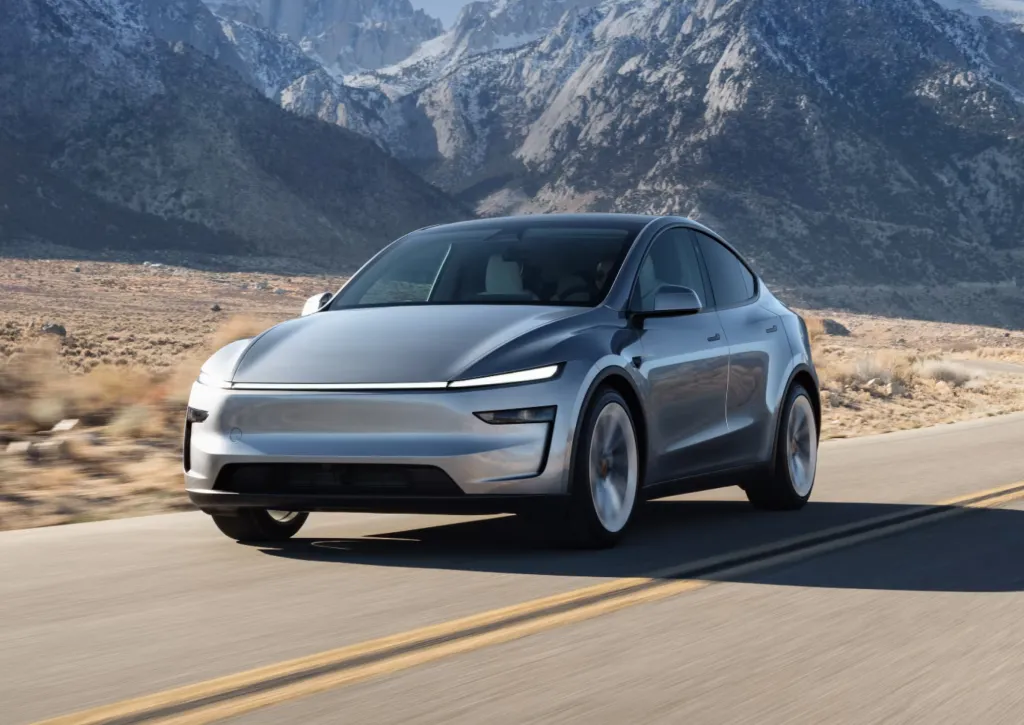
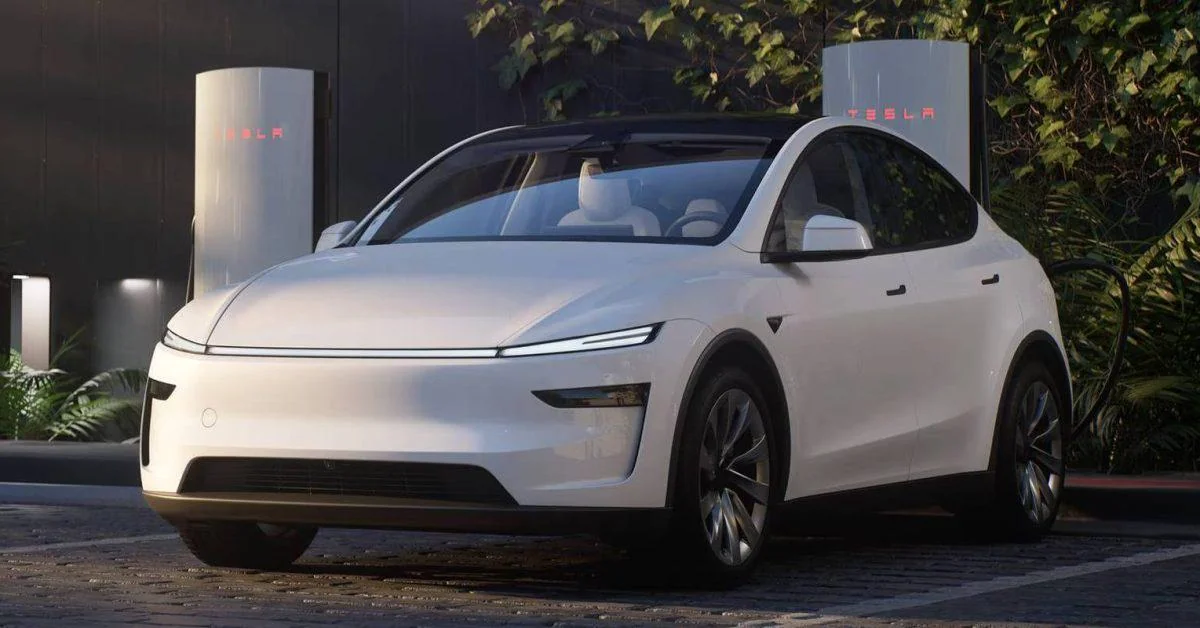
For buyers, the most tangible point of friction has been the perceived performance of vehicles equipped with Tesla’s 4680 battery cells, especially when compared to those utilizing the more mature 2170 cells. Take, for example, the Model Y All-Wheel Drive variant manufactured at Gigafactory Texas. When initially launched with 4680 cells, its EPA-estimated range was often slightly lower than Model Y variants produced at other factories using 2170 cells, even with similar battery pack capacities. This immediately created a perception of underperformance, frustrating buyers who had anticipated an improvement, not a regression, from the next-generation battery.
A key area of contention involves vehicle range. While Tesla has iterated on its 4680 packs, the Model Y Rear-Wheel Drive with 4680 cells often shows a rated range of around 260 miles, whereas a comparable Model Y Long Range with 2170 cells can exceed 300 miles. Although these are different trim levels, the expectation among enthusiasts was that the advanced 4680 technology would at least match, if not surpass, existing performance metrics for its capacity. This discrepancy can be attributed to several factors, including the actual usable energy density achieved in scaled production, the efficiency of the battery management system, and potentially the thermal management of the structural pack.
Charging performance also presents a nuanced picture. While the tabless design theoretically allows for faster charging, real-world data and independent tests have shown that 4680-equipped vehicles do not consistently offer a superior charging curve, particularly at higher states of charge, compared to their 2170 counterparts. This is a critical metric for long-distance travel and rapid turnaround, and any perceived shortfall contributes to buyer disappointment.
"The challenge with the 4680 cell isn't necessarily a failure of the concept, but rather the immense difficulty in translating laboratory breakthroughs into high-volume, cost-effective manufacturing without compromise. Tesla bet big, and while the long-term potential remains, the short-term delivery has fallen short of the hype, leading to understandable frustration among early adopters."Dr. Evelyn Reed, Battery Technology Analyst
Buyer Frustration and Market Implications
The frustration among purchasers of 4680-equipped vehicles stems from a gap between expectation and reality. Tesla has historically cultivated a brand image of relentless innovation and cutting-edge technology. When a buyer opts for a vehicle featuring a highly publicized "next-generation" battery, they expect tangible improvements. Instead, some have found themselves with a vehicle that, on paper or in practice, offers comparable or even slightly inferior range and charging metrics to models using older cell technology, often at a similar price point or with a premium.
Consider the Cybertruck, Tesla's latest high-profile launch, which exclusively uses 4680 cells. While its unique design and robust capabilities are undeniable, its official EPA range figures were notably lower than initial projections. Early deliveries also pointed to a heavier vehicle than some expected, which can further impact efficiency. For a vehicle with such a long development cycle and immense anticipation, any deviation from ambitious targets can amplify buyer dissatisfaction, particularly among those paying a significant premium for early access.
Globally, this situation impacts Tesla's competitive posture. In markets like China and Europe, where EV adoption is accelerating and competition is fierce, performance metrics are closely scrutinized. Chinese manufacturers, in particular, are rapidly advancing their battery technology, often focusing on LFP (lithium iron phosphate) cells for cost-effectiveness and NMC (nickel manganese cobalt) for high performance. If Tesla’s 4680 battery cells are not delivering a clear advantage, it diminishes the company's unique selling proposition in an increasingly crowded market.
In Europe, where high-performance EVs are increasingly common and charging infrastructure is robust, consumers are discerning. A Model Y with 4680 cells offering a marginally lower range than a European-built Model Y with 2170 cells, or even competitors like the BMW iX3 or Hyundai Ioniq 5, can influence purchasing decisions. The narrative that Tesla is always ahead in battery tech becomes harder to maintain if the latest iteration struggles to outperform its predecessors or rivals.
The Path Forward: Iteration and Resolution
Tesla is not a company known for abandoning ambitious projects, and the 4680 cell is undoubtedly a cornerstone of its long-term strategy for cost reduction and vehicle scalability. The challenges with Tesla’s 4680 battery cells are multifaceted: they involve perfecting the dry electrode process to achieve consistent quality and high yield, optimizing the cell chemistry for maximum energy density and longevity, and refining the structural pack integration to realize the promised weight and cost savings.
Improvements in manufacturing yield, material science, and electrode formulation are ongoing. Tesla has demonstrated a history of iterative improvements, often deploying new technologies before they are fully mature and refining them over time. We can anticipate continuous enhancements to the 4680 cell's performance, range, and charging capabilities as production scales and the manufacturing process is further optimized. The goal remains to deliver a battery that is both cheaper to produce and superior in performance, enabling more affordable Tesla models and accelerating global EV adoption.
The success of the 4680 cell is critical for Tesla's future ambitions, including the elusive $25,000 vehicle and a vast network of robotaxis. Without a substantial reduction in battery cost and an increase in energy density, these goals become significantly harder to achieve. The current underperformance is a temporary setback, highlighting the immense difficulty of revolutionizing a core technology. The long-term trajectory hinges on Tesla’s ability to overcome these manufacturing hurdles and finally unlock the full potential of these next-generation cells.
KEY TAKEAWAYS
Tesla's 4680 battery cells were introduced with ambitious promises of significantly increased energy density, power, and a 50% cost reduction, alongside a novel structural battery pack concept.
The primary manufacturing hurdle is the "dry electrode" process, an innovative solvent-free method that has proven exceedingly difficult to scale consistently and cost-effectively.
Vehicles equipped with Tesla’s 4680 battery cells, such as certain Model Y variants and the Cybertruck, have sometimes exhibited lower-than-expected range and charging performance compared to older 2170-equipped models or initial projections.
Buyer frustration stems from the gap between high expectations for a "next-generation" battery and the real-world performance, which can feel like a step backward or a missed opportunity for tangible improvement.
Despite current challenges, the 4680 cell remains central to Tesla's long-term strategy for cost-effective mass production and future models, with ongoing efforts focused on refining manufacturing processes and improving cell chemistry.
The journey of the 4680 battery cell encapsulates a familiar Silicon Valley narrative: audacious vision meeting the grinding reality of engineering and manufacturing at scale. While the initial promise has not yet been fully realized, the stakes are too high for Tesla to abandon this core innovation. The path forward involves relentless iteration, process optimization, and a continued push to make the revolutionary a routine. For founders and operators watching the EV space, the 4680 saga serves as a potent reminder that even the most innovative concepts require flawless execution to truly transform an industry.
Frequently asked questions
Why are Tesla's 4680 battery cells underperforming?
Tesla's 4680 battery cells are reportedly underperforming due to challenges in achieving consistent energy density and manufacturing efficiency at scale. This leads to lower-than-expected range and charging speeds for vehicles equipped with these advanced cells.
What vehicles use Tesla's 4680 battery cells?
Initially, the 4680 cells were primarily integrated into some Model Y vehicles produced at Gigafactory Texas, with plans for broader adoption across Tesla's lineup. This includes future Cybertruck and other models.
Are buyers frustrated with 4680 battery performance?
Yes, reports indicate that buyers of Tesla vehicles featuring 4680 cells are experiencing frustration due to issues such as reduced range and slower charging compared to expectations or vehicles with older battery technologies.
How do 4680 cells differ from Tesla's previous batteries?
The 4680 cells are larger, tabless cylindrical cells designed to offer higher energy density, faster charging, and lower production costs. They are also integral to Tesla's structural battery pack design.
What is Tesla doing to address 4680 battery issues?
Tesla is continuously working to refine the manufacturing process and improve the performance of its 4680 battery cells. This involves ongoing research and development to optimize chemistry and production scalability.
Does the 4680 underperformance impact all Tesla EVs?
No, the underperformance primarily impacts specific Tesla models and production batches that utilize the 4680 cells. Many Tesla vehicles still use proven 2170 or 18650 cells, which are not subject to these specific 4680 issues.