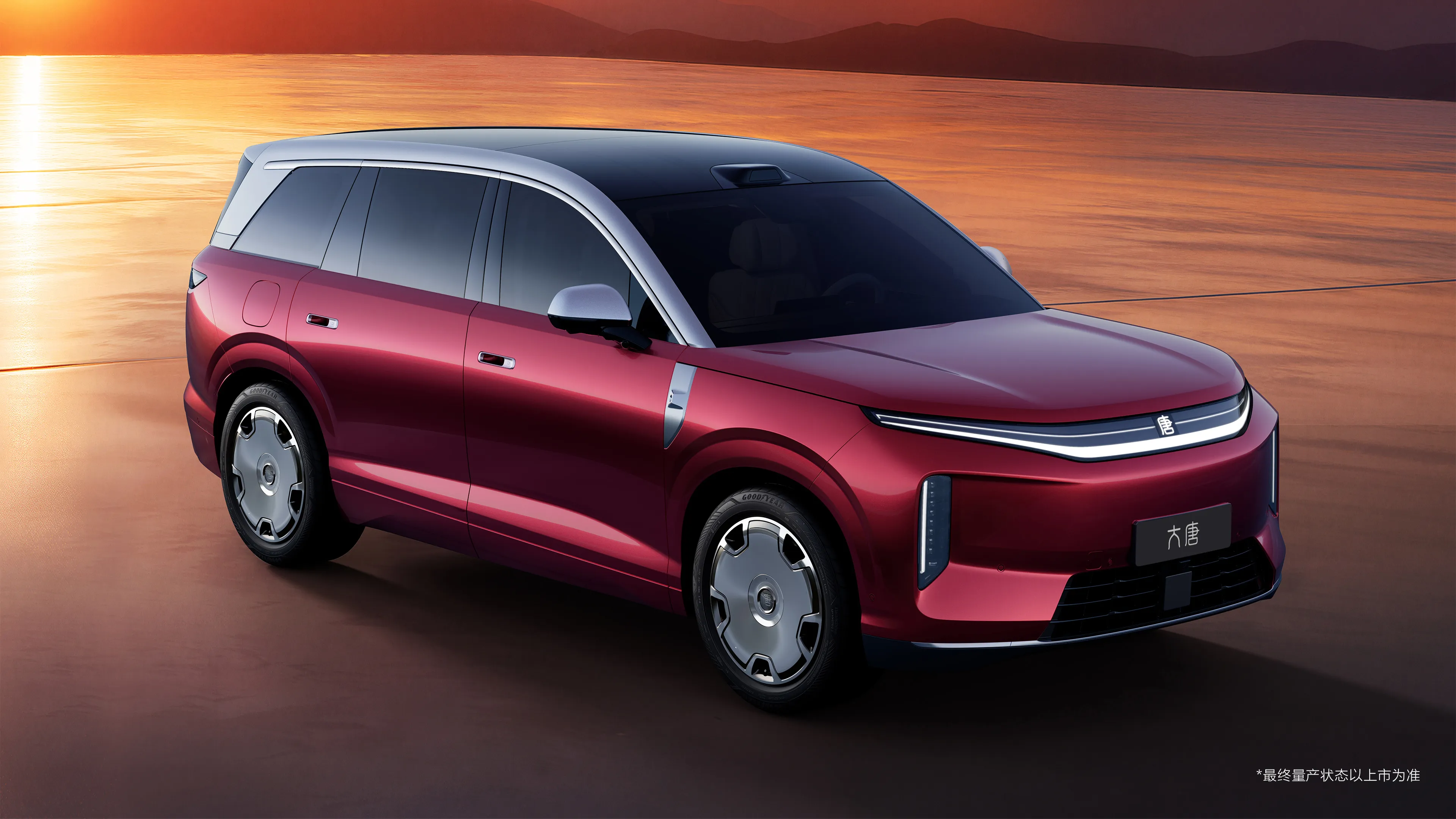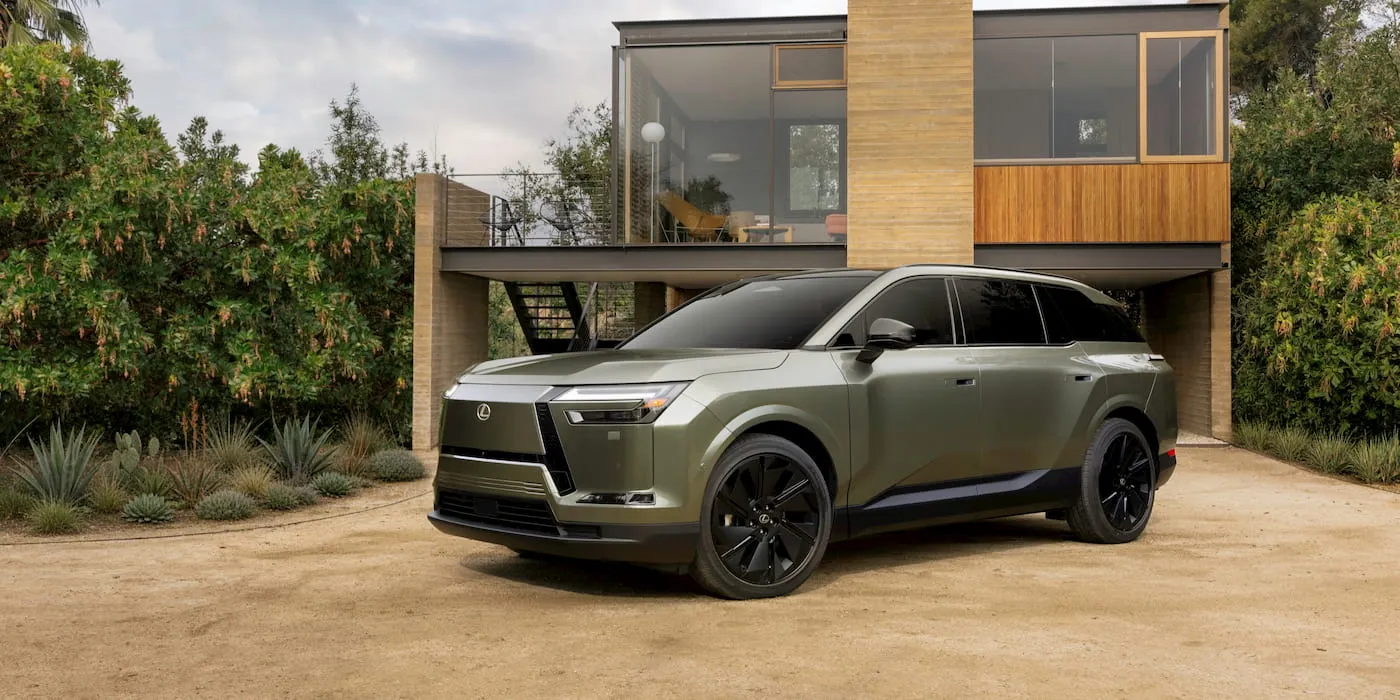
The new Lexus TZ promises luxury and range, but does it truly redefine the EV experience for a premium segment grappling with innovation?
The automotive industry’s pivot to electric vehicles is not merely a powertrain shift; it is a fundamental redefinition of what a vehicle is, how it operates, and how it delivers value. Established luxury marques, with decades of engineering excellence in internal combustion, face an existential challenge: adapting their formidable capabilities to this new paradigm without losing their core identity or, worse, falling behind agile, tech-first entrants. In this dynamic landscape, the hypothetical Lexus TZ, a 3-row luxury EV SUV with a stated 300-mile range, exemplifies a critical strategic dilemma. On paper, it checks many boxes for the discerning luxury buyer: brand prestige, spaciousness, and adequate range. However, for those of us observing the industry's rapid evolution, it feels like the Lexus TZ is a competent entry, but one that is conspicuously missing something foundational in the era of software-defined mobility and evolving luxury.
The 'something missing' is not a single feature but a holistic absence: a truly transformative digital experience, a bold reinterpretation of luxury for the electric age, and an integrated ecosystem strategy that extends beyond the vehicle itself. While a 300-mile range and three rows of opulent seating are respectable benchmarks, they are rapidly becoming table stakes in the premium EV segment. The real battleground for founders and operators in this space is shifting towards software intelligence, seamless connectivity, and a compelling, future-proof user journey.
The Software-Defined Imperative
The first and most significant gap for many legacy automakers entering the EV space, and one the Lexus TZ could hypothetically fall into, is the failure to fully embrace the Software-Defined Vehicle (SDV) paradigm. Companies like Tesla and Rivian, and even European challengers such as Mercedes-Benz with its MBUX Hyperscreen, have demonstrated that the user interface, the vehicle's intelligence, and its ability to evolve post-purchase via over-the-air (OTA) updates are now paramount. This is not about simply adding a large touchscreen; it is about an architecture where software dictates functionality, personalization, and the continuous enhancement of the driving experience.
A vehicle like the Lexus TZ, while undoubtedly possessing a high-quality infotainment system and driver-assistance features, often struggles to deliver the deep integration, real-time adaptability, and predictive intelligence found in purpose-built SDVs. Consider Tesla’s Full Self-Driving Beta, a constantly evolving software product that fundamentally alters the driving experience, or Lucid’s elegant and intuitive user interface in the Air sedan, which prioritizes seamless interaction and future upgradeability. These systems offer not just features, but an evolving relationship with the vehicle. The TZ, if it adheres to a more traditional development cycle, risks offering a static, well-executed system that feels dated within two years, failing to provide the continuous value stream that modern luxury tech consumers expect.
Redefining Luxury for the Electric Age
The definition of luxury itself is undergoing a profound transformation, moving beyond mere material opulence and quietude. Today's luxury consumers, particularly those at the helm of innovative enterprises, seek experiences that are intelligent, personalized, sustainable, and effortless. They value not just what a product is, but what it enables and how it aligns with their values. For the Lexus TZ, simply electrifying the traditional Lexus approach to luxury may prove insufficient.
New entrants and forward-thinking incumbents are reimagining the luxury interior as a personalized digital sanctuary. BMW's iX, for instance, emphasizes sustainable materials like olive-tanned leather and recycled fishing nets, alongside a minimalist, tech-forward cockpit. Nio, a Chinese EV manufacturer, offers its NOMI AI assistant, a physical and digital companion that learns user preferences and provides proactive assistance, creating an emotional connection. Furthermore, the concept of a vehicle as a 'third space' beyond home and office, capable of serving as a mobile office or entertainment hub, is gaining traction. This demands robust connectivity, advanced biometric recognition, and immersive audio-visual systems. The TZ's luxury, while comfortable, might lack this deeply integrated, forward-looking ethos that truly differentiates an EV in a crowded market.
Beyond the Battery: The Charging & Efficiency Equation
While a 300-mile range is a solid offering, the narrative around electric vehicles extends far beyond the absolute distance. The speed and convenience of recharging, the vehicle's energy efficiency, and its integration into a broader charging ecosystem are equally, if not more, critical for luxury buyers. Many premium EVs are now adopting 800-volt architectures, allowing for ultra-rapid charging that can add hundreds of miles in minutes rather than hours. The Porsche Taycan and Hyundai Ioniq 5 (and its Genesis equivalents) showcase this advantage, significantly reducing charging stops’ duration and inconvenience.
Moreover, the efficiency of energy usage determines the real-world range and running costs. Vehicles like the Lucid Air set benchmarks for aerodynamic efficiency and powertrain optimization, translating into superior range and lower energy consumption per mile. Does the Lexus TZ offer an 800V architecture? Is its aerodynamic design optimized for EV performance, or is it merely an adaptation of an existing SUV platform? Is there a comprehensive charging network strategy that simplifies the entire process for the owner, perhaps integrating with home energy solutions or public charging networks through seamless authentication and payment? Without these foundational elements, a 300-mile range becomes less compelling when competitors offer faster charging, greater efficiency, or a more integrated charging experience across geographies like North America and Europe.
The Strategic Chasm: Legacy vs. Native EV Approaches
The underlying challenge for a vehicle like the Lexus TZ often stems from the organizational structure and strategic inertia of its parent company. Traditional automakers excel at complex manufacturing, supply chain management, and hardware reliability. However, they frequently struggle with the rapid iteration cycles, software-first development, and risk-taking inherent to the tech industry. This creates a strategic chasm between companies born electric and those trying to electrify their existing portfolios.
Toyota, Lexus's parent, has historically taken a cautious approach to full electrification, prioritizing hybrid technology. While this strategy has yielded significant market share, it has also meant a slower development of ground-up EV platforms and a potentially conservative approach to software integration and digital innovation. This impacts everything from the hiring of software talent to the willingness to deploy cutting-edge, unproven technologies. For founders and operators, this presents a clear lesson: market leadership in one era does not guarantee it in the next without a fundamental re-evaluation of core competencies and strategic priorities. The TZ, therefore, might be a product of a company transitioning, rather than one fully embracing, the electric future.
To truly compete and lead in the luxury EV space, Lexus, and by extension Toyota, must move beyond incremental improvements. This requires a bolder vision for what a Lexus EV can be, one that leverages its formidable build quality and reputation for reliability but marries it with a cutting-edge digital ecosystem. It means fostering an internal culture of software innovation, potentially through dedicated EV software divisions or strategic partnerships. It necessitates designing not just a vehicle, but an integrated mobility experience that anticipates user needs, offers proactive intelligence, and continuously evolves.
The success of premium EVs in markets from California to Shanghai, and from Berlin to Singapore, hinges on their ability to offer a compelling narrative that extends beyond range and horsepower. It involves a commitment to sustainable practices throughout the supply chain, a seamless charging experience, and a digital interface that feels intuitive, personalized, and forward-looking. The Lexus TZ, while a promising step, stands at a crossroads. Its ultimate impact will depend on whether Lexus can truly define what it means to be a luxurious, technologically advanced EV for a new generation, rather than simply an electrified version of its past.
Key Takeaways
Software-Defined Vehicle Gap: The Lexus TZ, like many legacy EV entries, likely lacks a truly transformative, continuously evolving digital user experience and an integrated software platform that extends beyond basic infotainment.
Evolving Luxury Definition: Modern luxury in EVs demands more than material opulence; it requires seamless tech integration, personalization, sustainability, and a vehicle that serves as an intelligent 'third space.'
Integrated Ecosystem Imperative: A 300-mile range is insufficient without ultra-fast charging capabilities (e.g., 800V architecture), high energy efficiency, and a comprehensive, user-friendly charging network strategy.
Strategic Inertia: Legacy automakers face an inherent challenge in shifting from hardware-centric development to a software-first, agile innovation model, impacting their ability to compete with native EV players.
Future-Proofing: True competitiveness for luxury EVs lies in bold innovation, a dedicated software-first mindset, and a distinct EV identity that actively redefines the brand for the electric age, rather than merely adapting past successes.
Frequently asked questions
What is the Lexus TZ?
The Lexus TZ is an upcoming 3-row luxury electric SUV from Lexus, designed to offer a premium driving experience with an estimated 300 miles of range. It represents Lexus's entry into the competitive high-end EV segment.
How many rows does the Lexus TZ have?
The Lexus TZ is designed with three rows of seating, accommodating more passengers than typical two-row SUVs.
What is the estimated range of the Lexus TZ?
The Lexus TZ is projected to have an estimated electric range of 300 miles on a single charge, providing ample distance for most journeys.
Is the Lexus TZ a luxury vehicle?
Yes, the Lexus TZ is positioned as a luxury EV SUV, aiming to combine premium comfort and features with electric propulsion.
What challenges do luxury brands face with EVs?
Luxury brands must adapt their traditional engineering excellence to electric powertrains while maintaining their core identity and delivering new value propositions that resonate with evolving consumer expectations.
What might the Lexus TZ be missing?
The article hints at the Lexus TZ potentially missing a key element in re-defining the EV experience or a unique feature to truly differentiate it in the rapidly evolving luxury EV market, beyond just range and luxury.