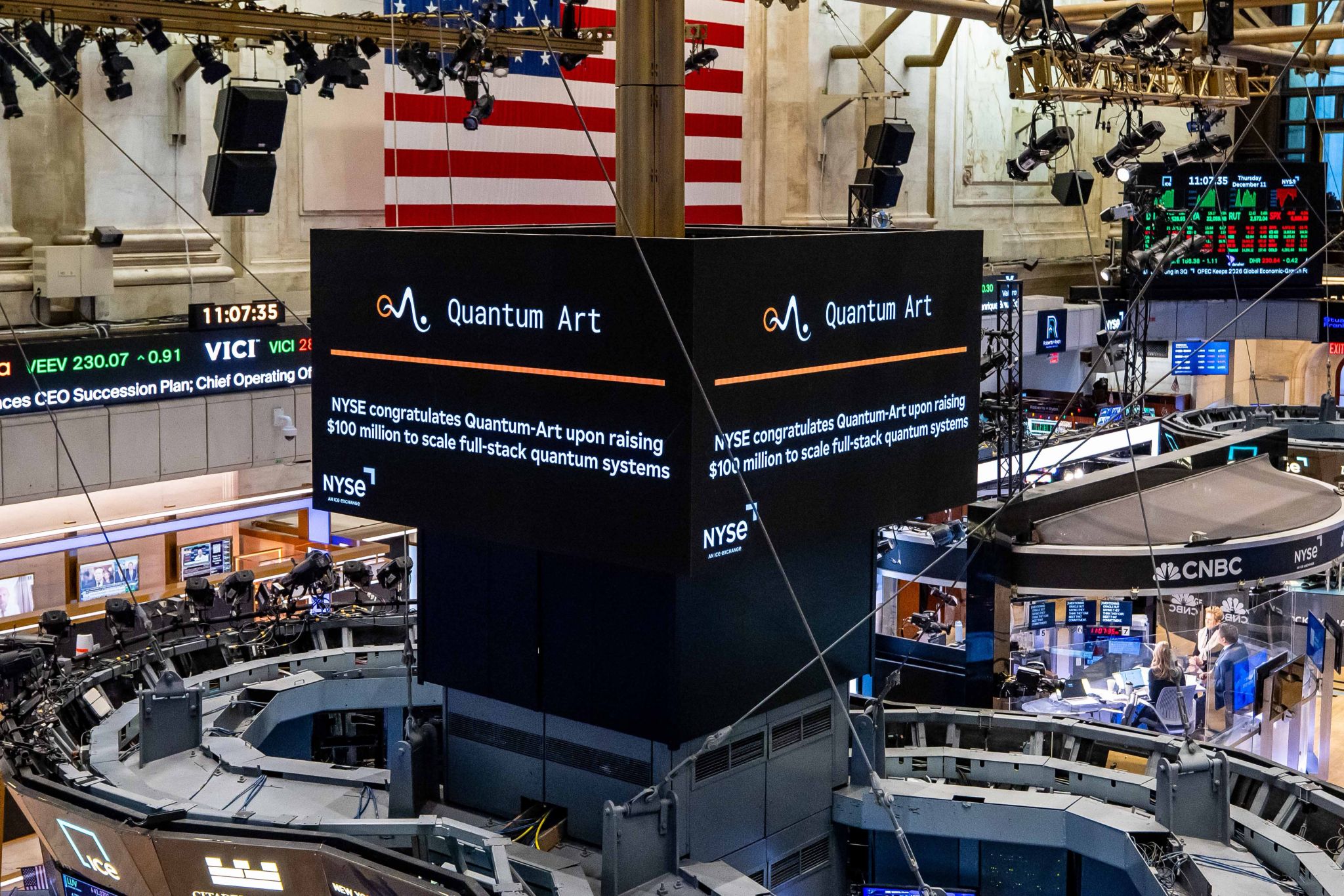
An Israeli quantum computing startup has extended its Series A financing to $140 million, adding new capital as investors double down on long-horizon computing breakthroughs. Quantum computing remains one of the most capital-intensive and research-heavy sectors in technology. Raising such a significant Series A — and extending it — signals confidence in both the company’s technical roadmap and the broader potential of quantum infrastructure. Unlike consumer-facing AI startups, quantum ventures operate on longer commercialization timelines, often requiring sustained funding rounds before meaningful revenue generation.
Israel’s Growing Deep-Tech Ecosystem
Israel has steadily strengthened its reputation as a deep-tech hub, particularly in cybersecurity, semiconductor design, and advanced computing. Quantum computing now represents a new frontier for the country’s innovation ecosystem. Government research institutions and private venture funds have increasingly supported quantum research, recognizing its potential applications in cryptography, materials science, logistics optimization, and drug discovery. The extended funding round highlights Israel’s ambition to remain competitive in a global race increasingly dominated by the United States and China.
Quantum’s Investment Case
Quantum computing promises to solve certain classes of problems exponentially faster than classical systems. While practical, fault-tolerant quantum computers remain in development, early-stage startups are racing to improve qubit stability, error correction, and scalability. Investors backing quantum startups are typically making decade-long bets. The sector’s high burn rates and hardware requirements demand patient capital. Extending a Series A rather than immediately moving to a Series B may allow the company to secure additional runway while demonstrating technical milestones.
Competitive Global Landscape
The quantum race is intensifying. Major technology firms in the United States are investing heavily in quantum research, while European and Asian governments have launched national quantum initiatives. Israeli startups must compete not only on research innovation but also on access to specialized talent and fabrication capabilities. Strong early funding can help secure engineering teams and establish strategic partnerships with research institutions and industrial customers.
Commercialization Challenges
Despite significant funding momentum globally, quantum computing remains largely pre-commercial at scale. Demonstrating quantum advantage — solving real-world problems faster or more efficiently than classical supercomputers — is still a work in progress. Startups in this space often focus on incremental milestones such as increasing qubit counts, reducing noise, or improving coherence times. Investors will closely monitor whether the additional capital accelerates tangible technical progress.
Broader Market Implications
The extension of a $140 million Series A reflects continued investor willingness to fund frontier technologies, even as broader venture capital markets have become more selective. Deep-tech funding tends to be less sensitive to short-term market cycles because of its strategic importance and longer development horizons. Quantum computing is increasingly viewed not merely as experimental science but as strategic infrastructure with national security and industrial competitiveness implications.
What It Signals
The expanded Series A round underscores sustained belief in quantum computing’s transformative potential. For Israel’s startup ecosystem, it reinforces positioning in advanced computing research beyond cybersecurity and software. For global investors, it signals that frontier technologies continue to attract capital — even in cautious funding environments — when the potential upside reshapes entire industries. Quantum’s commercial breakthrough may still lie years ahead.