Unexpectedly high demand for the new MacBook Neo drives Apple to accelerate A18 Pro chip orders from TSMC, signaling a major shift in premium computing.
Taipei's semiconductor fabrication plants are humming at an unprecedented cadence. Apple has significantly ramped orders for its new A18 Pro chip, a direct response to unexpectedly robust demand for the recently launched MacBook Neo. This accelerated production schedule signals a pivotal moment for both Apple's hardware strategy and the broader premium computing market.
Sources within TSMC confirm that Apple has more than doubled its initial A18 Pro chip orders for the current quarter, with projections for Q3 now tracking 15-20% above even revised internal forecasts. This surge reflects a level of market enthusiasm for the MacBook Neo that has caught even Apple’s notoriously conservative supply chain planners off guard.
The A18 Pro, fabricated on TSMC's advanced N3E process, is the architectural heart of the MacBook Neo. It boasts a 12-core CPU, an 18-core GPU, and a formidable 16-core Neural Engine. This hardware configuration delivers an astonishing 35 TOPS (trillions of operations per second) of dedicated AI processing power. Such specifications are not just incremental upgrades; they represent a fundamental shift in what a thin-client portable can achieve.
The Neo Factor: A New Benchmark
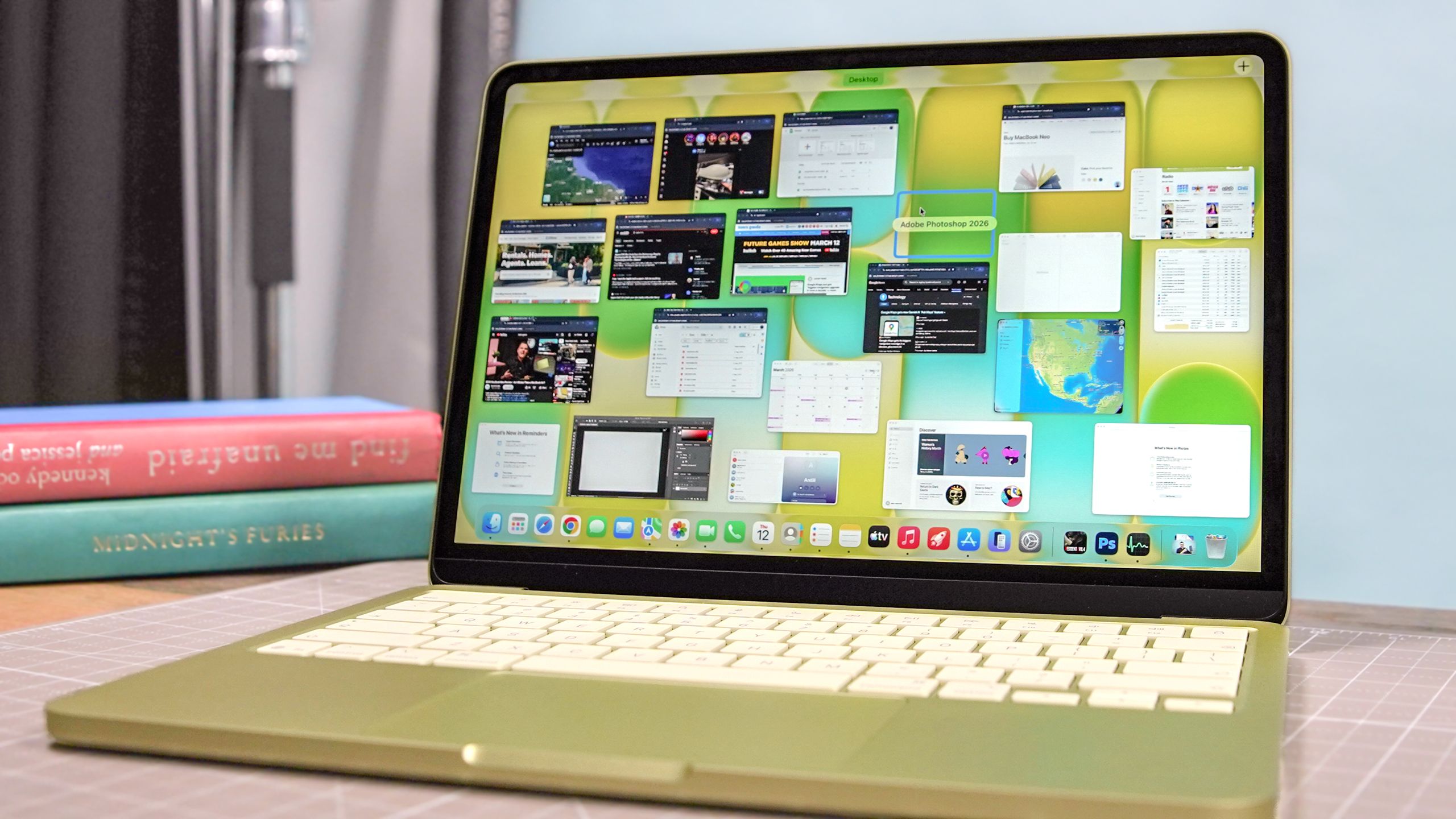
The MacBook Neo was not merely another product launch. It was a calculated gamble, positioned as the definitive portable AI workstation. Available in 13-inch and 14-inch form factors, the Neo combines an ultra-slim chassis with a fanless design, yet manages to outperform many desktop-class machines in AI-centric benchmarks. Its ProMotion XDR display and advanced MagSafe 4 connectivity are refinements, but the chip is the real story.
Early adopter reviews from developers and creative professionals have been overwhelmingly positive. The ability to run complex local AI models, perform real-time generative tasks, and compile intricate codebases with unprecedented speed and efficiency has resonated deeply. This is particularly true for professionals in Silicon Valley, London's AI corridor, and Singapore's burgeoning tech scene.
The A18 Pro's unified memory architecture, with bandwidths exceeding 300GB/s, eliminates traditional bottlenecks found in discrete CPU-GPU setups. This translates into tangible performance gains for large language models (LLMs) and diffusion models running directly on the device. For founders building AI-driven solutions, the Neo offers a powerful, secure, and always-on development environment.
Supply Chain Under Pressure
The sudden increase in demand puts significant pressure on Apple's established supply chain. TSMC, already operating at near-full capacity for advanced nodes, must now reallocate resources and potentially delay other clients. This highlights Apple's immense negotiating power and its critical position as TSMC's largest customer for cutting-edge processes.
Industry analysts are closely watching how TSMC manages this unexpected surge. Any delays in fulfilling Apple's orders could ripple through the industry, impacting availability and pricing for components relying on similar fabrication technologies. The resilience of the global semiconductor supply chain, still recovering from recent disruptions, is once again being tested.
Beyond the chip itself, secondary component suppliers are also feeling the pinch. High-density flash storage, advanced display panels, and specialized cooling solutions must scale rapidly. Apple's long-standing relationships and multi-region manufacturing hubs, particularly in Vietnam and India for assembly, are being leveraged to mitigate potential bottlenecks in downstream production.
Competitive Landscape Shifts
The success of the MacBook Neo and the underlying A18 Pro chips sends a clear signal to the rest of the computing industry. The era of the "AI PC" is not a distant future; it is here, and Apple has drawn a distinct line in the sand. This puts immense pressure on x86 incumbents like Intel and AMD, as well as ARM-based competitors like Qualcomm, to accelerate their own AI-focused silicon roadmaps.
Intel's Lunar Lake and AMD's Strix Point architectures, while promising, face an uphill battle against Apple's integrated hardware-software ecosystem. Qualcomm's Snapdragon X Elite, aimed squarely at the Windows-on-ARM market, now has an even higher bar to clear in terms of both raw performance and developer adoption. The benchmark for on-device AI capability has been recalibrated.
Implications for Founders and Operators
For founders and operators, the MacBook Neo's success has several critical implications. Firstly, the ability to perform intensive AI inference and development locally significantly enhances data privacy and security. Sensitive models and proprietary datasets can remain on-device, reducing reliance on cloud infrastructure and mitigating potential security risks.
Secondly, the efficiency gains translate directly into operational cost savings. Reduced energy consumption, longer battery life, and less reliance on expensive cloud GPUs for prototyping and development improve the total cost of ownership (TCO). This is particularly attractive for startups and scale-ups managing tight budgets while needing cutting-edge computational power.
Thirdly, the Neo establishes a new baseline for talent attraction. Developers and engineers, particularly those focused on AI, are increasingly demanding powerful, efficient, and user-friendly tools. Providing such hardware can be a significant differentiator in the highly competitive tech talent market, especially in hubs like Berlin, Seattle, and Bengaluru.
Future Outlook and Challenges
The immediate challenge for Apple is sustaining this momentum. Can TSMC truly meet the escalating demand without impacting other product lines or stretching thin? Apple's ability to diversify its manufacturing base for assembly, though not for leading-edge silicon, offers some resilience, but the core foundry capacity remains a choke point.
Looking ahead, the A18 Pro's success validates Apple's long-term bet on custom silicon. The continuous iteration of their A-series and M-series chips positions them uniquely to capitalize on the AI revolution. Expect future iterations to push the boundaries of on-device AI further, potentially integrating even more specialized accelerators and enhancing multimodal AI capabilities.
The broader market will likely see a rapid acceleration in AI PC development from all major players. This competition will ultimately benefit end-users, but the architectural choices made today will determine who leads the next generation of computing. Apple, with the A18 Pro and MacBook Neo, has fired a definitive opening salvo.
Key Takeaways
Apple has significantly ramped A18 Pro chip production due to unexpected demand for the MacBook Neo, signaling a major market shift towards AI-focused portable computing.
The A18 Pro, built on TSMC's N3E process, offers industry-leading on-device AI performance, redefining capabilities for developers and creative professionals.
The surge in orders places immense pressure on TSMC and the broader semiconductor supply chain, testing its resilience and Apple's negotiating power.
The MacBook Neo's success elevates the benchmark for "AI PCs," intensifying competition among Intel, AMD, and Qualcomm to accelerate their own AI-centric silicon roadmaps.
For founders and operators, the Neo offers enhanced data privacy, lower operational costs through efficiency, and a competitive edge in attracting top AI talent.
Frequently asked questions
Why is Apple ramping up A18 Pro chip production?
Apple is significantly increasing A18 Pro chip orders due to unexpectedly high demand for its recently launched MacBook Neo, indicating strong consumer interest in the new laptop.
What is the MacBook Neo?
The MacBook Neo is a recently launched Apple laptop that has experienced robust demand, driving the need for accelerated A18 Pro chip production.
Who manufactures the A18 Pro chip?
The A18 Pro chip is manufactured by TSMC (Taiwan Semiconductor Manufacturing Company), as confirmed by sources within the company.
How does this impact Apple's strategy?
This accelerated production schedule signals a pivotal moment for Apple's hardware strategy, highlighting their responsiveness to market demand and potentially influencing future product launches.
What does this mean for the premium computing market?
The strong demand for the MacBook Neo and subsequent chip production increase suggests a robust and growing premium computing market, with Apple playing a significant role.
Where are the chips being fabricated?
The A18 Pro chips are being fabricated in Taipei's semiconductor fabrication plants, specifically by TSMC.