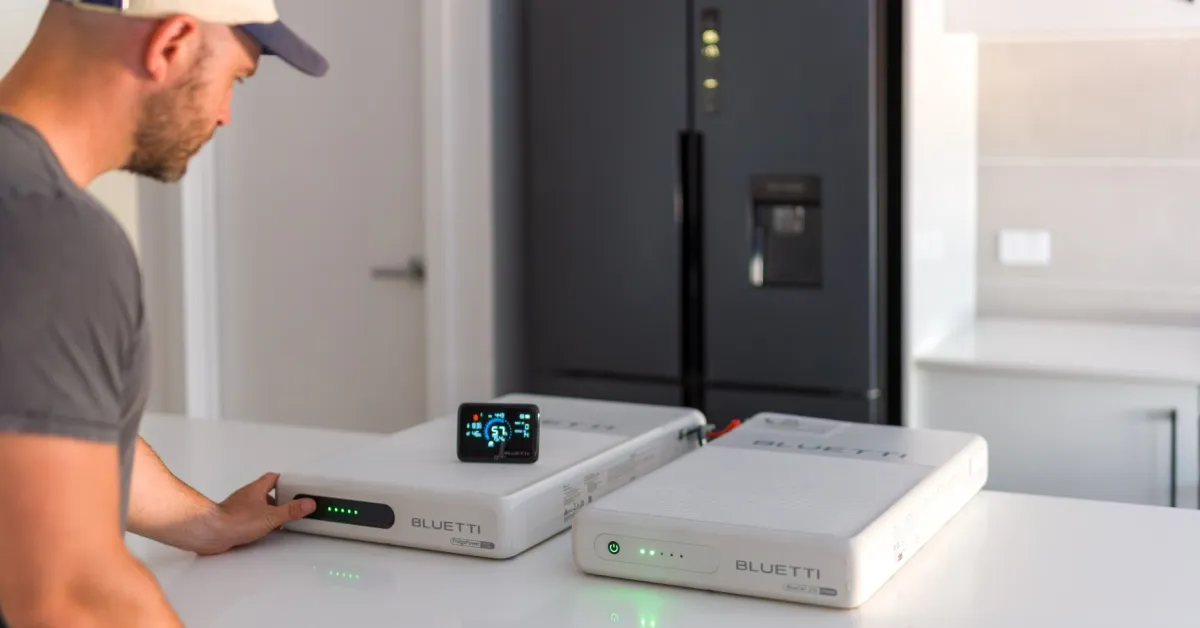
Navigate grid challenges & unlock energy independence. Discover optimal battery storage solutions for your home with our latest survey.
The energy landscape is shifting, presenting both challenges and unprecedented opportunities for homeowners. Grid instability, driven by aging infrastructure, extreme weather events, and a rapidly changing generation mix, makes headlines from Texas to Sydney. Simultaneously, the plummeting cost of solar photovoltaics and advanced battery storage technologies offers a compelling path toward energy independence and resilience.
For many, the question is no longer if they should consider a home battery, but how much backup they truly need. This is not a one-size-fits-all equation. Determining the optimal battery capacity and power output for your home requires a rigorous assessment of your specific goals, consumption patterns, and local grid conditions.
Key Takeaways for Home Battery Sizing
Define Your Goal: Are you seeking emergency backup, solar self-consumption, or full off-grid capability?
Assess Energy Needs: Calculate your daily critical load consumption (kWh) and peak power demand (kW).
Consider Duration: How long do you need to power essential appliances during an outage?
Understand Battery Metrics: Capacity (kWh), Power Output (kW), Round-Trip Efficiency, and Depth of Discharge are crucial.
Factor in Solar: An existing or planned solar PV system significantly alters battery requirements for extended backup.
Budget Realistically: System costs vary widely based on size, brand, and installation complexity.
The Imperative for Home Battery Storage
The motivations behind adopting home battery storage are multifaceted, evolving beyond simple blackout protection:
Grid Resilience and Blackout Protection: From the rolling blackouts in California driven by wildfire risk to the catastrophic winter storm outages across Texas (ERCOT grid collapse impacting millions for days in 2021), and the frequent power disruptions experienced in emerging economies, grid fragility is a global concern. A home battery system provides an instantaneous, seamless transition to backup power, safeguarding critical appliances and ensuring continuity.
Optimizing Renewable Energy Consumption: For homes with solar PV systems, batteries unlock maximum value. Instead of exporting excess solar generation to the grid at potentially low feed-in tariffs, batteries store this energy for use when the sun isn't shining, such as evenings or cloudy days. This significantly increases solar self-consumption, reducing reliance on grid power and maximizing financial returns. In regions like Australia, where solar penetration is high and feed-in tariffs are declining, this "self-use" model is paramount.
Time-of-Use (TOU) Arbitrage: Many utilities worldwide, particularly in Europe and North America, implement TOU electricity rates, where power is more expensive during peak demand periods (e.g., late afternoon to evening). A battery can be programmed to charge during off-peak hours when electricity is cheap (or from solar) and discharge during peak hours, effectively buying low and selling high to your own home, leading to substantial savings.
Demand Charge Management: For some commercial or larger residential customers, utilities impose demand charges based on the highest power drawn from the grid in a billing cycle. Batteries can shave these peak demands, reducing overall electricity costs.
Energy Independence and Security: Beyond economic drivers, many homeowners seek greater control over their energy supply, reducing vulnerability to geopolitical events, utility rate hikes, and grid vulnerabilities. True off-grid living, while more complex, relies entirely on robust battery storage coupled with renewable generation.
Global Energy Consumption Snapshots (Average Residential)
United States:Approximately 10,600 kWh/year (29 kWh/day)
Germany:Approximately 3,500 kWh/year (9.6 kWh/day) for a 3-person household
Australia:Approximately 6,500 kWh/year (17.8 kWh/day)
United Kingdom:Approximately 2,900 kWh/year (7.9 kWh/day)
Note: These are averages; individual consumption varies significantly by household size, appliance usage, climate, and energy efficiency.
Deconstructing Your Needs: A Step-by-Step Approach
To determine the right battery size, a systematic assessment is essential:
Step 1: Define Your Primary Goal
This is the foundational step. Your goal dictates the entire sizing process:
Critical Load Backup (Emergency Only): This is the most common and often most cost-effective goal. You only want to power essential appliances (refrigerator, internet, some lights, medical devices) for a limited duration during an outage.
Solar Self-Consumption Optimization: Your aim is to store excess daytime solar energy to use during the evening, maximizing your solar investment and reducing grid reliance. Blackout protection is a secondary benefit.
Partial Home Backup: Powering a significant portion of your home, including some non-essential items, for a moderate duration.
Whole Home Backup: Powering your entire home, as if the grid were still active, for an extended period. This requires substantial capacity and power output.
Off-Grid Operation: Complete independence from the utility grid. This is the most demanding scenario, requiring significant battery capacity, robust solar generation, and often a backup generator.
Step 2: Inventory Your Energy Consumption and Peak Power
This is where specific numbers become critical. You need to identify two key metrics: energy (kWh) and power (kW).
Identify Critical Loads (for backup goals): Make a list of every appliance you absolutely need to run during an outage. This typically includes:
Refrigerator/Freezer (cycle on/off)
Lights (LEDs are highly efficient)
Internet Router/Modem
Phone Chargers
Medical Devices (CPAP machines, oxygen concentrators)
Garage Door Opener (brief use)
Well Pump (if applicable, high startup surge)
Heating/Cooling (often the largest load, may need to be scaled back)
For each item, note its wattage (W) and estimate its daily run time (hours). Your appliance labels or a Kill-A-Watt meter can provide accurate wattage data.
Calculate Daily Energy (kWh) for Critical Loads:
(Appliance Wattage x Daily Run Time in Hours) / 1000 = Daily kWh per ApplianceSum these values to get your total daily critical kWh requirement. For example, a 150W refrigerator running 8 hours a day uses 1.2 kWh. Ten 10W LED lights on for 4 hours use 0.4 kWh. A 100W router on for 24 hours uses 2.4 kWh.
Determine Peak Power Demand (kW): This is the maximum instantaneous power you might draw from the battery. If your well pump (1500W) and microwave (1200W) both turn on while the refrigerator (150W) is running, your peak demand is approximately 2.85 kW. This ensures your battery inverter can handle simultaneous appliance startups. High-demand appliances like electric water heaters, ovens, or central air conditioning units typically require significantly larger battery inverters and capacities.
Step 3: Factor in Desired Backup Duration
How long do you want your battery to sustain your critical loads?
Short Outages (4-8 hours): A smaller battery (e.g., 5-10 kWh) might suffice.
Typical Outages (1-2 days): This is a common target. If your critical loads consume 5 kWh/day, you'd need 10 kWh for two days.
Extended Outages (3+ days): Requires significantly more capacity (e.g., 20+ kWh) or reliable solar charging to replenish the battery.
Indefinite Backup (with solar): Your solar PV system must be able to generate enough energy over the day to cover your daily consumption and recharge the battery for overnight use, especially during shorter winter days or prolonged cloudy periods.
Step 4: Account for System Inefficiencies and Depth of Discharge (DoD)
Round-Trip Efficiency: No energy conversion is 100% efficient. Modern lithium-ion batteries typically have a round-trip efficiency of 90-95%. This means if you put 10 kWh into the battery, you might only get 9-9.5 kWh out. Factor this in by dividing your calculated energy need by the efficiency (e.g., 10 kWh / 0.9 = 11.1 kWh gross capacity).
Depth of Discharge (DoD): While many advanced lithium iron phosphate (LiFePO4) batteries allow 100% DoD without immediate damage, repeatedly discharging to zero can shorten their lifespan. Most manufacturers design for and warrant systems with a practical DoD of 90-95%. This means a 10 kWh battery with 90% DoD provides 9 kWh of usable energy.
Example Calculation: If your critical loads consume 8 kWh per day and you want 2 days of backup, you need 16 kWh usable energy. Factoring in 90% efficiency and 90% DoD: (16 kWh / 0.9 efficiency) / 0.9 DoD = ~19.75 kWh gross battery capacity.
Battery Technology and Market Overview
The vast majority of modern home battery systems utilize lithium-ion chemistry, specifically Lithium Iron Phosphate (LiFePO4 or LFP). LFP offers superior safety, longer cycle life (often 6,000+ cycles, equivalent to 15-20 years of daily use), and better thermal stability compared to older lithium-cobalt chemistries.
Key players in the global home battery market include:
Tesla Powerwall: A dominant force, known for its sleek design and 13.5 kWh usable capacity, often bundled with Tesla Solar.
Enphase IQ Battery: Modular AC-coupled systems (e.g., IQ Battery 5P, 5 kWh) designed to integrate seamlessly with Enphase microinverter solar systems, particularly popular in North America and Australia.
LG Energy Solution (LG Chem): A long-standing battery manufacturer offering various RESU models with capacities ranging from 6.5 kWh to 16 kWh, widely adopted in Europe and Asia-Pacific.
Sonnen: German manufacturer known for its intelligent energy management systems and higher-end battery solutions (e.g., SonnenCore, SonnenHybrid) focused on optimizing self-consumption and virtual power plant integration.
Huawei: Offers robust residential battery solutions (e.g., LUNA2000) that integrate with their solar inverters, gaining traction in Europe and Asia.
BYD: A Chinese giant in battery manufacturing, supplying cells to many brands and offering its own modular Battery-Box systems (e.g., HVM, HVS) globally.
AlphaESS, Redback Technologies: Prominent players in the Australian market, offering integrated solar and storage solutions.
Installation costs for a typical 10-15 kWh home battery system, including the inverter, necessary electrical upgrades, and labor, generally range from $10,000 to $20,000 USD globally, though specific regional pricing, incentives, and labor costs can push this higher or lower. The cost per kilowatt-hour of battery storage at the cell level has decreased by over 80% in the last decade, making residential systems increasingly accessible.
Integration and Smart Energy Management
Modern battery systems are more than just passive storage; they are intelligent energy hubs. They integrate with home energy management systems (HEMS) and utility grids through advanced software. This enables:
Forecasting: Predicting solar generation and home consumption based on weather and historical data.
Automated Optimization: Charging and discharging decisions are made in real-time to maximize savings, often participating in Virtual Power Plants (VPPs) where aggregated home batteries can provide grid services, earning homeowners additional revenue. This is particularly advanced in markets like South Australia and parts of Germany.
Seamless Transition: Automatic transfer switches ensure an uninterrupted power supply during outages.
Remote Monitoring: Homeowners can monitor their energy flow and battery status via smartphone apps.
The Path Forward
The question of "how much home battery backup do you need?" demands a personalized answer. While the allure of complete energy independence is strong, a pragmatic approach often begins with securing critical loads for common outage durations or optimizing solar self-consumption.
Begin by meticulously itemizing your essential energy needs, considering both daily energy consumption (kWh) and peak power demands (kW). Consult with certified energy professionals who can conduct a thorough energy audit, assess your existing electrical infrastructure, and design a system that aligns with your specific goals and budget. The right home battery system is not merely a purchase; it is an investment in resilience, financial savings, and a more sustainable energy future for your home.
Frequently asked questions
What factors determine how much home battery backup I need?
The ideal home battery backup size depends on your energy consumption, desired backup duration, and specific appliances you want to power during an outage. Consider your daily kWh usage and critical loads.
Why should I consider a home battery backup system?
Home battery backup offers energy independence, protects against power outages, and can help optimize energy usage by storing solar power or charging during off-peak hours for later use.
What are the primary benefits of investing in home battery storage?
Key benefits include reliable power during blackouts, reducing reliance on the grid, potentially lowering electricity bills through time-of-use optimization, and increasing self-consumption of solar energy.
How long can a home battery typically power a house during an outage?
The duration a home battery can power a house varies significantly based on its capacity and your household's energy demand. Smaller systems might last a few hours, while larger ones can provide power for several days.
Is home battery backup only for homes with solar panels?
No, while commonly paired with solar to store excess energy, home battery backup systems can also be installed independently to draw power from the grid during off-peak hours for use during peak times or outages.
What kind of maintenance do home battery backup systems require?
Modern home battery backup systems, especially lithium-ion, are largely maintenance-free. Regular monitoring through a smart app and occasional visual inspections are typically sufficient to ensure optimal performance.