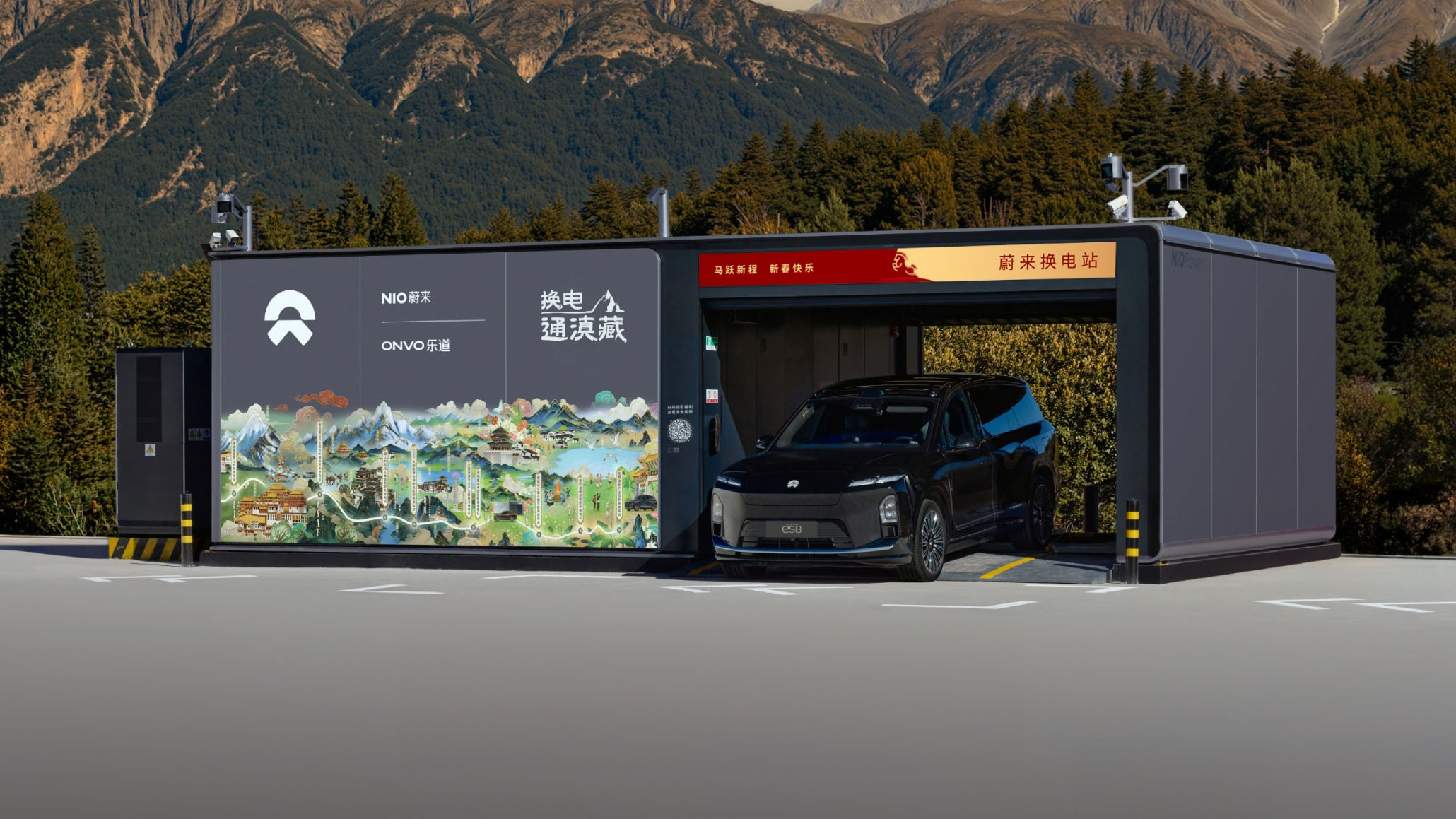
Nio's groundbreaking battery swapping technology reaches 1 million swaps, offering instantaneous EV refueling compared to the standard 30-minute charge.
The electric vehicle industry is a battleground of paradigms. On one side, the ubiquitous fast-charging station promises convenience, albeit often tethered to a 30-minute stop, a coffee break, or a quick scroll through social media. On the other, a radical alternative, battery swapping, offers a vision of instantaneous refueling, so swift it barely registers as a pause. Nio, the Chinese EV manufacturer, recently thrust this contrast into sharp relief with an astonishing announcement: its users completed one million battery swaps in a single week. This monumental figure isn't just a testament to Nio's operational scale; it’s a powerful signal to founders, investors, and operators globally that the future of EV refueling might not be as settled as once presumed.
For years, the dominant narrative has centered on improving charging speeds and expanding charging infrastructure. Tesla's Supercharger network set the benchmark, followed by a plethora of third-party networks and OEM-specific solutions. Yet, even with 350kW ultra-fast chargers, a significant wait remains. Nio's achievement challenges this fundamental premise, positing that a full battery exchange in under five minutes—often closer to three—is not merely a niche luxury but a scalable, compelling alternative. This isn't just about speed; it's about reimagining the entire EV ownership experience.
The Mechanics of Instant Gratification
Nio's Power Swap Stations (PSS) are automated marvels. A Nio vehicle drives into the station, the system automatically detects and unlatches the depleted battery pack from beneath the car, stores it for recharging, and installs a fully charged one. The entire process, from entry to exit, typically takes less time than filling a conventional gasoline tank. This technological feat is the bedrock of the user experience, eliminating range anxiety and battery degradation concerns simultaneously.
From a user's perspective, the appeal is immediate and tangible. Imagine driving on a long journey, the battery indicator dipping low. Instead of hunting for an available fast charger, plugging in, and waiting, a user navigates to a PSS, drives in, and drives out minutes later with a fresh power source. This seamless transition mirrors the convenience of traditional combustion engine refueling, an experience that EV adoption has struggled to replicate fully. Furthermore, the "Battery as a Service" (BaaS) model, where users subscribe to the battery rather than own it, reduces the upfront purchase price of the vehicle and allows for future battery upgrades without buying a new car. This flexibility offers a compelling value proposition that resonates deeply with practical concerns.
The Founder's Audacious Bet
For a founder contemplating entry into the EV space or an established OEM looking to differentiate, Nio's strategy presents a profound dilemma. The path to battery swapping is fraught with capital intensity and standardization challenges. Building a robust network of PSS, each stocked with a significant inventory of expensive battery packs, requires monumental upfront investment. Nio operates over 2,000 PSS globally, with plans for continuous expansion, each representing a substantial infrastructure outlay. This asset-heavy model stands in stark contrast to the asset-light approach of many EV manufacturers who outsource charging infrastructure or rely on third-party networks.
Yet, the advantages for the right business model can be transformative. A founder embracing swapping could offer unparalleled convenience, a unique selling proposition in a crowded market. It allows for innovative business models like BaaS, potentially decoupling battery costs from vehicle purchase prices, making EVs more accessible. It also opens avenues for advanced energy management; PSS can act as massive distributed energy storage units, participating in grid balancing and renewable energy integration. The challenge lies in balancing this visionary potential against the immense capital expenditure and the need for proprietary, standardized battery packs that limit interoperability with other brands.
The Investor's Calculus: ROI and Scalability
Investors analyzing Nio or similar ventures must weigh the long-term strategic advantages against the immediate financial burden. The high CapEx of PSS deployment is a significant hurdle. Each station and its inventory of batteries represent a considerable investment. The question for investors is clear: What is the return on this investment, and how quickly can it be achieved? The revenue streams from swapping are primarily subscription fees (BaaS) and potentially energy services to the grid. The one million swaps in a week signals high utilization in established markets, which is crucial for profitability.
The scalability of battery swapping beyond Nio's proprietary ecosystem remains a major concern. Without industry-wide standardization of battery pack designs and swapping mechanisms, the network effects that benefit charging infrastructure are limited. Nio has recently opened its swapping technology to other manufacturers in China, an ambitious move to broaden its network's utility and potentially attract investment from partners. This willingness to share intellectual property could be a critical inflection point, signaling a shift from a proprietary advantage to a collaborative ecosystem. However, convincing other automotive giants to adopt a competitor's technology is a monumental task.
"Nio's battery swapping success highlights a critical divergence in EV infrastructure strategy. While fast charging addresses range anxiety with speed, swapping fundamentally redefines the relationship between the driver, the vehicle, and the energy source. The real challenge now is transcending proprietary systems. If Nio can successfully onboard other OEMs, even in specific regions, it could catalyze a broader industry shift, but the economic and engineering hurdles for such widespread standardization are immense, bordering on revolutionary."
Dr. Lena Karlsson, Head of Automotive Futures at Horizon Global Research
The Analyst's Perspective: Technical Feasibility and Grid Integration
From an analyst's viewpoint, the technical prowess required for Nio's PSS is substantial. Precision robotics, sophisticated software for battery health monitoring, and a robust energy management system are all critical. The ability to perform a swap reliably and safely thousands of times a day, across a vast network, speaks volumes about Nio's engineering capabilities. Moreover, the integration of PSS into the broader energy grid offers tantalizing possibilities. Batteries stored within these stations can serve as buffers, absorbing excess renewable energy during off-peak hours and discharging it back to the grid during peak demand, effectively transforming them into virtual power plants. This V2G (Vehicle-to-Grid) or V2X (Vehicle-to-Everything) potential adds a layer of strategic value far beyond simple vehicle refueling.
However, the analyst must also consider the geopolitical and regulatory landscape. Nio's expansion into Europe, with PSS in countries like Norway, Germany, Sweden, and the Netherlands, demonstrates its global ambition. Yet, each market presents unique challenges in terms of permitting, grid connection regulations, and consumer acceptance. The high population density and existing infrastructure in China offered a fertile ground for rapid deployment. Replicating this success in diverse global markets, with varying energy policies and consumer habits, requires a tailored approach and substantial localized investment.
Beyond the Swap: Ecosystem and Evolution
The strategic implications of Nio's battery swapping go beyond mere refueling speed. It's about building an entire ecosystem around the battery. The BaaS model inherently addresses battery degradation concerns for the user, as the battery is managed and eventually replaced by Nio. This also allows Nio to maintain full control over the battery lifecycle, from manufacturing to second-life applications and recycling, contributing to a more circular economy model.
The potential for future-proofing is also significant. As battery technology evolves, Nio can upgrade its battery inventory at the PSS, allowing users to effectively upgrade their vehicle's range and performance without purchasing a new car, simply by swapping into a newer generation pack. This level of flexibility is unprecedented in the automotive industry and could dramatically alter vehicle ownership cycles and residual values.
Key Takeaways
Strategic Differentiation: Nio's battery swapping offers unparalleled convenience (sub-5 minute exchanges) that redefines the EV refueling experience, addressing range anxiety and battery degradation concerns.
Capital Intensity vs. Ecosystem Value: While PSS deployment requires massive upfront investment, it enables innovative BaaS models, future-proof battery upgrades, and potential revenue from grid services (V2G/V2X).
Standardization as a Global Hurdle: The proprietary nature of Nio's current system limits industry-wide adoption, although Nio's recent moves to open its technology could be a catalyst for broader collaboration.
Operational Scale and Global Ambition: One million swaps in a week demonstrates Nio's operational efficiency and the viability of the model at scale in specific markets, informing its cautious, yet determined, global expansion.
Future of EV Infrastructure: Battery swapping, while challenging, presents a compelling alternative to fast charging, potentially evolving into a hybrid model where both coexist to serve diverse user needs and energy management strategies.
Nio's milestone of one million swaps in a week is not merely a data point; it's a declaration. It asserts that an alternative to the charging cable exists, one that prioritizes speed, flexibility, and a holistic approach to battery management. While the challenges of capital, standardization, and global market penetration remain formidable, Nio's audacious bet continues to reshape the conversation around EV infrastructure. For founders and operators watching the evolving landscape, Nio offers a potent reminder: innovation often thrives at the intersection of technological ambition and a deep understanding of user needs, even if it means forging an entirely new path.
Frequently asked questions
What is Nio's battery swapping?
Nio's battery swapping is a service allowing EV owners to exchange a depleted battery for a fully charged one in minutes, rather than waiting for traditional charging. It offers a swift alternative to conventional fast-charging stations.
How fast is Nio's battery swapping compared to charging?
Nio's battery swapping takes just a few minutes, often less than five, significantly faster than the typical 30-minute or longer wait time for a fast-charging station.
How many batteries has Nio swapped?
Nio recently announced achieving 1 million EV battery swaps in a single week, highlighting the growing adoption and efficiency of their system.
What are the benefits of EV battery swapping?
Benefits include instantaneous "refueling," potential for battery upgrades, reduced charging anxiety, and lower upfront vehicle costs as the battery can be leased.
Is battery swapping available outside of China?
While Nio's battery swapping network is primarily in China, the company has started expanding into European markets like Norway, Germany, Sweden, and the Netherlands.
What is the primary keyword of this article?
The primary keyword for this article is "While You Stop For A", focusing on the comparison between traditional charging wait times and Nio's rapid battery swap.